Urban Form: Geometric Abstraction
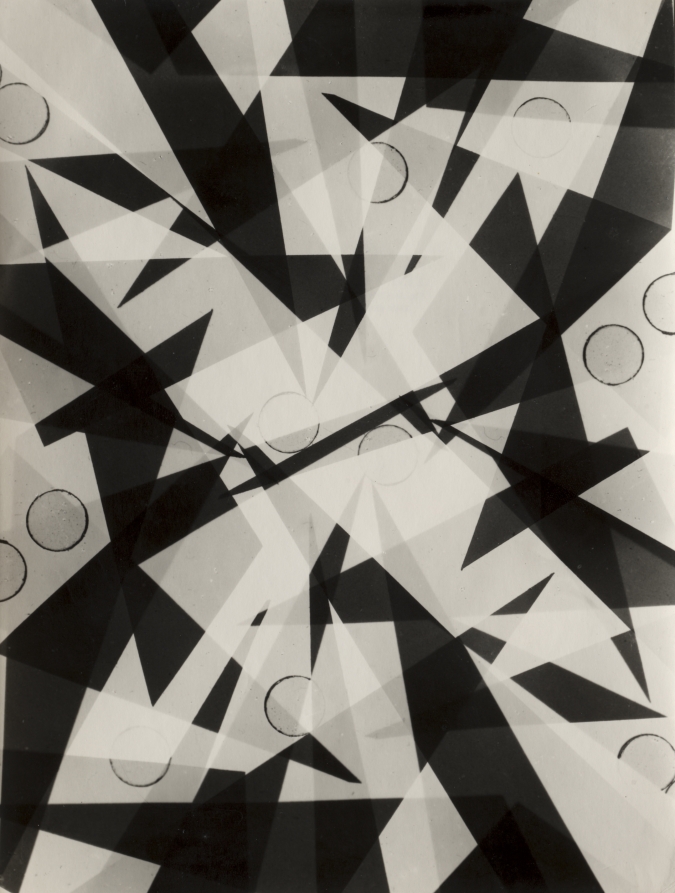
Geometric Abstraction as Structural Poetics
The research subject—a comparative analysis of the Japanese “Udonge” temple plaque from the Shōsōin and the Chinese Han-dynasty bronze mirror bearing the White Tiger, Divine Chariot, and Deities—presents a paradox of material transcendence. One is a Buddhist liturgical object, the other a funerary implement. Yet both articulate a shared aesthetic: the geometry of the invisible. For Addison Fashion’s 2026 executive silhouette, this research yields a definitive principle: form must negate itself to reveal structure. The urban executive does not wear clothing that describes the body; she wears clothing that defines space around the body. The Udonge plaque and the Han mirror are not decorative; they are architectural thresholds. Their geometric integrity lies not in symmetry or proportion, but in the tension between presence and absence—a tension that becomes the foundational poetics of the 2026 silhouette.
Structural Integrity: The Geometry of the Void
The Udonge Plaque: Calligraphy as Negative Space
The Udonge plaque’s three characters—優曇華—are executed in a script where line weight is uniform, spacing is deliberate, and each stroke terminates with a precise, unmodulated finish. There is no flourish, no emotional variance. The ink’s luminosity is not an effect of light but of material density: the carbon particles are packed so tightly that the black surface becomes a mirror. This is not calligraphy as expression; it is calligraphy as architecture. The strokes do not imitate petals; they construct a frame within which the concept of the sacred flower can exist. The geometric integrity here is one of negative space: the white ground between strokes is as active as the ink. Each character is a portal, not a picture. For the 2026 executive silhouette, this translates into seamless paneling that creates voids—cutouts, asymmetrical draping, and strategic absence of fabric—where the body’s movement becomes the only ornament. The silhouette is not fitted; it is held by internal seams that mimic the plaque’s stroke logic: clean, continuous, and self-referential.
The Han Mirror: The White Tiger as Geometric Matrix
The Han mirror’s White Tiger is not a naturalistic animal. It is a geometric cipher: the body is a series of arcs, the tail a continuous spiral, the limbs reduced to angular vectors that lock into the surrounding cloud patterns and chariot wheels. The composition is radial, with the tiger’s form interlocking with the divine chariot’s axle and the deities’ halos. This is not decoration; it is a cosmological diagram. The tiger’s geometry is one of containment—it defines the boundary between the mortal and the immortal. The mirror’s metal surface—a cold, reflective alloy of tin and copper—gives the image a permanent, unyielding quality. The 2026 executive silhouette must adopt this metallic logic: sharp shoulder lines that are not padded but cut from the fabric’s own structure; sleeves that terminate in angular cuffs that echo the tiger’s paw geometry; a hemline that is not soft but laser-cut to create a clean, reflective edge. The silhouette becomes a diagram of power, not a garment of comfort.
Urban Materiality: Onyx and the Architecture of Light
The color Onyx is selected not for its hue but for its optical behavior. Onyx is black that absorbs and reflects simultaneously—a paradox that mirrors the Udonge plaque’s ink and the Han mirror’s metal. In urban environments, Onyx does not compete with light; it manages it. The 2026 executive silhouette in Onyx uses matte and gloss juxtaposition: a matte wool crepe for the main body, with gloss-finished seams that catch light like the mirror’s polished rim. The fabric’s weight is critical—it must be dense enough to hold a crease but fluid enough to drape without collapsing. This is achieved through a double-faced construction: an outer layer of virgin wool with a tight twill weave, bonded to an inner layer of silk organza. The result is a fabric that stands away from the body at the shoulders and falls in controlled planes at the hem. The urban executive moves through glass-and-steel canyons; her silhouette must echo the buildings’ geometry—sharp, reflective, and unapologetically structural.
The 2026 Executive Silhouette: Form as Threshold
The definitive silhouette for 2026 is the Asymmetric Cocoon with Integrated Void. The jacket is cut with a single, continuous shoulder seam that extends into a collarless neckline, mimicking the Udonge plaque’s stroke continuity. The left side is fully enclosed—a solid panel from shoulder to mid-thigh. The right side is cut away at the waist, revealing a structural underlayer of Onyx silk that mirrors the Han mirror’s reflective surface. This is not a slit; it is a void. The trousers are wide-leg but tapered at the ankle, with a single seam that runs from hip to hem, creating a continuous line that echoes the mirror’s radial composition. The overall effect is one of controlled asymmetry—the body is not centered but balanced through negative space. The executive does not wear this garment; she inhabits it as a threshold between the mundane and the transcendent.
Conclusion: The Geometry of the Invisible
The Udonge plaque and the Han mirror teach that true structure is not seen but felt. The 2026 executive silhouette must be a diagram of power, not a description of the body. It must use geometric abstraction to create voids that activate the space around the wearer. The Onyx palette, the asymmetric cocoon, the integrated void—these are not trends. They are architectural principles derived from objects that understood that the most powerful form is the one that points beyond itself. The Addison Fashion executive does not wear clothing; she wears structure as philosophy. And in the urban canyon of 2026, that philosophy is the only ornament she needs.