Minimalist
Slate
Urban Form: Fountain of Notre-Dame at Saint-Brieuc, Brittany
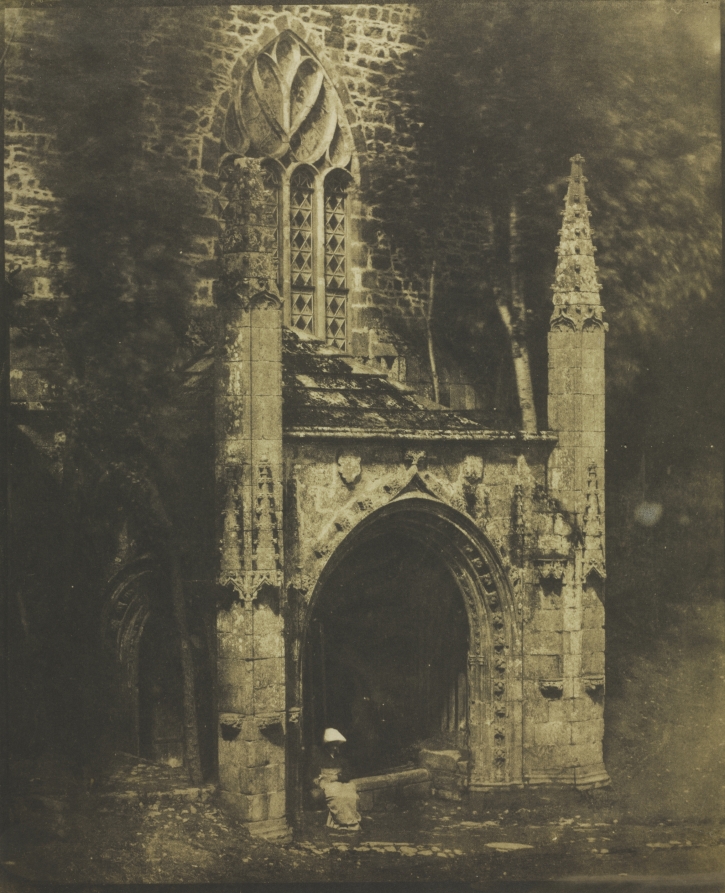
Geometric Integrity and the Architecture of Absence
The Fountain of Notre-Dame at Saint-Brieuc, Brittany, presents a study in restrained verticality and the poetics of negative space. Its primary geometric language is that of the **pointed arch**—a structure that channels gravitational force downward while simultaneously directing the eye upward. This is not the flamboyant Gothic of cathedrals; it is a Breton vernacular, weathered by Atlantic salt and time. The fountain’s silhouette is defined by a central pinnacle flanked by two smaller, identical niches, creating a **tripartite rhythm** that is both symmetrical and ascetic. The stone is not polished; it retains a granular, tactile surface that absorbs light rather than reflecting it. For the 2026 executive silhouette, this translates into a **Minimalist** approach that rejects superfluous volume. The fountain’s structural integrity lies in its **voids**—the empty niches, the shadowed recesses beneath the arch. These are not absences; they are functional spaces that define the form. Analogously, the Addison silhouette must be carved from the inside out. The garment’s geometry is not imposed by fabric but by the **negative space** it creates around the body. A tailored coat, for instance, should feature a **hollowed armhole** and a **suspended shoulder** that floats away from the collarbone, mimicking the fountain’s arch. The back panel should be cut with a **central seam** that echoes the pinnacle’s spine, creating a subtle, vertical tension.Structural Poetics: The Dialectic of Stone and Void
The fountain’s materiality—weathered granite—informs a **structural poetics** of permanence and erosion. The stone is both rigid and porous, a paradox that the 2026 silhouette must embody. The fabric of choice is a **double-faced wool** in **Slate**, a color that captures the fountain’s grey-blue patina under a Breton sky. This wool is not soft; it has a **crisp hand** and a **dense weave** that holds its shape like carved stone. The garment’s construction should employ **fused interfacings** and **internal stay tapes** to maintain architectural lines without visible stitching—a technique borrowed from tailoring’s highest echelon. The fountain’s **pointed arch** is a structural motif that recurs in the silhouette’s **lapel notch** and **pocket welt**. The lapel should be cut with a sharp, angular peak that mirrors the arch’s apex, while the pocket welt is set at a precise 15-degree angle, echoing the fountain’s buttressed sides. This is not decoration; it is **structural logic**. Each line serves to channel the eye upward, elongating the torso and creating a **vertical axis** that dominates the composition. The hemline is **severe and straight**, terminating at the mid-calf to avoid any horizontal interruption. The fountain’s base is a simple plinth; the garment’s hem is its equivalent—a clean, unadorned termination.Urban Materiality: The Texture of Time
Urban materiality for this silhouette is defined by **patina** and **erosion**. The fountain’s surface is not smooth; it is marked by lichen, salt spray, and centuries of rain. The Slate wool must be treated to mimic this **textural depth**. A **sanded finish** or **napped surface** that catches light unevenly, creating a visual analogue to weathered stone. The lining, visible only at the collar and cuff, should be a **raw silk** in **Ivory**—a nod to the fountain’s limestone mortar, which bleeds white against the grey granite. The garment’s **hardware**—buttons, zippers, and snaps—must be **oxidized brass** or **matte blackened steel**. These are not polished; they are **tarnished**, as if exposed to the same Atlantic air. The buttons are **flat and circular**, mimicking the fountain’s **boss stones** that anchor the arch’s keystone. Each button is set into a **bound buttonhole** that is cut with surgical precision, leaving no frayed edge. The zipper, if used, is a **concealed, two-way** system that disappears into the seam, preserving the garment’s monolithic front.The Silhouette as a Philosophical Vessel
The fountain’s **voids**—the empty niches—are its most potent feature. They are not filled with statues; they are **reservoirs of absence**. This concept is translated into the silhouette through **pockets** that are not merely functional but **sculptural**. The side pockets are **jetted and welted**, cut into the fabric as negative spaces. They are deep enough to hold a hand but not a phone, forcing the wearer to engage with the garment’s **emptiness**. The interior is lined with a **pocket square** in **Silver**—a metallic thread woven into the lining that catches light only when the garment is opened, revealing a hidden luminosity. The **back vent** is a **single, center vent** that opens like a **gothic lancet window**. It is not sewn shut; it is **weighted** with a small chain of oxidized brass, allowing it to fall open naturally, revealing the **Ivory** lining. This vent is the garment’s **arch**, its structural release point. When the wearer moves, the vent opens and closes like a breathing stone, creating a **dynamic silhouette** that is both rigid and fluid.Conclusion: The Eternal in the Everyday
The Fountain of Notre-Dame at Saint-Brieuc is not a monument to transcendence; it is a **utilitarian structure** that channels water for a community. Its beauty lies in its **function**—the way it serves while remaining silent. The 2026 executive silhouette, in **Slate** and **Minimalist** form, is its sartorial equivalent. It does not shout; it **endures**. It is a garment for the urban philosopher who understands that true presence is found in absence, that the void is not empty but **full of potential**. The silhouette is a vessel for the body, a **temporary container** that, like the fountain, holds the everyday while pointing toward the eternal. This is not fashion; it is **structural poetry**—a cold, sophisticated answer to the question of how to exist in a world of constant erosion.
Technical Insight
Technical Insight: Translating Slate palettes into Minimalist silhouettes for the modern metropolis.