Urban Form: The Grotto of Posillipo
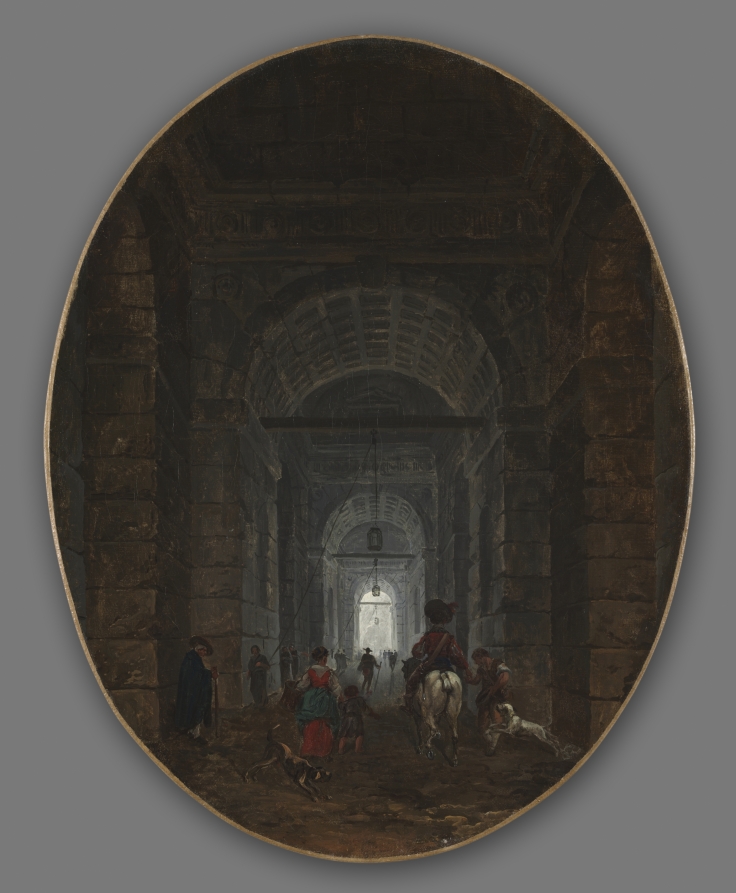
Structural Poetics: The Grotto of Posillipo as a Blueprint for the 2026 Executive Silhouette
The Grotto of Posillipo—a subterranean passage carved through tuff rock in Naples—is not merely a geological formation; it is a manifesto of negative space. For Addison Fashion’s 2026 Urban Silhouette Research, this site offers a profound lesson in geometric integrity. The grotto’s raw, excavated walls, its play of shadow and mineral light, and its function as a threshold between the urban chaos of Naples and the serene Gulf of Pozzuoli, all converge into a design language of minimalist luxury. The internal DNA of this analysis draws from the juxtaposition of two ancient artifacts: the vessel depicting The Death of Socrates and the stele of Sakyamuni and Bodhisattvas. Both confront the ultimate—death and enlightenment—through form and color, yet they diverge in their treatment of materiality and temporality. For the executive silhouette, this tension is resolved into a singular aesthetic: Slate, the color of volcanic stone, of mineral pigment aged into permanence.
Geometric Integrity: From the Grotto to the Garment
The Grotto of Posillipo is defined by its architectural subtraction. The rock is not built upon; it is hollowed out. This principle of carving from mass is the foundation of the 2026 executive silhouette. The garment must not drape; it must excavate. Shoulder lines are not padded but sculpted from the fabric itself, as if the cloth were a monolithic block from which the body emerges. The vessel of Socrates’ death exemplifies this: the philosopher’s form is reduced to geometric planes—a straight back, a rigid arm, a cup held at a precise angle. The silhouette is heroic stasis, a frozen moment of rational transcendence. In contrast, the stele of Sakyamuni dissolves the body into flowing, undulating lines—a liquid geometry that suggests the infinite. The 2026 executive silhouette synthesizes both: a jacket that is sharp at the shoulders (Socratic defiance) but fluid at the hem (Buddhist release). The result is a garment that stands as a monument to the wearer’s agency, yet yields to the urban environment’s constant motion.
The color Slate is not arbitrary. It is the hue of the grotto’s tuff, of the mineral pigments on the stele, of the dark wine in Socrates’ cup. Slate is neutrality with gravity. It absorbs light rather than reflecting it, creating a surface that is both opaque and deep. In the vessel, the dark background isolates Socrates’ pale form, emphasizing his isolation in the moment of death. In the stele, the slate-like blues and grays of the background allow the mineral reds and golds of the figures to vibrate with spiritual intensity. For the executive silhouette, Slate is the ground upon which the wearer’s presence is the figure. It is a color that does not compete but contains—a visual silence that amplifies the structural poetics of the cut.
Urban Materiality: Stone, Mineral, and the Body
The Grotto of Posillipo is a threshold space—neither fully natural nor fully artificial. It is a tunnel carved by human hands through living rock, connecting the city to the sea. This duality is essential to urban materiality. The 2026 executive silhouette must be architectural yet pliable, a second skin that is also a structure. The fabric should mimic the grotto’s texture: matte, dense, with a slight granularity. Think of a wool-cashmere blend that feels like dry stone, or a double-faced crepe that holds a crease like a chisel mark. The vessel’s surface is smooth but not polished—a matte finish that invites touch but resists glare. The stele’s mineral pigments are powdered rock, applied in layers that catch the light unevenly. The garment must do the same: a subtle iridescence woven into the Slate, like mica in tuff, visible only when the wearer moves through the urban canyon.
The structural poetics of the grotto also inform the silhouette’s negative space. The tunnel is defined by what is absent—the rock that was removed. In the garment, this translates to strategic cutouts and asymmetric closures. A jacket might have a single shoulder exposed, not for sensuality but for architectural tension, as if the fabric were a vault that has been partially unbuilt. The Socratic vessel uses negative space around the philosopher’s hand to emphasize his gesture toward the ideal. The stele uses empty space between the figures to suggest the void of nirvana. For the executive, negative space is power—a refusal to fill every inch, a confidence in what is left unsaid.
The Dialectic of Death and Enlightenment in Silhouette
The internal DNA of this research is a dialogue between two ultimate moments: Socrates’ rational suicide and Sakyamuni’s serene passing. The 2026 executive silhouette must embody both. From Socrates, it takes verticality and precision. The garment is long, unbelted, with a high armhole that forces the body into a posture of alert stillness. The collar is a sharp V, like the angle of a philosopher’s finger pointing upward. From Sakyamuni, it takes horizontal flow and asymmetry. The hem is not straight but cascading, like the folds of a robe that has settled into eternity. One sleeve might be elongated, trailing slightly, as if the wearer is already half-dissolved into the urban landscape.
The color Slate mediates this dialectic. It is the color of the stone that holds Socrates’ cup and the stone that bears the Buddha’s image. It is timeless—neither warm nor cold, neither bright nor dark. In the grotto, Slate is the color of the walls that have witnessed centuries of footsteps. In the garment, it is the color of executive authority stripped of ornament. The silhouette does not shout; it resonates. The wearer becomes a moving monument, a fragment of the grotto brought into the glass-and-steel city.
Conclusion: The Grotto as Garment
The Grotto of Posillipo is not a place to be seen; it is a place to pass through. The 2026 executive silhouette is likewise a transitional form—a garment that prepares the body for the threshold between the private self and the public arena. It is Minimalist in its reduction to essential lines, Slate in its mineral gravity. The geometric integrity of the grotto—its carved voids, its rough-hewn surfaces, its play of light and shadow—becomes the structural poetics of the garment. The vessel and the stele, Socrates and Sakyamuni, are not opposites but complementary forces in a single aesthetic: the urban silhouette as a form of resistance and release. The executive who wears this silhouette does not merely dress; they inhabit a philosophy of stone, space, and silence.