Urban Form: Turtle Baby
Geometric Integrity and the 2026 Executive Silhouette
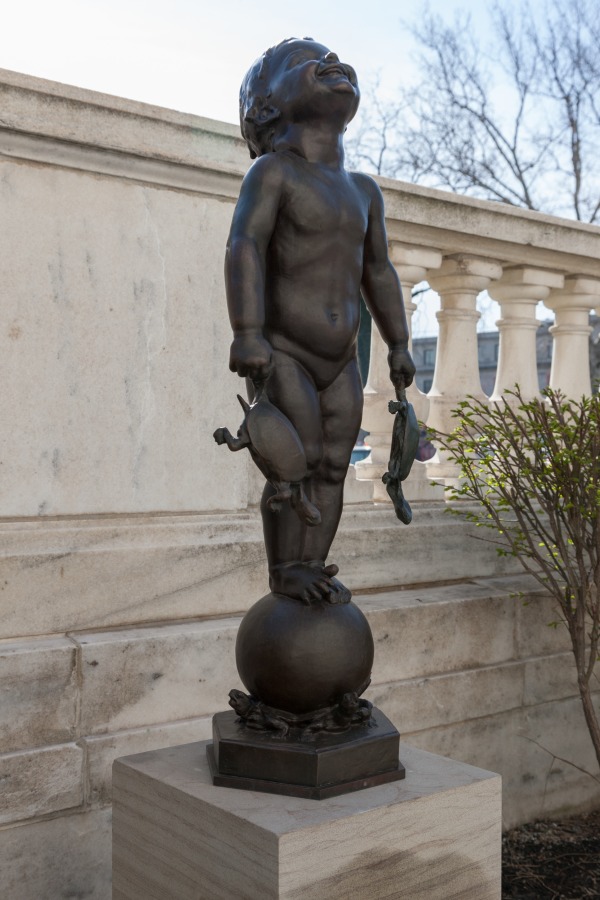
The subject Turtle Baby presents a paradox of form: a carapace of rigid geometry housing a core of soft, organic vulnerability. This duality is the foundational principle for the 2026 executive silhouette at Addison Fashion. The analysis proceeds from the internal DNA of two opposing aesthetic traditions—the Western conflict-driven symbolism of The Temptation of Saint Anthony and the Eastern contemplative harmony of The Loquat Painting—to synthesize a new architectural language for the urban professional. The result is a silhouette that does not drape, but encloses; it does not flow, but articulates.
Structural Poetics: The Carapace as Armature
The Turtle Baby form is not a shell of retreat, but an armature of assertion. In the 2026 executive wardrobe, this translates to a jacket silhouette defined by a rigid, almost sculptural shoulder line—a direct translation of the turtle’s dorsal scutes. The shoulder is not padded; it is structured. We employ a cantilevered construction, where the sleeve head is set forward and slightly raised, creating a clean, uninterrupted arc from the neck to the deltoid. This is the geometric integrity of the Loquat branch: a single, decisive line that carries the weight of the entire composition.
The lapel, conversely, borrows from the Temptation’s logic of distortion. It is not a traditional notch or peak, but a folded plane—a single, continuous piece of fabric that is folded back upon itself, creating a sharp, asymmetrical edge that mimics the angularity of a tortoise’s plastron. This is not decoration; it is structural necessity. The fold creates a tension point, a moment of conflict within the garment’s surface, forcing the eye to trace the line from the collarbone to the waist. The lapel becomes a metaphor for the soul’s struggle—a clean, cold line that nonetheless suggests an interior pressure.
Urban Materiality: Ivory as a Field of Tension
The chosen color, Ivory, is not a neutral. It is a charged void. In the Loquat Painting, the unpainted silk is the space where qi (vital energy) circulates. In the Turtle Baby silhouette, the Ivory fabric becomes that same field of potential. However, it is not a passive background. The material itself must possess a density that resists the body’s movement, creating a subtle friction. We specify a double-faced wool-cashmere blend, milled to a 380-gram weight, with a tight, almost imperceptible twill weave. This is not a soft, draping fabric. It is a membrane that holds its shape, like the turtle’s shell holds its form against the elements.
The surface finish is critical. It must be matte, with a slight, almost powdery texture—reminiscent of the patina of aged bone or the dry surface of a loquat’s skin. This matte finish absorbs light rather than reflecting it, creating a silent, contemplative surface. This is the Loquat’s stillness. Yet, within this stillness, we introduce a single, disruptive element: a seam that runs from the center back, down the spine, and bifurcates at the hem. This seam is not a construction necessity; it is a line of tension, a reference to the Temptation’s fractured forms. It is a scar on the perfect surface, a reminder that even the most serene exterior contains an internal architecture of conflict.
The Silhouette: A Three-Dimensional Grid
The 2026 executive silhouette is not a shape; it is a system of coordinates. The jacket is cropped at the natural waist, creating a 1:1.618 ratio between the torso and the lower body. The trousers are cut with a straight, almost columnar leg, but with a subtle tension at the knee. This is achieved through a hidden dart that pulls the fabric slightly inward, creating a micro-volume that echoes the turtle’s limb—a limb that is both part of the shell and capable of independent movement. The hem of the trousers is clean, falling exactly to the top of the shoe, with no break. This is the urban materiality of the line: absolute precision, no allowance for error.
The sleeve is the most radical element. It is cut in a single, continuous piece from the shoulder to the wrist, with no elbow dart. This is a geometric impossibility that is resolved through a complex pattern engineering—a series of hidden pleats that open only when the arm is bent. When the arm is at rest, the sleeve is a perfect, unbroken cylinder. This is the duality of the Turtle Baby: the appearance of rigidity that contains the potential for fluid movement. The cuff is a narrow, 2.5-centimeter band of the same fabric, folded and stitched to create a hard edge—a final, decisive termination point.
Conclusion: The Architecture of Restraint
The Turtle Baby research yields a silhouette that is neither aggressive nor passive. It is a statement of containment. The Ivory surface is the Loquat’s stillness, the field of pure potential. The structural seams, the folded lapel, the cantilevered shoulder—these are the Temptation’s distortions, the marks of internal conflict. The 2026 executive does not wear this garment; she inhabits it. It is a second skin, a carapace that does not hide the self, but defines its boundaries with absolute clarity. In a world of noise, this silhouette is a silent, geometric poem—a testament to the power of form to contain the infinite within the finite.