Urban Form: Christ at the Column
Structural Poetics: The Column as Architectural Axis
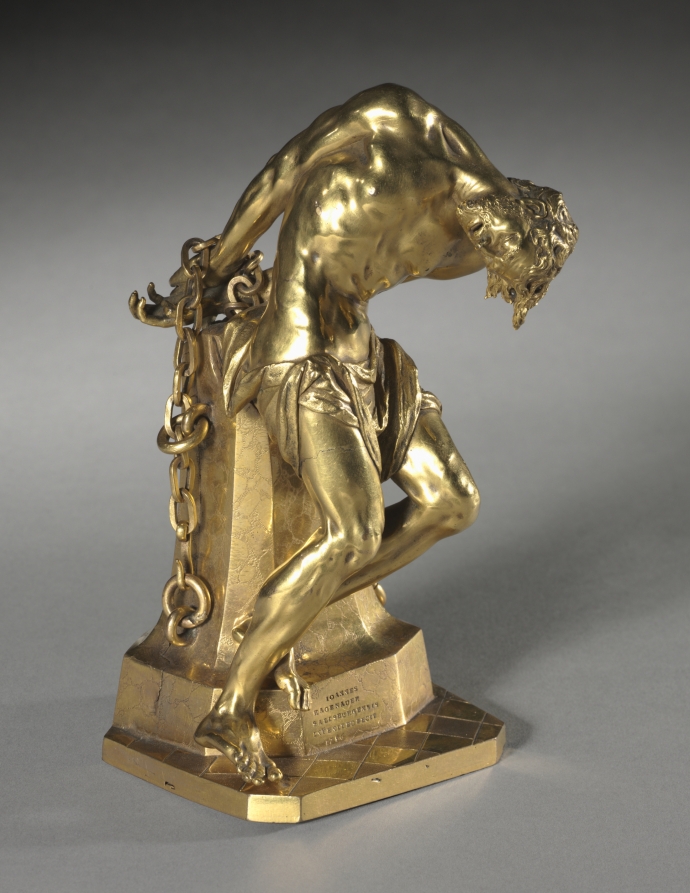
The subject, Christ at the Column, presents a definitive study in vertical compression and tensile release. The column itself is not a mere prop but the primary structural protagonist—a rigid, unyielding axis against which the figure’s form is both defined and deformed. In the context of the 2026 executive silhouette, this geometry translates directly into a Minimalist language of pure, unadorned lines. The column’s cylindrical precision, its lack of ornamentation, and its stark materiality serve as the archetype for a new urban uniform: a monolithic, columnar torso that prioritizes architectural integrity over organic fluidity.
The figure’s posture—bound, yet taut—creates a dynamic tension against this vertical axis. This is not a passive submission but a state of poised resistance. For the executive wardrobe, this translates into a silhouette that is structurally anchored yet viscerally charged. The shoulder line must be clean, unbroken, and slightly extended to mirror the column’s capital. The torso is elongated, a single, uninterrupted plane from clavicle to hem, eschewing any horizontal break that would disrupt the vertical flow. The fabric must behave like stone: it should drape with a weight that suggests permanence, yet possess a subtle, internal tension that hints at the body beneath—a body in a state of controlled, silent power.
Geometric Integrity: The Columnar Code
The artwork’s geometric integrity lies in its binary opposition: the perfect, cylindrical column versus the fractured, angular lines of the bound figure. This is not a harmonious composition but a dialectical one. The column provides the absolute datum—a vertical line of perfect, indifferent order. The figure’s arms, bound behind the column, create a series of sharp, diagonal vectors that cut across this order. The resulting composition is a study in compression: the figure is literally and metaphorically pressed against the geometric ideal.
For the 2026 silhouette, this translates into a Minimalist approach that is not about simplicity but about essential tension. The garment’s structure must be as unforgiving as the column. Seams are not decorative; they are load-bearing lines. A jacket’s lapel is not a flourish but a structural fold, a precise geometric plane that directs the eye upward. The waist is not cinched but implied through a subtle shift in the fabric’s fall, a shadow rather than a seam. The entire garment is a series of controlled planes—front, back, side—that intersect at precise, right-angled junctions. The silhouette is a monolithic block, a column of Onyx-dark fabric that absorbs light and defines space through its sheer, uncompromising presence.
Urban Materiality: The Coldness of Onyx
The Color is Onyx—not a simple black, but a deep, geological black that contains within it the memory of pressure and time. Onyx is a stone of absolute opacity and internal depth. It does not reflect light; it absorbs it, creating a void that is both a surface and a space. This is the materiality of the 2026 executive: a presence that is felt through absence, a power that is expressed through silence.
The urban context demands a material that can withstand the cold, hard geometries of glass, steel, and concrete. The fabric must be a technical analogue to the column’s stone. We propose a double-faced, compacted wool with a ceramic-infused finish. This material offers the visual weight of stone with the functional requirements of movement. Its surface is matte, almost chalky, absorbing ambient light to create a silhouette that is sculptural rather than reflective. The hand-feel is cool, dense, and unyielding—a tactile echo of the column’s surface.
The structural poetics of this materiality lie in its resistance. The fabric does not drape; it stands. It holds a crease with the precision of a chiseled edge. It does not wrinkle; it folds into sharp, deliberate planes. This is a fabric that remembers its form, much like the column remembers its verticality. In the urban landscape, this garment becomes a mobile architecture, a personal column that the executive carries through the city. It is a statement of immovable presence in a world of constant flux.
The Dialectic of Binding and Release
The most compelling aspect of Christ at the Column is the rope—the agent of binding that creates the figure’s tension. In the 2026 silhouette, this translates into a hidden infrastructure of restraint. The garment’s internal structure—its canvas, its fusing, its boning—acts as the rope, holding the outer fabric in a state of controlled tension. The external appearance is one of serene, monolithic calm, but the internal structure is a network of precise, load-bearing points.
This is the urban poetics of the design: the visible is Minimalist, the invisible is complex. The garment’s geometric integrity is not a natural state but an achieved one, a product of internal discipline and external pressure. The executive wears not just a garment but a system of order, a column that both supports and constrains. The silhouette is a dialectic between the freedom of the body and the rigidity of the structure, a tension that is resolved in the perfect, static form of the column itself.
In conclusion, the 2026 executive silhouette, derived from Christ at the Column, is a Minimalist study in vertical compression and material opacity. It is a silhouette of architectural precision, where the body is a column and the garment is its stone. The Onyx palette and the ceramic-infused wool provide the urban materiality necessary for this vision—a vision of cold, sophisticated power that is both ancient and resolutely contemporary.