Urban Form: Jar
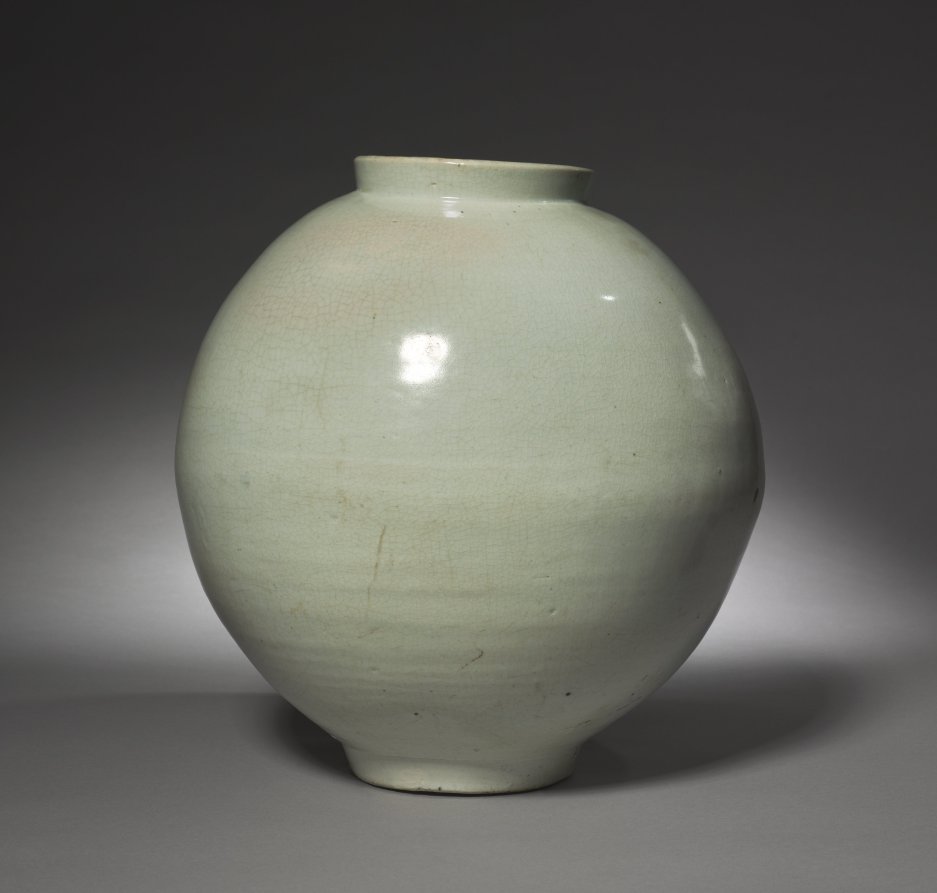
Technical Analysis of the Jar as a Form-Color Matrix for Urban Silhouette Research
I. Form Deconstruction: The Jar as a Dialectical Container
The jar, in its most distilled architectural essence, is a study in containment and release. It is a volume defined by its negative space—the interior void—and its exterior boundary, which negotiates between the gravitational pull of the earth and the expansive potential of the air. For the 2026 NYC executive, this form translates into a silhouette that is neither rigidly structured nor formlessly draped, but rather fluidly volumetric. The jar’s archetypal profile—a broad shoulder, a tapered base, and a narrow neck—offers a precise analog for the modern urban wardrobe: a garment that holds its shape while allowing for internal movement, a vessel for the body that does not constrict but rather frames presence.
Drawing from the dualistic aesthetic of Ingres’s *Oedipus and the Sphinx* and the Ming dynasty *Landscape Inscription Plate*, the jar becomes a site of philosophical tension. Ingres’s painting is a drama of triangular stability—the hero’s torso, the sphinx’s claw, the dark abyss—a composition that arrests time in a moment of confrontation. The jar, in contrast, is a circular, cyclical form, echoing the Ming plate’s “圆满” (yuanman) or completeness. The jar’s shoulder is the sphinx’s riddle: a point of maximal tension where the curve must decide whether to expand outward or collapse inward. In our silhouette research, this translates to a structured shoulder line that does not pad or exaggerate but rather defines the upper quadrant of the body with a clean, architectural arc. The taper to the hem is the Oedipal resolution—the narrowing of possibility into a singular, decisive line. Yet the jar’s interior void, like the Ming plate’s “留白” (liubai, or reserved blankness), is where the wearer’s agency resides. The garment does not answer the riddle; it contains the question.
This form is inherently fluid. It rejects the sharp, angular cuts of traditional power dressing (the boardroom blazer, the pencil skirt) and instead embraces a continuous, unbroken line from shoulder to hem. The jar’s silhouette is a single, uninterrupted curve, which in garment construction requires draping over cutting. The fabric must be manipulated to follow the body’s natural contours without darts or seams that disrupt the flow. This is a minimalist approach to maximal effect: the fewer the interruptions, the more the form becomes a statement of contained energy. For the executive, this means a coat or dress that moves with the body as a single unit, not as a collection of separate panels. The silhouette is self-possessed, much like Oedipus’s gaze—steady, unblinking, and aware of the abyss it stands before.
II. Color as Chromatic Void: Slate as the Urban Answer
Color, in this analysis, is not mere pigment but a chromatic field that defines the form’s relationship to light and space. The selection of Slate is deliberate. It is a color that exists in the liminal zone between black and gray, between the absolute void of Onyx and the sterile neutrality of Silver. Slate is the color of the urban horizon at dusk—the moment when the sky meets the buildings in a wash of muted, absorbing light. It is the color of the Ming plate’s “青花” (qinghua, blue-and-white) after centuries of oxidation, where the cobalt has softened into a philosophical gray-blue that does not assert but rather receives.
In the context of the jar silhouette, Slate functions as a negative color. It does not reflect; it absorbs. This aligns with the jar’s interior void—the space that holds the wearer’s identity without imposing its own. Slate is the color of the unanswered question, the riddle that remains suspended in the air between Oedipus and the Sphinx. It is not the black of finality (death, the abyss) nor the white of purity (the blank canvas, the untouched surface). It is the gray of process, of the moment before resolution. For the 2026 executive, this is a strategic chromatic choice. It signals authority without aggression, depth without opacity. It is the color of quiet power—the kind that does not need to announce itself because it is already present.
The technical application of Slate requires a matte finish. Any sheen would introduce a reflective quality that disrupts the color’s absorptive nature. The fabric must be heavy enough to hold the jar’s volume but soft enough to drape without stiffness. Think of a double-faced wool crepe or a densely woven cashmere—materials that have body without rigidity. The color must be evenly saturated, with no variegation, to maintain the form’s integrity as a single, unbroken field. This is the chromatic equivalent of the Ming plate’s glaze: a surface that appears uniform but contains within it the depth of the landscape it depicts.
III. Synthesis: The Jar as an Executive Silhouette for 2026
The jar silhouette, rendered in Slate, is not a garment for the heroic individual of Ingres’s painting—the one who confronts the sphinx and answers the riddle. Nor is it a garment for the contemplative sage of the Ming plate, who dissolves into the landscape. It is a garment for the urban navigator, the executive who moves through the city as a container of contradictions: the tension between action and reflection, between the linear demands of the boardroom and the cyclical rhythms of the natural world. The jar holds both the question and the answer within its volume, without needing to resolve them.
In practical terms, this translates to a long, fluid coat with a defined shoulder and a gentle taper to the hem, falling just below the knee. The neckline is a soft, rolled collar that echoes the jar’s rim—an opening that invites the gaze inward without exposing. The sleeves are set in a continuous curve from the shoulder, eliminating the traditional armhole seam to preserve the silhouette’s unbroken line. The fabric is a slate-colored, matte-finish wool-cashmere blend, weighing approximately 380 grams per square meter—heavy enough to hold the form, light enough to drape. The interior is unlined, allowing the fabric to breathe and move with the body, the void within the jar.
This is a silhouette that does not perform. It does not gesture toward power through padding or structure. It is power, contained and directed. The jar form, in its simplicity, is a statement of confidence—the confidence to be a vessel, to hold space, to allow the wearer’s presence to fill the void. In the 2026 NYC executive wardrobe, this is the foundational piece: the garment that underlies all others, the constant in a wardrobe of variables. It is the urban answer to the eternal riddle of how to dress for a world that demands both presence and permeability.