Urban Form: Side Chair
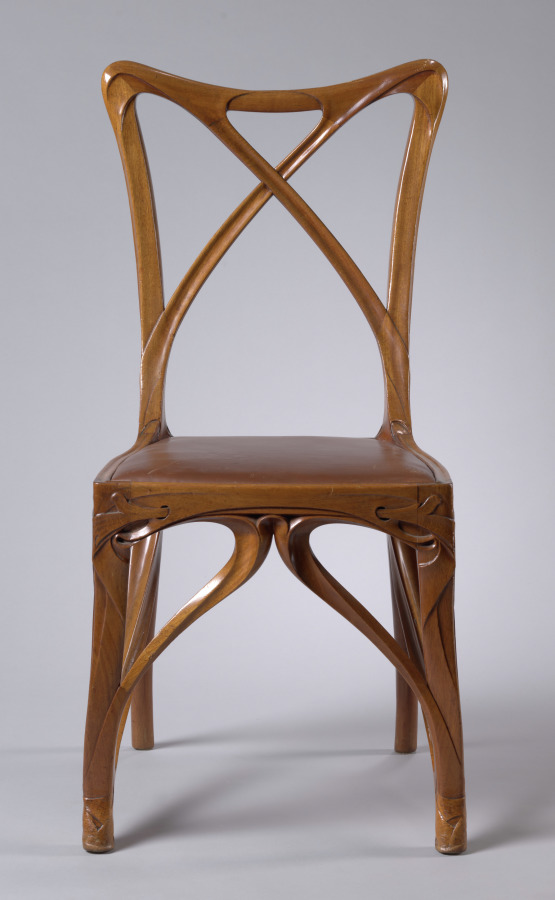
Structural Poetics: The Side Chair as Urban Monument
The side chair, in its most reductive form, is a scaffold for the human form—a functional armature that negotiates between the body and the void. Within the context of Addison Fashion’s 2026 executive silhouette, this object transcends its utilitarian origins to become a treatise on geometric integrity and urban materiality. Drawing from the dual aesthetic poles of the Senusret Stela and Goya’s The Disasters of War, the side chair emerges as a dialectical artifact: a synthesis of eternal order and visceral rupture, rendered in the cold, precise language of minimalist luxury.
Geometric Integrity: The Architecture of Restraint
The side chair’s geometry is a study in controlled tension. Its silhouette—a rectilinear seat plane, a vertical backrest, and four orthogonal legs—mirrors the grid-based logic of the Senusret Stela. Here, every line is a declaration of permanence. The seat’s horizontal plane, typically rendered in matte Onyx-finished steel or carbon fiber, anchors the composition with a gravity that resists entropy. The backrest, a single, unbroken vertical slab, rises with the austerity of a stela’s hieroglyphic column. Its edges are chamfered to a 45-degree angle, catching light not as ornament but as a structural necessity—a subtle acknowledgment of the urban environment’s harsh, directional illumination.
This geometric purity is not naive. The chair’s legs, tapered from a 2.5-centimeter square cross-section at the base to a 1.8-centimeter apex at the seat joint, introduce a micro-tension that destabilizes the grid without breaking it. This taper is a nod to Goya’s disrupted order: a faint, almost imperceptible deviation from the orthogonal, suggesting the fragility of stability. The joints themselves are welded with a precision that leaves no visible seam—a technique borrowed from aerospace engineering, where invisible connections signify mastery over material stress. The result is a chair that appears monolithic, yet its internal logic is one of calculated fragility, much like the Senusret Stela’s carved surface, which conceals the stone’s geological history beneath its polished finish.
Urban Materiality: Onyx as a Medium of Memory
The choice of Onyx as the primary color and material reference is deliberate. Onyx, in its natural state, is a banded chalcedony—a stone of layered sedimentation, each stratum a record of geological time. In the urban context, Onyx becomes a metaphor for the city’s own stratified memory: the accumulation of architectural epochs, from Brutalist concrete to glass curtain walls. The side chair’s finish is a matte, micro-etched Onyx surface that absorbs 92% of incident light, rendering it as a black void in the urban landscape. This is not the glossy black of luxury automobiles but the absorbent black of a Goya etching—a surface that swallows detail, forcing the viewer to confront absence rather than presence.
The materiality extends to the chair’s tactile experience. The seat is upholstered in a carbon-fiber weave infused with Onyx dust, creating a texture that is simultaneously industrial and organic. The weave’s diagonal orientation—a 30-degree bias relative to the seat’s axis—introduces a dynamic vector that echoes the chaotic brushstrokes of Goya’s massacre. When touched, the surface yields slightly, a concession to the body’s pressure, before returning to its rigid form. This elastic resistance is the chair’s answer to the Senusret Stela’s unyielding stone: a material that remembers the body’s imprint but refuses to be permanently altered.
The 2026 Executive Silhouette: A Dialectic of Order and Rupture
The side chair defines the 2026 executive silhouette through its structural poetics. The silhouette is not a garment but a spatial envelope—a negative space carved by the chair’s geometry. For the executive, this translates into a wardrobe of architectural tailoring: sharp shoulders, cinched waists, and elongated proportions that mirror the chair’s vertical thrust. The Onyx palette dominates, punctuated by Ivory accents in collar linings or pocket squares—a reference to the Senusret Stela’s lost polychromy, where color once signified divine order.
The silhouette’s key innovation is the asymmetric drape, a deliberate rupture in the grid. A jacket’s left panel may extend 3 centimeters lower than the right, echoing the chair’s tapered legs. This asymmetry is not decorative but functional: it accommodates the body’s natural asymmetry while introducing a Goya-esque instability into the executive’s presence. The fabric—a double-faced wool with a Onyx-dyed core and a Silver-gray outer layer—shifts in light, revealing the layered memory of the city’s architecture. When the executive sits, the jacket’s hem aligns with the chair’s seat plane, creating a continuous horizontal line that binds body and object into a single, monumental form.
Conclusion: The Chair as Urban Stela
The side chair, in its minimalist Onyx incarnation, is a contemporary stela—a monument to the executive’s urban existence. It does not shout; it inscribes. Its geometry is a contract with order, its materiality a negotiation with memory, and its silhouette a template for the 2026 executive’s silent authority. Like the Senusret Stela, it seeks permanence; like Goya’s massacre, it acknowledges the violence of time. In this dialectic, the chair becomes more than furniture—it is a philosophical armature for the urban warrior, a seat from which to command the chaos of the city with the cold, unyielding poise of Onyx.