Urban Form: Courtyard, Alhambra
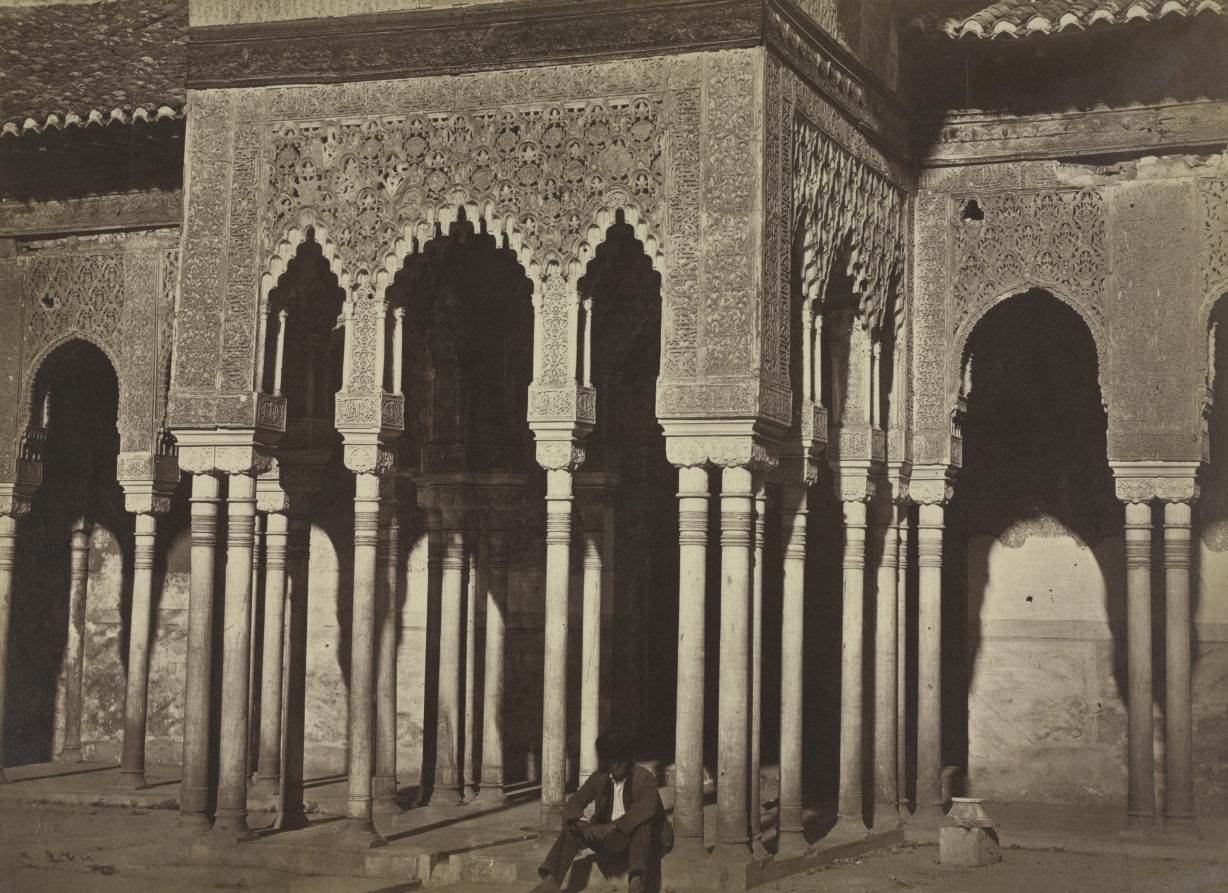
Structural Poetics of the Enclosed Void: The Alhambra Courtyard as Urban Silhouette
The Alhambra’s Courtyard of the Lions is not a space of occupation but of negative volume. Its arcaded perimeter, the slender columns, the central fountain—these are not decorative elements but structural parentheses that define an absence. For the 2026 executive silhouette, this courtyard offers a definitive grammar: the body is not clothed to be seen, but to be enclosed within a portable architecture. The silhouette becomes a vessel, a cubic void that the wearer inhabits, much like the courtyard frames the sky.
Geometric Integrity: The Column and the Void
The courtyard’s geometry is one of repetition and interval. Each column is identical, yet the space between them—the negative interval—is where the architectural poetry resides. In garment construction, this translates to a rigid, unbroken outer shell that defines a precise internal volume. The shoulder line must be sharp, almost architectural, as if carved from a single block of slate. The sleeve is not an appendage but a cantilevered extension of the torso, maintaining a consistent distance from the body. The result is a silhouette that is monolithic yet hollow—a walking courtyard.
The central fountain, with its twelve lions, is a point of stillness. In the executive silhouette, this corresponds to the neckline and collar structure. A high, standing collar—neither soft nor draped—acts as the fountain’s basin, a fixed point from which the rest of the volume radiates. The fabric must be self-supporting, a dense wool or a structured double-faced cashmere, capable of holding its own geometry without internal boning. The material is the structure; there is no hidden armature.
Urban Materiality: Slate as a Metaphor for Light Absorption
The color Slate is not a neutral. It is the color of water in shadow, of the Alhambra’s marble after rain. It absorbs light rather than reflecting it, creating a surface that is matte, dense, and volumetric. For urban environments, this materiality is essential. The executive moves through glass-and-steel canyons; a Slate garment does not compete with the city’s reflections. Instead, it becomes a dark, solid mass—a piece of the city’s own geology. The fabric must have a dry hand, a slight crispness that suggests paper or stone, not skin. It is a barrier, a second epidermis that is impermeable to the gaze.
This aligns with the internal DNA of the “Udonge” and the medieval chest. The Slate garment is the “closed chest” of the body. Its interior is invisible, a private space that the wearer alone knows. The exterior is a sealed surface, a monolith that invites no touch, only contemplation. The garment’s value lies not in its decoration but in its refusal to reveal. It is the “优昙钵花” that never blooms—a promise of presence that is never fulfilled, a silhouette that is always about to speak but remains silent.
The 2026 Executive Silhouette: A Cubic Volume
The definitive form is a long, straight coat with a dropped shoulder and a minimal armhole. The length falls to the mid-calf, creating a vertical block that elongates without clinging. The waist is not defined; the silhouette is a rectangle from shoulder to hem. Pockets are hidden in the side seams, invisible to the eye. The closure is a single, hidden button at the sternum—a point of tension that holds the entire volume closed. When fastened, the coat becomes a courtyard wall; when open, it reveals only a sliver of the interior—a glimpse of the “inner darkness” that is the wearer’s own space.
This is not a garment for movement in the traditional sense. It is a garment for stillness within motion. The executive who wears it does not walk; they process. The fabric’s weight ensures that the silhouette does not flutter or shift. It remains a constant, geometric shape, a mobile architecture that defines the space around the body as precisely as the Alhambra’s arcades define the courtyard.
Conclusion: The Silhouette as Sacred Vessel
Just as the “Udonge” plaque is a material signifier of an immaterial flower, and the medieval chest is a container for an unseen interior, the 2026 executive silhouette is a vessel for the self. It does not express personality; it houses presence. The Slate color and the Minimalist category are not choices of taste but of necessity. They are the only means by which the garment can achieve the geometric purity of the Alhambra’s courtyard—a space that is defined not by what it contains, but by the precision of its emptiness. The executive silhouette is, in the end, a portable void, a piece of sacred architecture worn against the city’s chaos.