Urban Form: Carved Bowl
Geometric Integrity and the Architecture of Absence
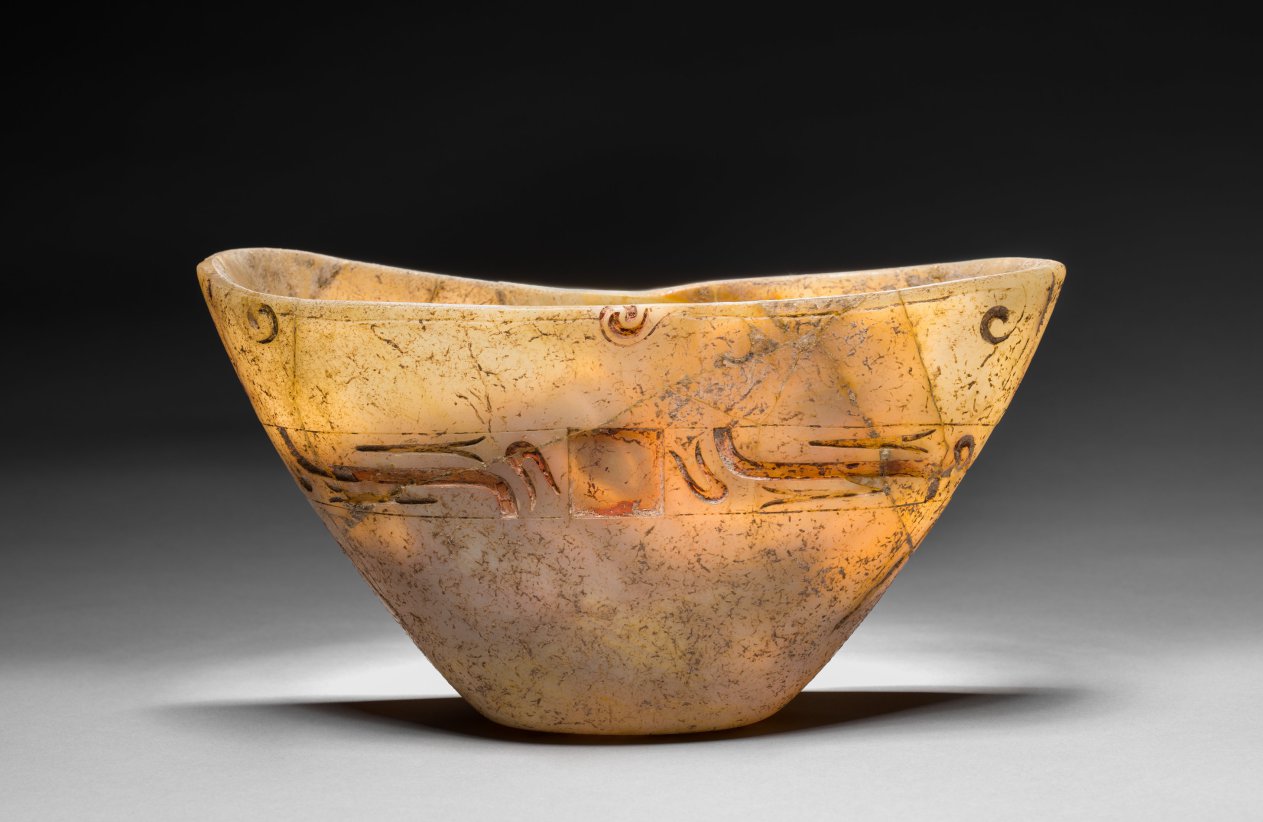
The Carved Bowl, as interpreted through the lens of the Udumbara Flowers plaque and the Cup and Stand vessel, presents a radical thesis for the 2026 executive silhouette. Its geometric integrity is not found in additive complexity, but in a subtractive, almost surgical, precision. The bowl’s form is a study in negative space—a hollow volume defined by its boundaries, much like the porcelain cup’s “capacity for the void.” The core structural principle is the suspension of mass. The bowl’s walls, ideally rendered in a material like matte-finished ceramic or a densely woven, unbleached linen, must appear to hold their shape through internal tension, not external thickness. The lip is a critical node: it should be a clean, uninflected circle, a perfect horizon line that separates the interior void from the external world. This is not a vessel for holding; it is a vessel for defining emptiness.
The plaque’s carved wood provides the textural counterpoint. The “Udumbara Flowers” are not depicted as literal blooms but as a trompe-l’œil of geological time. The grain of the wood is the primary geometry, with the carving serving only to amplify its natural flow. For the 2026 silhouette, this translates into a fabric that behaves like a topographical map. A double-faced wool crepe, for instance, could be laser-cut or bonded to create a subtle, undulating surface that mimics the plaque’s “layered petals” without any overt floral motif. The geometry is latent, revealed only by light and movement. The executive’s jacket, therefore, is not a flat plane but a relief sculpture—a landscape of micro-folds and shadow lines that speak of a process, not a pattern.
Structural Poetics: From Sacred Vessel to Urban Armor
The dialogue between the plaque’s “transient” carving and the cup’s “eternal” stillness creates a unique structural poetics. The Carved Bowl’s silhouette must embody this paradox. The shoulder of a coat, for example, should be constructed with a floating, cantilevered structure—a seam that appears to hover, unsupported, like the cup’s rim “gently closed like palms in prayer.” This is achieved through internal boning or a hidden, rigid canvas that is not stitched to the outer shell, allowing the fabric to drape with a ghost-like independence. The sleeve head becomes a structural event, a point where the garment’s materiality is both asserted and denied.
The “Cup and Stand” informs the lower half of the silhouette. The wide, stable base of the stand translates into a trouser or skirt that is voluminous yet anchored. A wide-leg trouser in a heavy, fluid wool gabardine, cut with a deep, inverted pleat at the front, creates a column of air. The hem should be weighted, perhaps with a hidden chain or a dense, raw edge, to ensure it falls with the “gravity of a lotus pedestal.” The waistband is the critical fulcrum: a clean, unadorned band that cinches the volume, creating a sharp transition from the torso’s structured void to the leg’s grounded mass. This is the urban materiality of ritual—a garment that performs the act of standing still with immense, quiet power.
Materiality as a Manifesto: Ivory and the Urban Void
The chosen color, Ivory, is not a neutral. It is a material argument. It is the color of the cup’s “egg-shell thin” porcelain, of aged bone, of the faint, luminous glow of a temple wall at dusk. In the urban context, Ivory is a radical act of refusal—a rejection of the city’s chromatic noise. It is a color that absorbs light rather than reflecting it, creating a soft, volumetric presence that is both assertive and recessive. For the Carved Bowl silhouette, Ivory is the only logical choice. It allows the garment to function as a mobile void, a pocket of stillness in the relentless visual cacophony of the metropolis.
The materiality must be tactile and auratic. A double-faced cashmere in a matte, almost chalky finish would echo the cup’s “warm, jade-like glaze.” The surface should be uninflected—no sheen, no pattern, no weave visible to the naked eye. This is a fabric that exists to be felt, not seen. It is the urban equivalent of the plaque’s worn, lacquered wood—a surface that has been refined to the point of anonymity, where the material’s own history is the only decoration. The seams must be felled and invisible, the closures hidden. The garment should appear to have been carved from a single block of light.
Urban Materiality: The Executive as a Temple of Stillness
The 2026 executive silhouette, as defined by the Carved Bowl, is not about movement. It is about presence. The garment’s geometry is designed to create a force field of calm. The jacket’s shoulder, with its floating construction, should not move with the body; it should remain a static, architectural element. The trousers, with their weighted hem, should not flutter; they should fall in a single, unbroken line. The entire ensemble is a monument to the act of standing—a secular ritual of composure.
This is the ultimate expression of minimalist luxury: the complete negation of the decorative in favor of the structural. The Carved Bowl’s “self-effacing materiality” is the blueprint. The garment does not seek to adorn the body; it seeks to frame the void that the body occupies. The executive wearing this silhouette is not a person in a suit; they are a living sculpture, a vessel for the sacred act of decision-making. The “Udumbara Flowers” are not on the fabric; they are the ephemeral moment of clarity that the garment’s stillness allows to occur. The “Cup and Stand” is not a shape; it is the capacity for that clarity.
In conclusion, the Carved Bowl research dictates a silhouette of extreme, almost monastic, restraint. It is a silhouette that speaks of power through absence, of luxury through denial, and of presence through stillness. The Ivory palette, the Minimalist category, and the structural poetics of the void converge to create a uniform for the executive who understands that the most profound statement is the one left unspoken. The garment is not worn; it is inhabited. It is a portable temple, a carved bowl of light, holding the quiet, potent emptiness from which all decisive action emerges.