Urban Form: Hunters Near Ruins
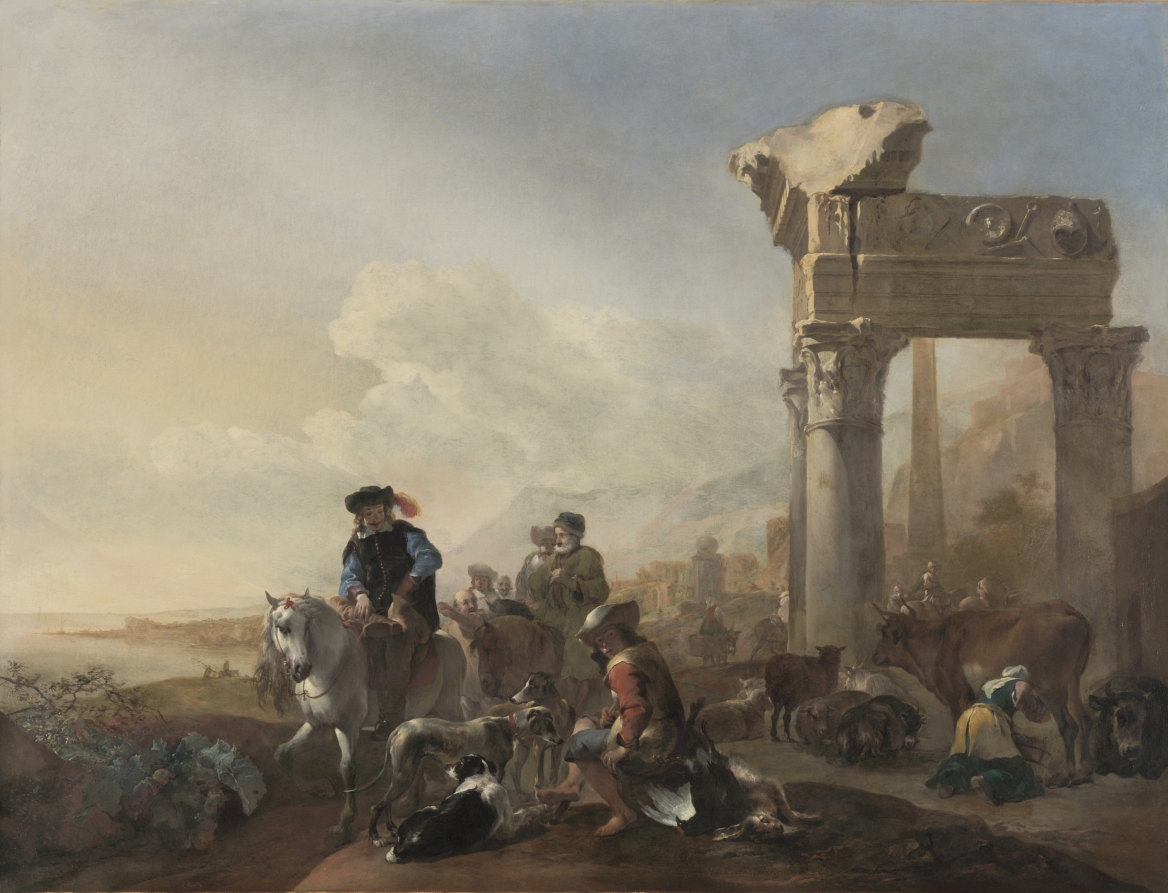
Structural Poetics: The Dialectic of Tension and Stillness
The urban silhouette for 2026, as derived from the internal DNA of Hunters Near Ruins, is a study in architectural dualism. The two artworks—the Western Temptation of Saint Anthony and the Eastern Loquat Branch—are not merely references; they are structural equations. The former provides the tectonic compression of conflict, the latter the volumetric release of serenity. For the executive wardrobe, this translates into a silhouette that is simultaneously armored and airy, a garment that protects the body while allowing the spirit to breathe.
The geometric integrity of this collection is defined by a minimalist shell that contains within it the memory of distortion. We are not replicating the grotesque forms of the Saint Anthony temptations. Instead, we are abstracting their kinetic energy into sharp, asymmetrical seams and angular shoulder lines. The shoulder becomes a cantilevered plane, a structural element that suggests both the weight of urban pressure and the defiance of it. This is not a soft, draped shoulder; it is a geometric assertion, a clean line that cuts through the chaos of the cityscape.
The Armature of the Temptation: Conflict as Construction
The Temptation of Saint Anthony presents a dense, claustrophobic geometry of overlapping, distorted forms. For the 2026 executive silhouette, we translate this into layered, modular construction. A single garment—a coat, a jacket—is no longer a monolithic piece. It is a system of interlocking panels. The seams are not hidden; they are exposed, structural lines that trace the body’s architecture. Think of a double-breasted blazer where the lapels are elongated into sharp, dagger-like points, and the waist is cinched not by a belt, but by a rigid, internal corset structure that is visible through the cut of the fabric.
The color palette is Onyx—a deep, absorbing black that is not flat but luminous with depth. This is the color of the urban night, of the shadows where the hunters lurk. It is a negative space that absorbs light, creating a void-like presence on the body. The fabric itself must have a matte, almost chalky finish—a wool-cashmere blend with a tight, felted surface that rejects gloss. This is not a reflective black; it is a consuming black, a material that holds its shape with military precision.
The Breath of the Loquat: Volume as Liberation
In stark contrast, the Loquat Branch introduces the principle of negative volume. The painting’s genius is its economy of form—the fruit and leaves are rendered with minimal strokes, surrounded by an infinite, breathing void. For the silhouette, this translates into strategic emptiness. A wide-leg trouser is not voluminous in a billowing, romantic sense. It is architecturally wide, falling from a high, structured waist in a clean, vertical column. The space between the fabric and the leg is the loquat’s void—a deliberate, meditative gap that allows the body to move without constraint.
The sleeve becomes a critical site of this dialectic. A kimono-inspired sleeve is cut with geometric precision, falling straight from the shoulder to the wrist, but with a hidden internal seam that allows for a subtle, wing-like lift. This is the hunter’s reach—a gesture that is both protective and predatory. The fabric, a heavy silk crepe in Onyx, has a dry, granular texture that catches the light only at the edges, creating a halo of shadow around the arm.
Urban Materiality: The Fabric as Ruin and Renewal
The materiality of this collection is rooted in the concept of the urban ruin. The hunters are not in a pristine landscape; they are navigating the decayed, fragmented architecture of the modern city. The fabrics must reflect this tension between decay and structure. We use double-faced wool that is felted on one side and raw on the other, allowing the garment to be worn inside out, revealing a frayed, unfinished edge that mimics the crumbling walls of a forgotten building.
Leather is used sparingly, as structural reinforcement. A collar is faced in matte calfskin, its edges unpainted, showing the natural grain. This is not a luxury finish; it is a functional armor. The buttons are not polished brass but oxidized iron, their surfaces pitted and dark, like hardware salvaged from a construction site. Every fastening is a point of tension, a reminder of the effort required to hold the silhouette together.
The Silhouette as a Spatial Statement
The final silhouette for the 2026 executive is a vertical, elongated column that is broken by a single, sharp horizontal line. This line—a seam at the hip, a pocket flap, a belt—is the hunter’s sightline. It is the moment of focus within the void. The jacket is cropped, ending at the natural waist, while the trouser extends to the floor, creating a continuous, unbroken line from hip to hem. This is the loquat’s branch—a single, unadorned stroke that carries the weight of the entire composition.
The neckline is a high, standing collar that frames the face like a ruined archway. It is not a comfort; it is a discipline. The wearer is forced to hold their head with architectural poise. The sleeves are cut to expose the wrist bone, a small, vulnerable point that is the only concession to the body’s fragility. This is the Saint Anthony’s temptation—the moment of exposure within the armor.
Conclusion: The Geometry of the Hunt
The Hunters Near Ruins silhouette is not a garment for the passive observer. It is a tool for navigation through the dense, conflicting geometries of the urban environment. It is minimalist in its reduction, but maximalist in its structural intelligence. The Onyx color is the absence of distraction, the pure potential of the void. The conflict of the Temptation and the stillness of the Loquat are resolved in a single, unified line—a line that is both weapon and shelter. This is the 2026 executive: a hunter who moves through the ruins of the old world, building a new one with every step.