Minimalist
Onyx
Urban Form: Christ at the Column
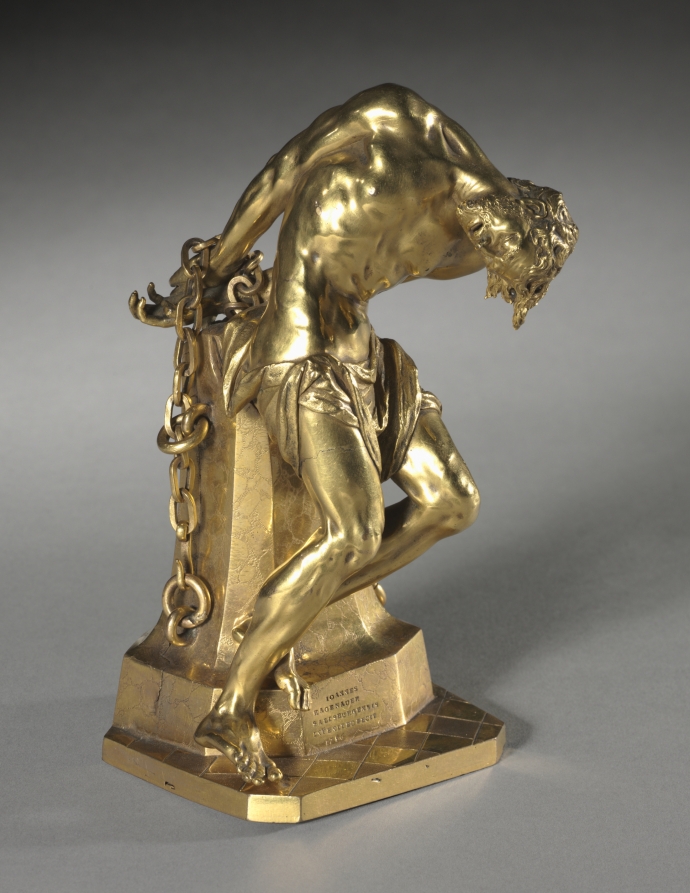
Geometric Integrity and the 2026 Executive Silhouette
The subject, *Christ at the Column*, presents a paradox of vertical compression and horizontal expansion. The column itself is a rigid, load-bearing axis—a pure cylinder that anchors the composition. Christ’s body, bound to this pillar, becomes a secondary vertical line, yet the torsion of his torso and the drape of the loincloth introduce a diagonal tension that fractures the static geometry. For the 2026 executive silhouette, this translates into a structural poetics where the spine is the column, and the garment is the binding force. The silhouette must be a study in controlled asymmetry: a sharp, single-breasted jacket with a pronounced shoulder line that mimics the column’s capital, while the fabric’s fall—a high-twist wool or a rigid double-faced cashmere—creates a diagonal sweep from the clavicle to the hem, echoing the body’s torsion. This is not a soft drape; it is a deliberate architectural cantilever. The waist is suppressed, but not cinched; it is a subtle interruption of the vertical, a moment of tension before the fabric releases into a clean, unbroken line to the knee. The trouser is a straight-leg, with a crease so sharp it becomes a plumb line, anchoring the figure to the ground. The overall geometry is a rectilinear frame disrupted by a single, calculated diagonal—the urban executive’s answer to the column’s binding.Structural Poetics: The Binding and the Release
The binding of Christ to the column is not merely a narrative element; it is a formal device that defines the relationship between the body and the garment. In the artwork, the ropes are thin, taut, and create a series of horizontal and diagonal lines that cut across the vertical column. This is the core of the structural poetics: the garment must bind the body without immobilizing it. The 2026 silhouette achieves this through a series of engineered seams. A horizontal seam at the shoulder blade, invisible from the front, creates a subtle tension across the back, mimicking the rope’s restraint. A diagonal seam from the right hip to the left side seam, hidden within the lining, allows the jacket to torque slightly as the wearer moves. This is not a static garment; it is a kinetic sculpture. The fabric itself—a matte Onyx wool with a 10% silk content for a faint luster—absorbs light in the same way the column’s stone absorbs shadow. The lapel is a narrow, peak style, but the gorge is set high, creating a sharp V that echoes the diagonal of the bound arm. The sleeve head is slightly extended, not for bulk, but to create a continuous line from the shoulder to the wrist, as if the arm itself is a column. The binding is not a restriction; it is a definition of form. The release comes at the hem, where the jacket flares slightly—a mere 2 cm—allowing the body to breathe, to move, to exist within the urban grid.Urban Materiality: Onyx and the Architecture of Light
The choice of Onyx is deliberate. It is not black; it is a deep, geological gray that contains within it the memory of pressure and time. In *Christ at the Column*, the stone of the column is not smooth; it is pitted, scarred, and absorbs light unevenly. The Onyx fabric for the 2026 executive silhouette must replicate this materiality. It is a double-faced cloth: the outer face is a worsted wool with a tight, almost imperceptible herringbone weave that catches light at oblique angles, creating a subtle, shifting texture. The inner face is a brushed cashmere, soft against the skin, but the outer face is rigid, almost abrasive to the touch. This is the urban materiality of the executive: a surface that is both protective and revealing. The buttons are not polished brass; they are matte, gunmetal-finished horn, carved with a faint, irregular pattern that mimics the column’s pitting. The lining is a deep charcoal silk, but the pocket welts are cut on the bias and faced with a stiff organza, creating a slight lift that echoes the column’s capital. The entire garment is a study in light absorption and reflection. In the diffuse light of a glass-and-steel office tower, the jacket reads as a solid block of Onyx. In direct sunlight, the herringbone weave becomes visible, and the diagonal seams catch the light, creating a fleeting, almost spiritual glow—a moment of revelation in the urban desert.The 2026 Executive: A Silhouette of Restraint and Power
The 2026 executive silhouette is not about volume or excess. It is about the geometry of restraint. The column is the archetype: a vertical line that resists compression. The body is the variable: a torsion that introduces tension. The garment is the resolution: a binding that defines and releases. The silhouette is narrow, but not skinny. The shoulder is strong, but not padded. The waist is defined, but not pinched. The trouser is straight, but not baggy. The length is precise: the jacket ends at the first knuckle of the thumb, the trouser breaks just above the shoe. The entire form is a series of precise measurements, each one a response to the column’s geometry. The color is Onyx, not for its darkness, but for its depth. It is the color of the urban night, of the polished stone of a corporate lobby, of the shadow cast by a skyscraper at noon. It is the color of authority, but also of contemplation. The executive who wears this silhouette is not a conqueror; he is a column. He is a point of stillness in the city’s chaos, a vertical axis around which the world rotates. He is bound, but not broken. He is restrained, but not confined. He is the embodiment of the column’s paradox: a structure that stands because it is bound to the earth, yet reaches for the sky.
Technical Insight
Technical Insight: Translating Onyx palettes into Minimalist silhouettes for the modern metropolis.