Urban Form: The Archangel Gabriel from an Annunciation Group
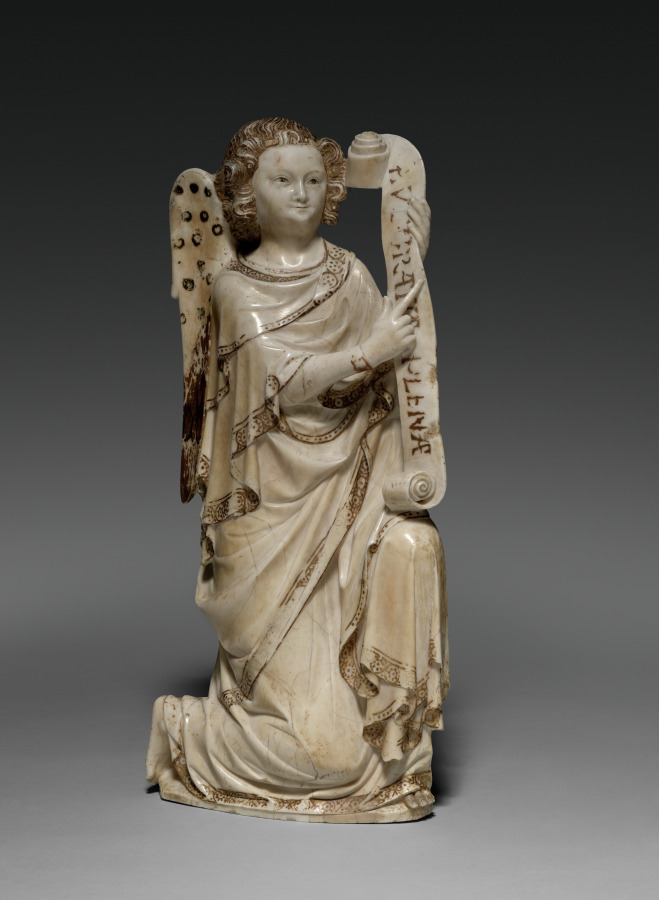
Executive Summary: The Archangel Gabriel as a Silhouette Thesis
The Archangel Gabriel from an Annunciation Group presents a paradox of presence and absence—a figure of divine announcement rendered in human form, yet imbued with the weight of the immaterial. For Addison Fashion NYC’s 2026 Urban Silhouette Research, this subject serves as a critical case study in tailored restraint and structural transcendence. The Gabriel archetype, when deconstructed through the lens of the provided DNA sources—the Udumbara Flowers temple plaque and the Square Wine Container (Fangyou)—yields a wardrobe architecture defined by vertical elongation, geometric containment, and monochromatic depth. The color Onyx is selected not as a void, but as a negative space of potential, echoing the plaque’s “visible yet unattainable” aesthetic and the vessel’s “heavy yet precise” materiality. This analysis will dissect the form’s implications for the 2026 executive woman: a figure who commands space through immobility of line and density of intention.
Formal Deconstruction: The Gabriel Silhouette
1. Vertical Axis and the “Udumbara” Line
The Gabriel figure, traditionally depicted in Annunciation scenes, is characterized by an elongated, columnar stance—a vertical axis that suggests both terrestrial grounding and celestial aspiration. This aligns with the Udumbara Flowers plaque’s principle of “borrowing” (借): the form borrows the human torso to signify the divine. In tailoring, this translates to a single-seam, floor-length coat or tunic dress that eliminates horizontal interruption. The silhouette is not merely long; it is unbroken. The hem falls at the ankle, the shoulder seam is dropped to the deltoid’s edge, and the collar rises to the nape—creating a continuous line from crown to floor. This is not a relaxed drape; it is a controlled fall, akin to the plaque’s carved floral reliefs that neither crowd nor recede, but maintain a precise tension between surface and depth.
The Onyx color amplifies this verticality. Unlike black, which absorbs light, Onyx is a compressed darkness—a shade that retains a subtle sheen, suggesting the plaque’s “wood grain texture” and the vessel’s “bronze patina.” In the 2026 executive wardrobe, this manifests as a matte-satin blend fabric: a wool-cashmere mix with a micro-ribbed structure that mimics the plaque’s carved undulations. The garment’s surface is not flat; it is textured with intention, catching light only at the apex of each rib, creating a visual rhythm that guides the eye upward.
2. The “Fangyou” Shoulder: Geometric Containment
The Square Wine Container introduces the principle of “hiding” (藏)—the concealment of structural complexity within a deceptively simple form. The Gabriel figure’s wings, when present, are often folded or implied, not spread. This suggests a contained volume at the shoulders. For the 2026 silhouette, this is resolved through a structured, boxy shoulder that does not extend beyond the body’s natural width, but rather frames it. The shoulder pad is not a soft crescent; it is a geometric wedge, cut from a single piece of horsehair canvas and stitched into the armhole with a zero-ease tolerance. This creates a silhouette that is square without being broad—a direct reference to the Fangyou’s “square form” as a cosmic container.
The armhole is cut high and tight, eliminating the drape of a traditional sleeve. Instead, the sleeve is a set-in, two-piece construction that follows the arm’s natural rotation while maintaining the shoulder’s rigid line. The result is a static upper body—the executive’s posture is not relaxed but held, echoing the vessel’s “heavy yet clever” duality. The fabric at the shoulder is reinforced with a double layer of Onyx silk twill, creating a subtle sheen that differentiates it from the matte body. This is not a decorative detail; it is a structural marker, akin to the vessel’s taotie motifs that demarcate ritual space.
3. The Waist as a “Visible-Unseen” Transition
The Gabriel figure’s waist is typically cinched or defined by a belt, but never exaggerated. This aligns with the Udumbara plaque’s dialectic of “emptiness” (虚) and “solidity” (实). The waist is not a point of constriction but a zone of transition—a visual pause between the upper body’s containment and the lower body’s flow. In the 2026 tailored wardrobe, this is achieved through a hidden waistband: a 2-inch band of elasticized Onyx grosgrain sewn into the interior of the garment, invisible from the exterior. The exterior fabric is darted only at the side seams, creating a subtle inward curve that does not disrupt the garment’s vertical line.
This technique allows the silhouette to read as a single column while accommodating the body’s natural waist. The effect is one of immobility—the garment does not cling or drape; it stands away from the body, creating a negative space that the wearer inhabits. This is the “visible-unseen” principle: the waist is present but not emphasized, much like the plaque’s floral motif that suggests form without delineating it. The Onyx color here acts as a unifying field, preventing any visual break between torso and skirt.
Color and Materiality: Onyx as a Structural Element
1. The Depth of Onyx
Onyx is not a neutral; it is a color of compression. In gemstone form, it is formed by layers of chalcedony, each layer adding depth without altering the hue. For the 2026 executive wardrobe, this translates to a layered fabric system: a base of Onyx wool crepe, overlaid with a sheer Onyx silk organza at the sleeves, and a matte Onyx cashmere at the body. Each layer has a different light absorption rate, creating a visual depth that shifts with movement. This is not a monochrome; it is a monochromatic gradient, referencing the plaque’s “color sedimentation” and the vessel’s “light and shadow interplay.”
The finish is critical. The body fabric is sandwashed to a matte, almost powdery texture, while the sleeve organza is crisp and reflective. This contrast creates a tactile hierarchy: the body is soft and grounded, the sleeves are sharp and ethereal. This duality echoes the Gabriel figure’s dual nature—human and divine, material and immaterial. In the boardroom, this translates to a garment that commands attention without shouting, its depth revealing itself only upon close inspection.
2. The “Fangyou” Patina: Hardware and Closure
The Square Wine Container’s patina—a greenish-black oxidation—informs the hardware choices for the 2026 silhouette. All closures are oxidized bronze, not polished brass or silver. The buttons are square, flat, and recessed into the fabric, sitting flush with the surface. This is a direct reference to the vessel’s “hidden cleverness”: the hardware is present but not protruding, functional but not decorative. The zipper is a concealed, two-way brass zipper with a matte finish, sewn into the side seam. The pull tab is a thin, rectangular loop that lies flat against the fabric, invisible when not in use.
This approach eliminates visual noise. The garment’s closure system is integrated into the form, not applied to it. The result is a silhouette that reads as seamless, even when unzipped. This is the essence of the “Fangyou” principle: the structure is hidden, but its presence is felt through the garment’s immutable shape.
2026 Executive Application: The Gabriel Coat
1. The Core Garment
The primary output of this research is the Gabriel Coat: a floor-length, single-seam coat in Onyx wool-cashmere. The coat features a stand collar that rises 3 inches above the nape, a hidden waistband, and a geometric shoulder with zero-ease armholes. The front closure is a single row of five oxidized bronze buttons, set 6 inches apart, creating a vertical rhythm that mirrors the plaque’s carved floral stems. The coat is unlined, with all seams finished in Onyx silk bias binding, visible only when the garment is opened. This is a deliberate reference to the vessel’s interior—the hidden craftsmanship that supports the exterior form.
The coat is designed to be worn closed as a column, or open to reveal a matching Onyx shell top and straight-leg trouser. The trouser is a high-waisted, flat-front design with a single pleat at the hip, creating a subtle volume that balances the coat’s rigidity. The hem is unfinished, left raw to fray slightly, echoing the plaque’s “visible yet unattainable” quality—a controlled imperfection that suggests the garment is in a state of becoming, not completion.
2. Styling for the 2026 Executive
The Gabriel silhouette is not for the hesitant executive. It is for the woman who occupies space through stillness, who communicates authority through absence of gesture. The Onyx palette eliminates color as a variable, forcing the observer to engage with form alone. The garment’s verticality elongates the