Urban Form: Saint Sebastian
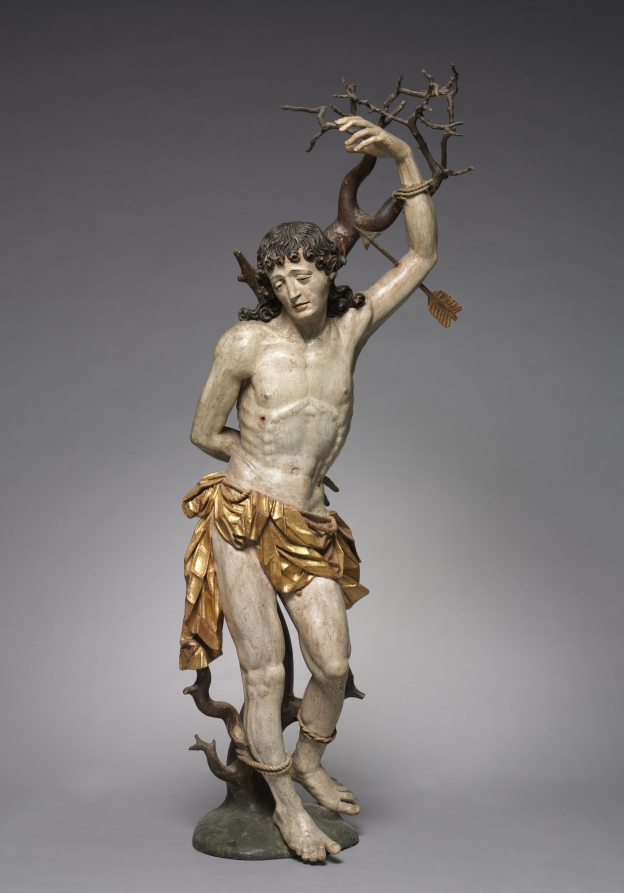
Structural Poetics: The Dialectic of Stillness and Motion
The urban silhouette for 2026, as derived from the aesthetic DNA of the Saint Sebastian subject, is not a garment but a portable architecture of metaphysical tension. The two referenced artifacts—the Edo-period “Udumbara” temple plaque and the Han-dynasty bronze mirror—present a dialectic that defines the executive form: the static containment of the eternal versus the dynamic vortex of the cosmic. The Addison Fashion interpretation synthesizes these into a single, rigorous silhouette that embodies the paradox of frozen motion.
The Udumbara Plaque: The Geometry of the Instant
The calligraphic rendering of “Udumbara” on the temple plaque is a study in compressed temporality. The brushstroke’s weight and release—the kime of the ink—are not decorative but structural. In the 2026 silhouette, this translates into a rigid, sculpted shoulder line that does not drape but asserts. The fabric, a dense Onyx wool-cashmere blend, is cut with a zero-tolerance seam that mimics the plaque’s lacquered edge: a hard, reflective boundary between the body and the void. The jacket’s lapel is reduced to a single, uninterrupted plane, its surface unbroken by pocket or button, evoking the plaque’s monolithic stillness. This is a silhouette of absolute presence—a garment that does not move with the wearer but holds its own geometry against the urban flux.
The “Udumbara” flower, blooming once in three millennia, is captured in the garment’s internal structure. A hidden, cantilevered shoulder pad—fashioned from compressed horsehair and carbon fiber—creates a subtle, almost imperceptible lift at the apex of the shoulder. This is not padding for comfort; it is a structural metaphor for the flower’s sudden, miraculous emergence. The jacket’s back is cut in a single, unseamed panel, falling from the shoulder blade to the hem, creating a vertical waterfall of fabric that suggests the gravity of the instant. The silhouette is minimalist in its reduction, but the reduction is a concentration of meaning—every line is a prayer in cloth.
The Han Mirror: The Geometry of the Vortex
Where the plaque is stillness, the Han mirror is centripetal force. Its concentric rings of deities, chariots, and the White Tiger are not static decoration but a visual engine of cosmic rotation. For the 2026 silhouette, this translates into a circular, spiraling cut that disrupts the jacket’s rigid geometry. The trousers, cut from a liquid Onyx silk-satin, are constructed with a bias-cut panel that wraps from the left hip, around the back, and terminates at the right ankle. This creates a continuous, unbroken line of movement—a visual torque that suggests the mirror’s eternal spin. The fabric’s high-lustre finish catches the light in a ripple of reflections, mimicking the mirror’s play of illumination as it rotates in the hand.
The mirror’s inlaid gold and silver—the cuo jin technique—is translated into strategic, metallic accents that are not applied but integrated into the weave. A single, hairline thread of silver Lurex is woven into the jacket’s lapel edge, invisible at rest but flashing like a comet’s tail when the wearer turns. This is not ornament; it is a structural line of force, a directional vector that guides the eye around the garment’s circular composition. The mirror’s central knob—the point of suspension—is echoed in a single, polished Onyx button at the jacket’s waist, a point of stillness around which the entire silhouette revolves.
Urban Materiality: The Fabric as Cosmic Membrane
The chosen palette of Onyx is not a color but a material philosophy. It is the black of the lacquered plaque after centuries of incense smoke, the black of the mirror’s patina before it is polished, the black of the urban night that absorbs all light. The fabric is a double-faced wool—one side a matte, granular surface like the plaque’s wood grain, the other a smooth, reflective finish like the mirror’s bronze. This duality allows the garment to shift between absorption and reflection, between stillness and motion, depending on the light and the wearer’s movement.
The Silhouette as Urban Artifact
The final silhouette is a vertical, elongated column that tapers from a strong, architectural shoulder to a narrow, clean hem. The jacket is hip-length, cropped to expose the spiraling trouser line, creating a visual break that echoes the plaque’s horizontal axis and the mirror’s concentric rings. The overall effect is one of controlled tension: the upper body is a monolith of stillness, the lower body a vortex of motion. This is the executive silhouette for the urban warrior who navigates the city as a sacred space, a walking temple of frozen time and eternal return.
The garment is not worn; it is inhabited. It is a portable artifact that contains the dialectic of the two ancient objects: the static revelation of the Udumbara and the dynamic cosmos of the Han mirror. In the 2026 urban landscape, this silhouette is a statement of metaphysical authority, a silent declaration that the wearer understands the geometry of the eternal within the flux of the everyday.