Minimalist
Onyx
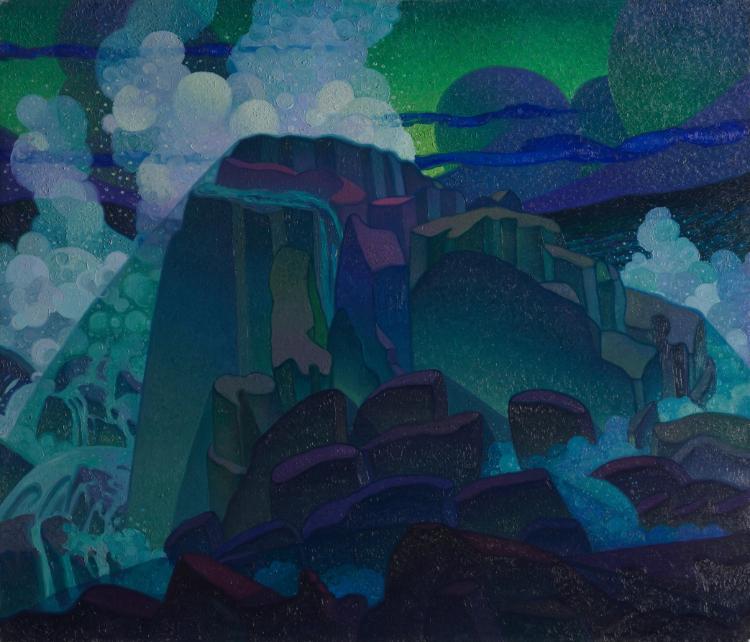
Urban Form: Rock at Sea
Geometric Integrity as Structural Poetics
The urban silhouette for 2026, as derived from the aesthetic dialogue between the Ming dynasty carved lacquer box and Caravaggio’s *The Musicians*, is defined by a rigorous geometric integrity that rejects ornamentation in favor of pure architectural form. The lacquer box’s layered, cubic volume—a container within a container—establishes a primary geometry of rectilinear containment. Its surface, though carved, is not decorative in the Western sense; it is a subtractive process that reveals depth through negative space, creating a topography of light and shadow that is inherently structural. This is not a silhouette of soft draping or organic flow, but one of sharp, deliberate planes—a jacket shoulder that extends with the precision of a cantilever, a trouser leg that falls in a single, unbroken column from hip to hem. Caravaggio’s *The Musicians* introduces a counterpoint: the geometry of the human form as a series of interlocking, tension-filled arcs. The tilted heads, the bent elbows, the curve of the lute—these are not soft curves but controlled, dynamic arcs that define a spatial envelope. The 2026 silhouette synthesizes these two geometric languages: the rigid, planar structure of the lacquer box and the tensile, curved architecture of Caravaggio’s figures. The result is a silhouette that is both a container and a gesture—a coat that is a box with a living spine, a dress that is a column with a single, deliberate sweep of fabric that mimics the arc of a musician’s arm.Urban Materiality: Onyx and the Tactile-Visual Spectrum
The chosen color, Onyx, is not a mere pigment but a material statement. It references the deep, almost black lacquer of the Ming box, which is not black but a darkness born of hundreds of layers of cinnabar red, compressed into a surface that absorbs and reflects light with a unique, oily depth. In urban materiality, this translates to a fabric that is not flat but possesses a tactile density—a double-faced wool with a subtle sheen, a bonded jersey that feels like a second skin, a coated cotton that mimics the lacquer’s resistance to touch. Onyx is the color of the city at night, of wet asphalt, of the void between skyscrapers. It is a color that does not shout but commands through its sheer presence. The materiality must also engage with the tactile-visual spectrum that the lacquer box embodies. The box’s beauty is revealed through touch—the smoothness of the polished surface, the sharpness of the carved edges, the warmth of the aged lacquer. The 2026 executive silhouette demands fabrics that invite a similar haptic experience: a wool crepe that is cool and crisp to the touch, a silk satin that slides like water, a leather that is both supple and rigid. These materials are not chosen for comfort alone but for their ability to hold a shape, to create a silhouette that is as much a sculpture as it is a garment. The Onyx palette allows these textures to speak without chromatic distraction, creating a monochromatic landscape of light and shadow, of matte and gloss, of hard and soft.Structural Poetics: The Silhouette as a Spatial Argument
The 2026 silhouette is a spatial argument about the relationship between the body and the urban environment. The lacquer box is a micro-architecture, a portable space that contains a narrative. The 2026 coat is a similar micro-architecture: a sharp, oversized shoulder that creates a personal aura, a defined waist that anchors the form, a hem that falls with geometric precision. This is not a silhouette that follows the body; it is a silhouette that creates a new body—a body that is armored, composed, and ready for the city. Caravaggio’s *The Musicians* offers a counter-argument: the body in motion, the body as a source of energy. The 2026 silhouette must accommodate this tension. A tailored jacket with a high, structured armhole allows for the arc of a gesture. A wide-leg trouser with a single, sharp crease creates a vertical line that is both static and dynamic. A dress with a sculpted neckline and a fitted bodice that flares into a A-line skirt mimics the geometry of a lute—a narrow top that opens into a resonant body. The silhouette is not a uniform but a series of architectural possibilities, each one a response to a specific urban condition: the boardroom, the gallery, the street.Executive Silhouette: The New Uniform of Power
For the executive, this silhouette is a redefinition of power. The traditional power suit—broad shoulders, narrow hips—is a relic of a corporate hierarchy that no longer exists. The 2026 executive silhouette is more nuanced: it is about presence without aggression, about structure without rigidity. The Onyx palette ensures that the wearer is not a spectacle but a focal point, a figure of authority that commands through stillness and precision. The key pieces are: a single-breasted coat with a notched lapel that extends to the shoulder point, creating a continuous line from neck to arm; a high-waisted trouser with a forward pleat that adds volume without bulk; a shell top with a high, curved neckline that references the lute’s sound hole; and a flat, architectural shoe—a loafer with a squared toe and a low, stacked heel. Each piece is designed to be worn alone or in combination, creating a modular system of urban armor. The silhouette’s geometric integrity is its greatest strength. It is not a trend but a statement of intent: that the body is a site of architectural possibility, that clothing is a form of urban sculpture, and that the executive is not a worker but a creator of space. The lacquer box and the Caravaggio painting are not inspirations but blueprints for a new way of dressing—a way that is both ancient and futuristic, both tactile and visual, both rigid and fluid. This is the urban silhouette for 2026: a geometry of power, a materiality of depth, a poetics of structure.
Technical Insight
Technical Insight: Translating Onyx palettes into Minimalist silhouettes for the modern metropolis.