Minimalist
Onyx
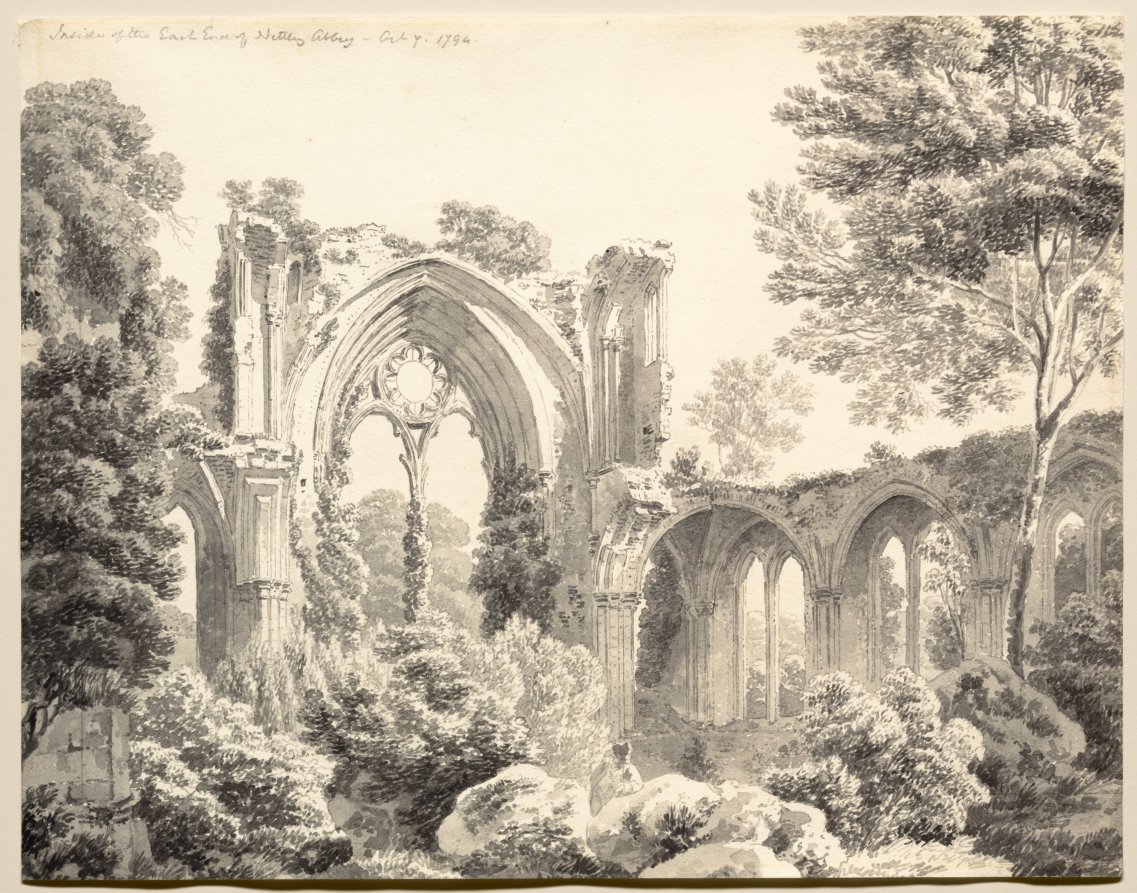
Urban Form: Inside the East End of Nettley Abbey
Geometric Integrity and the 2026 Executive Silhouette
The dialogue between the Udumbara Flower plaque and *The Hunt* is not merely a juxtaposition of Eastern and Western aesthetics; it is a precise tectonic diagram for the 2026 executive silhouette. The former operates through subtraction—a geometry of absence—while the latter operates through accumulation—a geometry of force. For the urban professional, the body is no longer a passive vessel for fabric. It is a structural proposition. This analysis deconstructs how these two visual languages converge to define a silhouette that is simultaneously monastic and predatory, serene and aggressive.The Udumbara Plaque: The Geometry of the Void
The plaque’s aesthetic strategy is one of negative space as structural load. The Udumbara flower, depicted as a minute white umbel against decaying wood, does not occupy space; it *interrupts* it. The calligraphic strokes are not lines of definition but boundaries of emptiness. In architectural terms, this is akin to a cantilevered slab where the visual weight is carried by the void beneath it. For the 2026 executive silhouette, this translates into a shoulder line that is not padded but implied. The jacket’s structure must be so refined that the shoulder seam becomes a ghost—a faint architectural ridge that suggests the body’s frame without reinforcing it. The fabric itself must behave like the plaque’s wood grain: a textured, almost mineral surface that absorbs light rather than reflecting it. Onyx, in this context, is not a color but a material condition—a depth that swallows ambient light, creating a silhouette that is defined by what it excludes. The key structural detail is the internal stay. Unlike traditional tailoring that uses canvas to build volume, the 2026 silhouette requires a floating interlining that mimics the plaque’s “化虚为实” (transforming emptiness into substance). The garment’s interior becomes a hidden armature, a skeleton of fine, unbleached cotton and horsehair that holds the outer shell in a state of tension. The result is a jacket that appears to hover around the body, its lapels folding like the petals of a flower that is not quite there. The hemline, too, must be treated as a calligraphic stroke—sharp, unhemmed, and terminating with a precision that suggests a deliberate cut rather than a finished edge.The Hunt: The Geometry of the Trajectory
Where the plaque is static, *The Hunt* is a study in kinetic compression. Rubens’ hunting scenes are not about the animals; they are about the diagonal lines of force that tear across the canvas. The twisted limbs, the flying manes, the bloodied horizon—all are vectors that converge on a single point of impact. This is the geometry of the chase, of pursuit and capture. For the 2026 executive silhouette, this translates into a trouser cut that is both narrow and aggressive. The leg is not a tube but a trajectory. The fabric must be cut on the bias to allow for a subtle spiral twist from hip to ankle, mimicking the torque of a hunter’s lunge. The waistband is not a simple band but a structural yoke that cinches the body like a cinch on a saddle, creating a point of tension that releases downward into the leg. This is not comfort; it is readiness. The color Onyx here takes on a different quality. It is not the void of the plaque but the sheen of a wet cobblestone, the glint of a blade in low light. The fabric must be a high-twist wool or a compacted microfiber that holds a crease with surgical precision. The pleats, if any, must be inverted and sewn down at the hip, creating a visual line that echoes the diagonal thrust of the hunting scene. The silhouette is not relaxed; it is coiled, ready to spring.Structural Poetics: The Dialectic of the Seam
The true innovation lies in the seam as a site of dialogue. In traditional tailoring, seams are junctions of fabric. In the 2026 silhouette, they are lines of tension between the two aesthetic poles. The shoulder seam, for instance, must be a floating seam—stitched with a thread that is slightly elastic, allowing the fabric to move independently of the structure beneath. This creates a subtle ripple effect, a micro-movement that recalls the trembling of the Udumbara flower on its decaying branch. Conversely, the side seam must be a locked seam, stitched with a double needle and a reinforcing tape. This seam is the line of the hunt, the boundary between the body and the environment. It must be rigid enough to hold the silhouette’s shape but flexible enough to allow for the body’s torsion. The result is a garment that is both a temple and a trap.Urban Materiality: The Surface as Narrative
The fabric for the 2026 executive silhouette must be a composite material. The outer face is a tightly woven wool or a technical blend that mimics the plaque’s wood grain—matte, dense, and slightly irregular. The inner face, however, is a silk or a cupro lining that has been treated with a micro-embossed pattern of the Udumbara flower. This pattern is invisible to the eye but perceptible to the touch, a secret language of texture that only the wearer knows. The buttons are not buttons but toggles of polished horn, carved to resemble the seed pods of the Udumbara. They are not functional closures but ritualistic markers, points of meditation on the garment’s surface. The zippers, if used, must be invisible, their pulls hidden within the seam allowance, so that the act of closing the garment is a silent, almost sacred gesture.The 2026 Executive: A Body in Suspension
The final silhouette is a paradox: it is both minimalist and maximalist. The outer form is severe, a block of Onyx that cuts through the urban landscape. But within that block, there is a hidden complexity—a dialogue between the void of the plaque and the force of the hunt. The wearer is not just dressed; they are armored in a philosophy. The shoulder is sharp but not padded. The waist is defined but not cinched. The leg is narrow but not restrictive. This is the silhouette for the executive who understands that power is not about volume but about controlled absence. The Udumbara flower teaches us that the most profound presence is often invisible. *The Hunt* teaches us that the most profound action is often still. The 2026 executive silhouette is the body held in that suspension—between the flower and the chase, between the temple and the field. It is a garment that does not move; it is moved.
Technical Insight
Technical Insight: Translating Onyx palettes into Minimalist silhouettes for the modern metropolis.