Minimalist
Slate
Urban Form: Procession or Pardon at Perros-Guirec
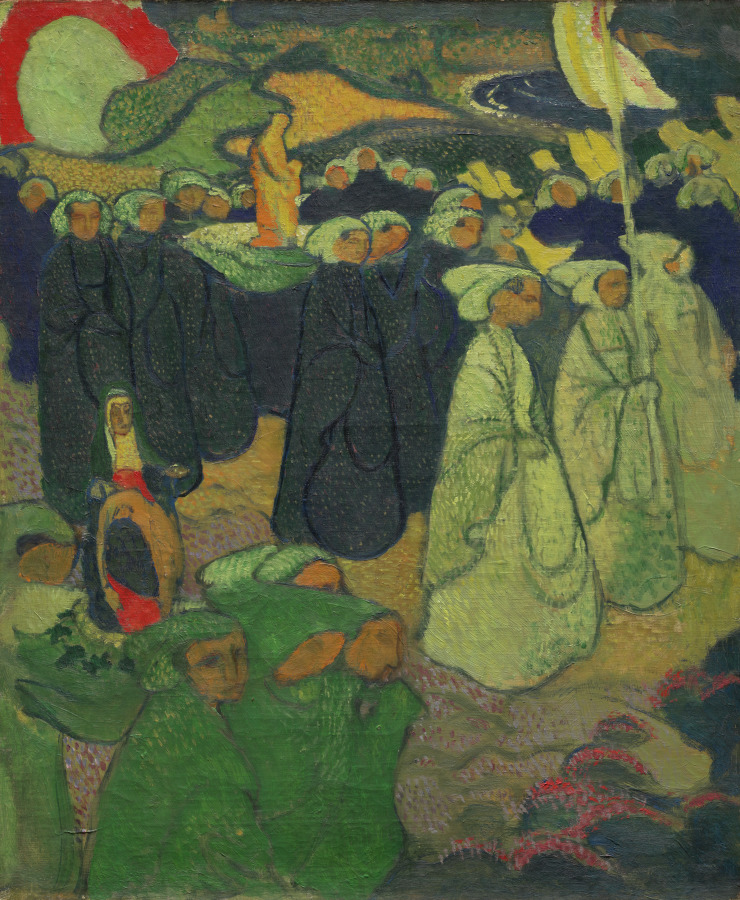
Technical Deconstruction: The Urban Silhouette as a Dialectic of Containment and Release
The subject, *Procession or Pardon at Perros-Guirec*, presents a critical tension for the 2026 NYC executive wardrobe: the negotiation between the public, perform self (the procession) and the private, contemplative self (the pardon). This is not a binary choice but a dynamic oscillation that must be engineered into the garment’s architecture. Drawing from the DNA source—the dialectic between the Song dynasty scholar’s rock (赏石) and the Qing dynasty door ring holder (铺首)—we find a precise formal vocabulary for this negotiation. The rock’s chaotic, generative form and the door ring’s rigid, symmetrical order are not opposites to be reconciled, but rather two distinct spatial logics to be layered. The result is a silhouette that functions as a mobile architecture of the self: a controlled exterior that permits an interior of organic complexity.I. Form: The Exoskeleton of Order and the Endoskeleton of Chaos
The primary formal challenge is to translate the **“center-governed”** logic of the *pushou* into the garment’s outer shell, while embedding the **“chaotic generation”** of the scholar’s rock within its internal structure. This is not a soft, draped garment. It is a **structured exoskeleton** that defines a clear boundary between the wearer and the environment, much like the door ring’s assertion of a threshold. The Shoulder Line: The Gate of Authority The shoulder must be the primary site of the *pushou*’s influence. It is the architectural lintel, the point of maximum visual weight and control. We reject the soft, sloping shoulder of the 1980s power suit. Instead, we specify a **rigid, extended shoulder** with a slight, deliberate lift. The construction is not a padded insert but a **structured, cantilevered cap**—a piece of engineered textile that projects outward and forward. This is the “monster face” of the garment: it announces presence, establishes territory, and creates a visual barrier. The seam is not a soft roll but a **sharp, clean line** that mimics the precise casting of the bronze ring. The fabric at this point must be a **high-density wool or a bonded technical twill** that holds its shape without collapsing, a material analogue to the metal’s permanence. The Torso: The Void and the Volume Below the shoulder, the torso must transition from the *pushou*’s rigid order to the scholar’s rock’s organic interior. The silhouette is **not a box**. It is a **controlled, asymmetrical volume**. The front panel is cut with a **single, sharp vertical seam** that deviates slightly from center, creating a subtle, off-kilter axis. This is the “wrinkle” (皱) of the rock, a deliberate break in symmetry that introduces tension. The back panel, however, is where the “leakage” (漏) and “penetration” (透) of the rock are realized. We introduce a **deep, vertical pleat** or a **hidden gusset** at the center back, which creates a hidden pocket of volume. This is not a functional pocket for objects, but a **spatial pocket for the body’s own movement**. It allows the wearer to shift, to breathe, to retreat inward without disrupting the clean front line. The garment’s front is the *pushou*—closed, declarative, symmetrical in its asymmetry. The back is the scholar’s rock—open, generative, a space for internal “wandering” (卧游). The Hem and Sleeve: The Termination of the Line The hem is not a soft curve. It is a **hard, architectural edge**, cut at a precise, slightly higher-than-standard length to avoid pooling. This is the “base” of the rock, the point of grounding. The sleeve is a critical element. It is cut **fuller through the upper arm**—a nod to the rock’s volumetric presence—but **tapered sharply from the elbow to the wrist**. This creates a dramatic, sculptural line that echoes the *pushou*’s flaring mane and narrowing snout. The cuff is a **rigid, closed band**, a final assertion of control before the hand, the instrument of action, emerges.II. Color: The Spectrum of Silence and Signal
The color palette is derived directly from the DNA source’s chromatic dialectic: the **“silent black-white” (玄素)** of the scholar’s rock and the **“deterrent gold” (鎏金)** of the door ring. For the 2026 executive, this is not a choice between beige and black. It is a **spectrum of value and saturation** that dictates the garment’s psychological impact. Primary Field: Slate (Onyx-Black Base) The primary color is **Slate**, a deep, complex grey-black that contains both the **Onyx** of the rock’s shadowed recesses and the **Ivory** of its sunlit peaks. This is not a flat black. It is a **living, mineral black** that shifts under different light conditions. The fabric must be a **worsted wool with a subtle, irregular slub** or a **matte technical jersey with a slight, woven texture**. This texture is critical: it creates the “micro-gradation” of the rock, preventing the color from reading as a solid block. The Slate field is the **“silent”** zone, the invitation to contemplation. It is the color of the interior, the back panel, the hidden gusset. It is the space of the pardon. Secondary Signal: Silver (The Deterrent Glint) The secondary color is **Silver**, a cold, metallic grey that functions as the *pushou*’s “deterrent gold.” This is not a warm, reflective silver. It is a **brushed, matte silver**—the color of a tarnished bronze door ring, of a polished steel architectural fitting. This Silver is deployed as a **structural accent**: a **thin, horizontal band** at the shoulder seam, a **single, sharp line** down the off-center front seam, or a **rigid, metallic zipper** that replaces the traditional button closure. This is the “signal,” the moment of visual deterrence. It is the color of the public procession, the assertion of rank. The Silver must be applied with surgical precision. One line. One seam. It is not decoration; it is a **formal declaration of boundary**. Tertiary Accent: Sand (The Ghost of the Rock) A tertiary accent of **Sand**—a pale, desaturated beige—is used as a **lining color** or a **hidden interior panel**. This is the “ghost” of the scholar’s rock, the memory of the earth from which it was formed. It is visible only when the garment is opened, when the wearer chooses to reveal the interior. This is the ultimate expression of the “pardon”: a private, internal color that is never seen in the public procession. It is a secret, a luxury of the self.III. Construction: The Engineering of the Dialectic
The construction methodology must reflect the dual nature of the form. The **outer shell** is built with **rigid, fused interlinings** and **precise, machine-stitched seams**—the *pushou*’s “closed, completed” logic. The **inner structure**, however, is built with **floating canvases** and **hand-finished, loose stitches**—the scholar’s rock’s “open, generative” logic. This is not a cost-saving measure. It is a deliberate formal strategy. The garment is a **tensioned system**: the rigid outer shell contains and controls the looser inner structure, allowing for a range of movement that is both precise and organic. The wearer feels the containment of the shoulder and the release of the back. This is the embodied experience of the dialectic: the procession is the shell, the pardon is the core.IV. Conclusion: The 2026 Executive as a Mobile Threshold
The final garment is not a suit. It is a **threshold**. It is a garment that, like the *pushou*, defines a boundary, and like the scholar’s rock, contains a universe within that boundary. For the 2026 NYC executive, this is the ultimate expression of power: not the power to dominate, but the power to **control the terms of engagement**. The wearer can present the Silver-shouldered, Slate-clad front of the procession, or they can open the garment to reveal the Sand-lined interior of the pardon. The silhouette is a choice, a performance of self that is both architecturally precise and psychologically complex. It is the form of a person who knows when to guard the gate and when to let the world in.
Technical Insight
NYC Perspective: Translating Slate tones into Minimalist silhouettes.