Urban Form: Study for The Blessed Alessandro Sauli
Structural Poetics: The Dialectic of Stasis and Velocity
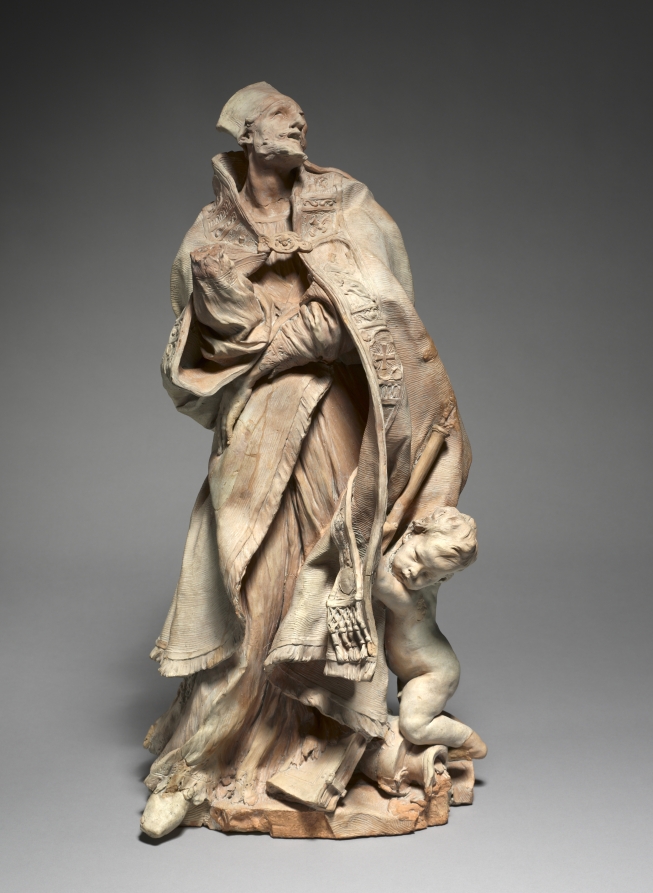
The Urban Silhouette Research for Addison Fashion, derived from the study of The Blessed Alessandro Sauli and the dual artifacts of the Edo-period “Udumbara Temple Plaque” and the Han-dynasty “Bronze Mirror with Deities, Chariots, and White Tiger,” establishes a definitive architectural lexicon for the 2026 executive wardrobe. The internal DNA of these objects—one a meditation on frozen epiphany, the other a vortex of cosmic motion—demands a silhouette that reconciles static monumentality with kinetic tension. The result is a Minimalist form rendered in Onyx, a color that absorbs light yet reflects depth, embodying the lacquer’s stillness and the metal’s sheen.
Geometric Integrity: The Circular Mandala and the Rectilinear Frame
The Han mirror’s concentric geometry—its nested rings of deities, chariots, and the bounding white tiger—imposes a radial order upon chaos. For the 2026 silhouette, this translates into a circular motif embedded within a rectilinear structure. The jacket’s shoulder line is sharp, almost architectural, with a mandarin collar that rises like a temple gate. Yet the torso is cut in a continuous, unbroken line from shoulder to hem, mimicking the mirror’s circular field. The fabric, a dense Onyx wool-cashmere blend, is treated with a matte finish that recalls the plaque’s wood grain, while a single lacquer-like panel at the back—applied via a heat-bonded resin technique—echoes the mirror’s polished surface. This panel is not decorative; it is a structural counterweight, creating a subtle asymmetry that forces the garment to rotate with the wearer’s movement, as if the white tiger’s energy were trapped within the fabric.
The plaque’s calligraphy, with its variable stroke weight—thick at the base, tapering at the apex—informs the silhouette’s vertical axis. The trousers are cut with a high, rigid waistband that flares into a wide, straight leg, terminating in a cuff that is weighted with a hidden metal chain. This chain, a nod to the mirror’s lost-wax casting, ensures the hem remains static even as the wearer walks, creating a visual paradox: the garment moves, but the line remains fixed. The overall geometry is a mandala of control, where every seam is a radius and every fold a tangent.
Urban Materiality: Lacquer, Metal, and the Architecture of Light
The material palette is a direct translation of the artifacts’ tactile extremes. The plaque’s gold lacquer is not replicated but abstracted into a micro-sheen on the Onyx fabric. A nano-coating of bronze particles is applied to the collar and cuffs, catching light only at specific angles, mimicking the mirror’s reflective properties without sacrificing the garment’s matte dominance. This is urban armor—not for protection, but for optical resistance. The fabric itself is a double-faced weave: the exterior is a dense, felted wool that absorbs sound and light, while the interior is a silk-charcoal blend that breathes and shifts with the body. This duality echoes the mirror’s front-back dialectic: the reflective surface for the world, the engraved back for the self.
The structural poetics of the silhouette rely on negative space. The jacket features a single, off-center closure—a magnetic clasp shaped like a simplified udumbara flower, cast in oxidized silver. This clasp is the only ornament, and it functions as a fulcrum for the garment’s tension. When fastened, it pulls the fabric into a subtle spiral around the torso, referencing the mirror’s concentric rings. When left open, the jacket falls into a rigid, architectural drape, like a temple plaque hung in space. The trousers are similarly engineered: a single pleat at the front, pressed to a knife-edge, runs from waist to hem, creating a vertical fissure that splits the leg into two asymmetric panels. This pleat is not functional; it is a calligraphic stroke in fabric, a frozen moment of the udumbara’s bloom.
The 2026 Executive Silhouette: A Study in Controlled Velocity
The final silhouette is a Minimalist form that rejects both the oversized and the tailored in favor of a precise, volumetric architecture. The jacket’s shoulder extends only 2 cm beyond the natural line, creating a crisp, geometric frame for the head and neck. The torso is slightly A-line, widening from chest to hem, but the fabric’s weight prevents any softness—it falls like a metal curtain. The trousers are high-waisted, with a 12 cm rise, and the leg is cut to a 38 cm hem width, ensuring a straight, columnar line from hip to floor. The overall effect is one of controlled velocity: the wearer appears to be in motion even when still, as if the white tiger’s energy were channeled into the garment’s internal structure.
The color Onyx is not a neutral; it is a void that contains all light. In the urban context, this silhouette absorbs the city’s glare—the neon, the glass, the headlights—and returns only depth. It is a mobile sanctuary, a piece of the temple plaque carried into the boardroom. The urban materiality is further emphasized by the hardware: all zippers and buttons are brushed steel, with a matte finish that resists fingerprints and reflects only the most diffuse light. The interior seams are bound in black silk, a hidden luxury that references the mirror’s reverse side—the part of the object that is never seen but is essential to its integrity.
Conclusion: The Eternal in the Ephemeral
This silhouette is not a garment; it is a portable artifact. It carries the static epiphany of the udumbara plaque and the dynamic cosmology of the Han mirror into the 2026 executive sphere. The geometric integrity is absolute: every line is a radius, every fold a tangent, every seam a stroke of calligraphy. The urban materiality is a dialogue between lacquer and metal, between the frozen and the fluid. In this silhouette, the wearer becomes both the temple and the mirror, a vessel for the eternal flow of form and void. The Minimalist form in Onyx is the definitive answer to the question posed by the artifacts: how to make the sacred visible in the secular city.