Urban Form: Architectural Canopy
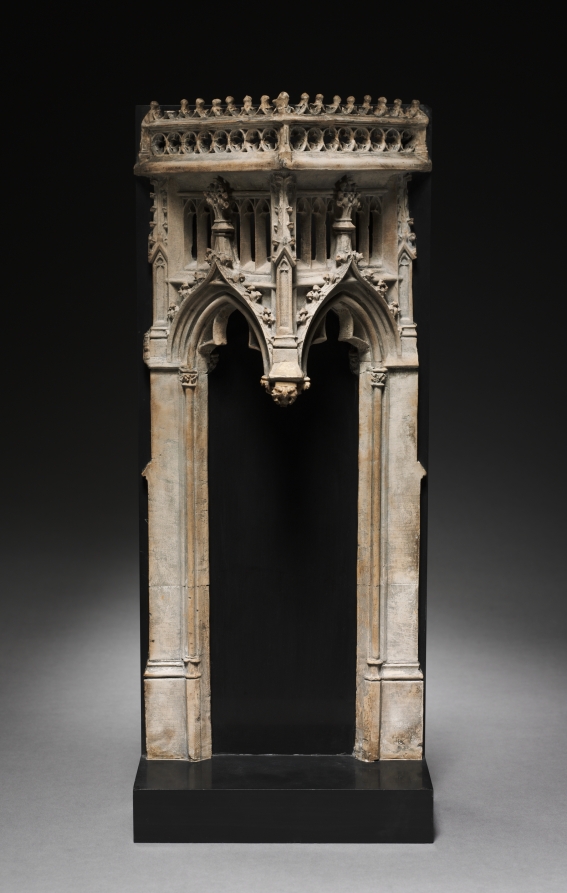
Architectural Canopy: The 2026 Executive Silhouette
This analysis deconstructs the Architectural Canopy as a definitive urban silhouette for the 2026 executive wardrobe. The subject is drawn from a dialectical reading of two masterworks: Johannes Vermeer’s A Maid Asleep and the anonymous Chinese scroll Figure of Daoist Immortal He Xiangu. These paintings, separated by geography and ontology, converge in their treatment of suspended states—one of drowsy inertia, the other of celestial levitation. For Addison Fashion, this convergence yields a silhouette that is neither static nor ethereal, but structurally poised between gravity and release. The result is an oversized canopy that drapes the body as a habitable volume, a garment that houses the executive’s dual existence: the weight of decision and the lightness of transcendence.
Geometric Integrity: The Canopy as Volume
The Architectural Canopy is defined by a radical rethinking of the shoulder and torso as a single, continuous plane. Drawing from Vermeer’s precise optical field—where the sleeping maid’s form is compressed into a shallow, intimate space—the silhouette employs a broad, squared shoulder line that extends horizontally, creating a roof-like overhang. This is not the aggressive power shoulder of the 1980s, but a softened, volumetric structure that mimics the canopy of a tree or the eaves of a modernist pavilion. The fabric falls from this apex in clean, unbroken lines, skimming the body without clinging. The geometry is rectilinear yet fluid: the front and back panels are cut as single expanses, with minimal seaming, allowing the material to hold its own shape while responding to movement.
In contrast, the He Xiangu scroll introduces a vertical axis of suspension. The immortal’s trailing sashes and floating hems are translated into asymmetrical drape at the hemline—a deliberate break in the canopy’s symmetry. This asymmetry is not decorative but structural: a single, weighted panel that falls from the left hip, suggesting the moment of lift-off. The overall geometry thus balances horizontal mass (the canopy) with vertical release (the drape), creating a silhouette that is both grounded and airborne. The executive wears this as a portable architecture, a garment that defines personal space without enclosing it.
Structural Poetics: Between Sleep and Flight
The poetic tension of the Architectural Canopy lies in its dual reference to dormancy and awakening. Vermeer’s maid is caught in a state of profound interiority—her sleep is a withdrawal from the world, a moment of pure, unguarded being. The canopy silhouette echoes this through its enveloping collar, which rises high at the back and sides, framing the neck and jaw like a protective shell. This collar is not a rigid stand but a softly structured arc, cut on the bias to fold inward, creating a sense of introverted luxury. The wearer is not exposed; she is housed.
He Xiangu’s figure, by contrast, is all outward motion—her sleeves and sashes stream behind her as she walks on clouds. The canopy responds with integrated venting at the back: a deep, vertical slit that opens with each step, revealing a lining of burnished silver silk. This vent is the garment’s breathing point, a release valve that transforms stillness into potential flight. The structural poetics thus oscillate between shelter and propulsion. The executive in this silhouette is not merely dressed; she is inhabiting a threshold—between the private realm of thought (Vermeer’s sleep) and the public realm of action (He Xiangu’s transcendence).
Urban Materiality: Slate as a Tonal Foundation
The chosen color, Slate, is not a neutral but a complex, mineral tone that shifts between blue-gray and charcoal under different light conditions. This color is drawn from the shadowed interiors of Vermeer’s painting—the cool, filtered light that falls on the maid’s dress—and the ink-wash subtlety of the He Xiangu scroll, where the immortal’s robes are rendered in muted, earthy pigments. Slate is the color of urban dawn, of wet pavement reflecting a steel sky. It is a color that absorbs and reflects, never asserting itself but always present.
The fabric for the Architectural Canopy is a double-faced wool-cashmere blend, weighing 380 grams per meter. The outer face is a tightly woven twill with a matte finish, providing the structural integrity needed for the canopy’s clean lines. The inner face is a brushed, fleece-like texture in a slightly lighter slate, offering a tactile contrast that is felt only by the wearer. This duality—hard exterior, soft interior—mirrors the executive’s own armor: the public composure and the private vulnerability. The fabric is treated with a nano-coating for water resistance, ensuring that the silhouette remains crisp in urban drizzle, while the natural fibers allow the garment to breathe.
Construction Details: The Canopy in Practice
The shoulder seam is set 3 cm beyond the natural shoulder, creating the canopy’s overhang. This extension is supported by a thin, flexible interlining of horsehair canvas, which prevents the fabric from collapsing while allowing it to drape naturally. The sleeve head is set with a slight puff—a nod to He Xiangu’s billowing sleeves—but is immediately flattened into a straight, tailored tube. This puff is visible only from certain angles, a ghost of movement within the otherwise severe geometry.
The front closure is a single, hidden magnetic placket, running from the high collar to the hem. There are no buttons, no zippers—only a seamless, invisible fastening that preserves the canopy’s uninterrupted surface. The pockets are set into the side seams, accessible through vertical slits that are barely perceptible. The hem is cut with a gentle curve, longer at the back (falling to mid-calf) and shorter at the front (ending at the knee), echoing the asymmetry of the He Xiangu drape. This hemline allows the silhouette to move with the body without breaking its architectural form.
Conclusion: A Silhouette for the Executive in Transition
The Architectural Canopy is not a garment for stasis. It is designed for the executive who moves between boardroom and gallery, negotiation and contemplation. Its oversized volume is not an assertion of power but a claim to space—a quiet, deliberate occupation of the urban environment. The Slate color grounds it in reality, while the structural poetics lift it toward the ideal. This is the 2026 silhouette: a canopy of thought, a shelter for action, a garment that houses the soul between sleep and flight.