Urban Form: Portrait of a Woman
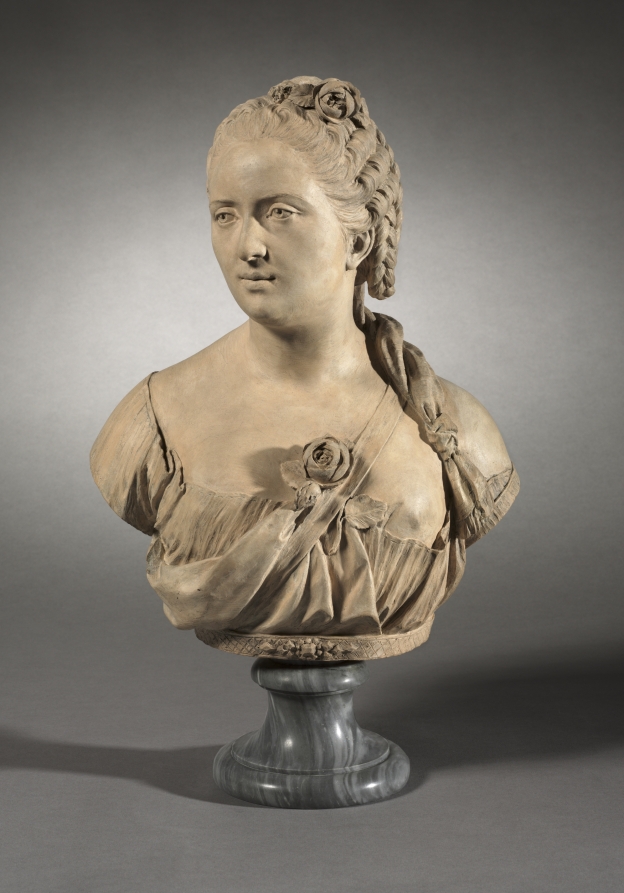
Structural Poetics: The Dialectic of Containment and Confrontation
The Portrait of a Woman for Addison Fashion’s 2026 executive silhouette is not a representation of a subject, but a study in architectural containment. The internal DNA provided—a comparative analysis of Ingres’s Oedipus and the Sphinx and a Ming dynasty blue-and-white porcelain dish—offers a dualistic framework for constructing the modern female form. The Ingres painting embodies a triangular, tensile geometry: the figure’s stance is a fulcrum of rational inquiry, a static moment of high drama where the human form confronts the monstrous unknown. The porcelain dish, conversely, operates on a circular, absorptive geometry: a vessel that does not confront but contains, its surface a microcosm of infinite space. For the 2026 executive, the silhouette must reconcile these opposing forces—the sharp, interrogative line of Western classicism with the fluid, meditative volume of Eastern minimalism. The result is a minimalist armor that is both a shield and a sanctuary.
Geometric Integrity: The Triangular-Circular Hybrid
The Shoulder as Sphinx
The primary structural element is the extended, angular shoulder, referencing the sphinx’s poised, predatory geometry. This is not a soft, draped shoulder but a cantilevered architectural fin—a sharp, horizontal line that breaks the verticality of the torso. In Onyx, a deep, absorptive black, this shoulder becomes a statement of urban materiality: it is the steel beam of a skyscraper, the edge of a polished obsidian slab. The cut is precise, with a 90-degree angle at the acromion, creating a visual tension that mirrors Oedipus’s confrontation. The shoulder does not merely support the garment; it questions the space around it, defining a perimeter of authority.
The Torso as Vessel
Contrasting the aggressive shoulder, the torso is constructed as a cylindrical, unbroken column—a direct translation of the Ming dish’s circular containment. The fabric, a heavyweight Japanese wool-cashmere blend, is cut on the bias to create a continuous, unseamed flow from collarbone to hem. There is no waist suppression, no darting. The silhouette is anti-figurative; it does not trace the body’s contours but houses them. This is the “eternal mood” of the porcelain: the garment becomes a vessel for the woman’s presence, not a display of her anatomy. The hem falls at the mid-calf, a horizontal terminus that echoes the dish’s rim, grounding the volume without interrupting its flow.
The Neckline as Inscription
The neckline is a high, mandarin collar that rises to the jawline, functioning as the “inscription” on the porcelain dish. It is a minimalist calligraphy in fabric—a clean, unadorned band that frames the face without distraction. This collar is not a closure but a threshold: it separates the internal, meditative space of the garment from the external, interrogative world. In Onyx, it absorbs light, creating a void that draws the eye upward to the face—the only exposed element of the “portrait.” The collar’s rigidity is a structural poem: it is the line of the horizon, the edge of the dish, the boundary between self and other.
Urban Materiality: Onyx as a Philosophical Substance
Color as Void and Vessel
The selection of Onyx is not arbitrary. In the context of the Ingres painting, black is the abyss of the unknown—the dark background from which the sphinx emerges, the shadow of fate. In the Ming dish, black is the ink of the brushstroke, the defining line that gives form to the void. Onyx, as a color, is both. It is the absorptive surface that swallows light, creating a depth that suggests infinite space. For the urban executive, Onyx is the color of authority without aggression—it is the black of a polished granite facade, of a lacquered piano, of a night sky over a city. It does not reflect; it contains.
Fabric as Architecture
The fabric is a double-faced wool with a matte finish, chosen for its ability to hold a sharp edge without stiffness. The outer face is a tight, plain weave that resists draping, maintaining the silhouette’s geometric integrity. The inner face is a brushed cashmere, soft against the skin—a tactile reminder of the vessel’s interiority. This duality is essential: the garment is hard on the outside, soft within, like the porcelain dish’s glazed surface and porous clay body. The seams are taped and pressed flat, invisible to the eye, creating a monolithic surface that reads as a single, continuous form. The only detail is a single, vertical seam at the center back, a subtle reference to the dish’s crack or the sphinx’s spine—a line of tension that holds the structure together.
The 2026 Executive Silhouette: A Manifesto
Proportions and Posture
The silhouette is elongated and volumetric, with a height-to-width ratio of approximately 4:1. The shoulder width is exaggerated to 1.5 times the hip width, creating a trapezoidal frame that is both powerful and serene. The garment does not move with the body; the body moves within the garment. This requires a specific posture: a straight spine, a lifted sternum, a still head. The woman becomes the center of her own gravity, like Oedipus standing before the sphinx, like the dish resting on a table. She is not performing; she is being.
Accessories as Counterpoints
To complete the look, accessories are minimal and geometric. A single, matte Onyx cuff at the wrist—a solid, unadorned cylinder that echoes the torso’s volume. Shoes are flat, square-toed mules in the same Onyx, grounding the silhouette without adding height. The bag is a rectangular clutch with a single, horizontal closure—a miniature version of the garment’s shoulder line. No jewelry, no logos, no ornament. The only adornment is the silhouette itself.
Conclusion: The Eternal Question in Fabric
The 2026 executive silhouette is a philosophical garment. It does not answer the question of the woman’s identity; it frames the question. Like Ingres’s painting, it presents a moment of confrontation—the sharp shoulder, the rigid collar, the absorptive black. Like the Ming dish, it offers a space for contemplation—the cylindrical torso, the unbroken line, the meditative volume. The woman who wears this silhouette is not a subject to be read; she is a vessel of inquiry. She contains the sphinx and the landscape, the riddle and the answer, in a single, seamless form. This is minimalist luxury at its most rigorous: the reduction of the portrait to its essential geometry, the translation of urban materiality into a wearable architecture of the soul.