Urban Form: Architecture of the Middle Ages: St. Etienne, Rouen
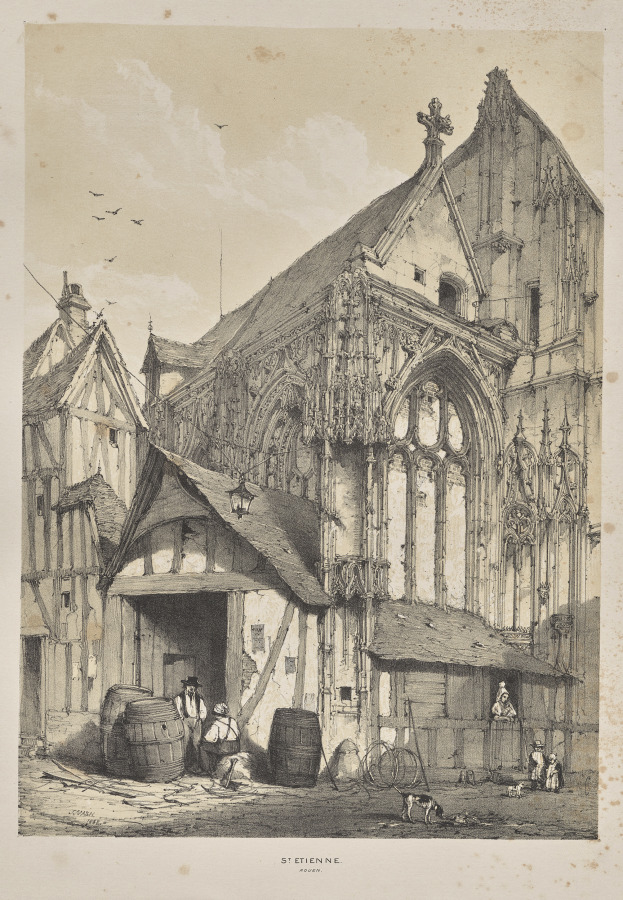
Geometric Integrity of the Medieval Chest: A Study in Volumetric Closure
The Chest for Storing Garments from the medieval period, particularly as exemplified in the architectural context of St. Etienne, Rouen, presents a paradigm of volumetric closure that is essential to the 2026 executive silhouette. The chest is not merely a container; it is a cubic manifesto. Its geometry is defined by absolute right angles, a heavy horizontal datum, and a deliberate denial of transparency. The lid, when closed, creates a perfect, sealed plane. This is not the soft drape of fabric, but the hard edge of architecture. For the Addison Fashion executive, this translates into a silhouette that prioritizes structural containment over fluid expression. The shoulders are defined, not padded into softness, but cut with a clean, architectural line that mirrors the chest’s lintel. The waist is not cinched; it is implied by the sheer verticality of the garment’s fall, creating a monolithic column from shoulder to hem. This is the urban poetics of the block—a form that asserts its presence through its refusal to yield to the body’s natural curves.
The Aesthetics of the Invisible Interior
The most profound geometric lesson from the St. Etienne chest is its opacity. The painting depicts a closed object; the interior is a sacred, unseen space. This is a direct challenge to the contemporary obsession with deconstruction and transparency. In the 2026 executive wardrobe, this translates to a rejection of the visible lining. The garment’s interior becomes a private architecture, a secret space known only to the wearer. The outer shell—be it a double-faced wool coat or a structured blazer—must be self-supporting. Seams are not decorative; they are load-bearing. The materiality of Onyx—a deep, absorbing black—reinforces this. Onyx does not reflect; it consumes light. It creates a surface that is both impenetrable and infinitely deep, much like the painted wood of the chest. The garment becomes a negative space around the body, a void that the wearer inhabits. The silhouette is not about the body’s shape, but about the volume of air the garment claims as its own. This is the essence of minimalist luxury: the absence of ornament is not emptiness, but a charged, potent silence.
Structural Poetics: From Reliquary to Uniform
The chest in St. Etienne is not merely furniture; it is a reliquary. Its function—storing garments—is secondary to its symbolic role as a guardian of value. This elevates the garment from a utilitarian object to a vessel of status. The 2026 executive silhouette must embody this sacred geometry. The garment’s construction must be monolithic. Consider the seam allowance: it should be generous, not for fit, but for structural integrity. The shoulder seam is a buttress. The collar is a keystone. The hem is a plinth. Every line must read as intentional, as if carved from a single block of Onyx. The urban materiality here is crucial. We are not working with soft, yielding fabrics. We are working with architectural textiles: high-density wool, bonded cottons, and technical silks that hold a crease like a stone edge. The poetics arise from the tension between the garment’s rigid exterior and the implied, fluid body within. This is the dialectic of the closed chest: the outside is absolute, the inside is mystery.
Proportion and the Gothic Arch
While the chest is a cube, its decorative elements often feature the Gothic arch. This is not a contradiction but a sublimation. The arch, in the context of St. Etienne, is a structural necessity that becomes a decorative motif. For the silhouette, this translates into a subtle, pointed elongation. The lapel is not a standard notch; it is a slender, ascending line that mimics the vertical thrust of a cathedral nave. The sleeve is not set in at a right angle; it is cut with a slight, forward pitch, creating a dynamic, architectural sweep. The overall proportion is elongated and lean, but not slender. It is a dense, compact mass that moves with purpose. The color Onyx is not a choice of mood; it is a choice of depth. It allows the eye to read the garment’s geometry without distraction. The surface texture must be matte, almost granular, like the aged wood of the chest. This is the urban materiality of the future: not shiny, not new, but ancient and authoritative.
Urban Materiality: The Weight of the Object
The final analysis concerns weight. The medieval chest is heavy. It is meant to be immovable. The 2026 executive garment must possess a visual and physical weight. This is not the weight of fabric per square meter, but the weight of presence. The garment must anchor the wearer to the ground. The hem should fall with a decisive, unbroken line. The fabric’s hand must be firm, almost stiff, resisting the body’s movement to create a living architecture. The silhouette is a negative volume—a space carved out of the urban landscape. The wearer does not move through the city; the city moves around the wearer. This is the executive power of the closed form. The chest’s interior remains unseen, but its potential is absolute. The garment, in its minimalist, Onyx-clad geometry, becomes a portable sanctuary. It is the Udonge flower of the secular world: a thing of unseen beauty, made manifest through the rigor of its form. The 2026 silhouette is not a fashion; it is a philosophy of containment.