Urban Form: Waist Cloth (Kain Panjeng)
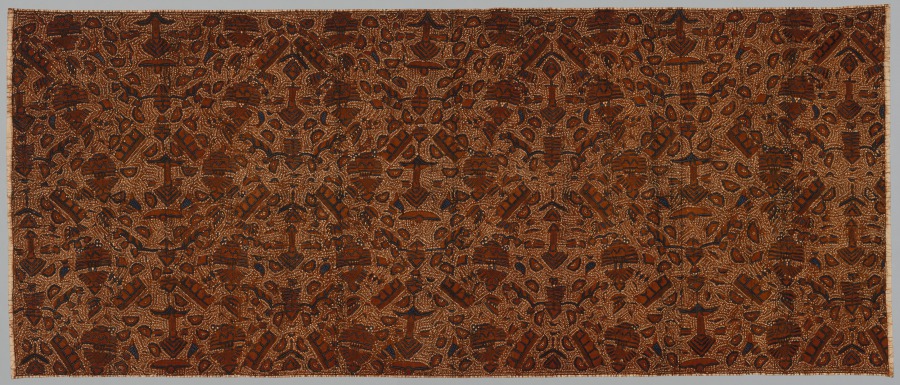
Geometric Integrity of the Waist Cloth: A Study in Volumetric Draping
The Kain Panjeng, or waist cloth, represents a paradigm of non-constructive tailoring that challenges the Western orthodoxy of seamed, fitted garments. In the context of the 2026 executive silhouette, this garment is not merely an accessory but a primary architectural element. Its geometric integrity is defined not by rigid seams or darts, but by the tensile relationship between fabric, gravity, and the wearer’s axial skeleton. The cloth operates as a suspended plane, a horizontal interruption of the vertical line, creating a zone of deliberate ambiguity between the torso and the lower body.
The internal DNA of the “Rock in the form of a fantastic mountain” provides the critical lens for this analysis. The Lingbi stone’s principle of “thinness, wrinkling, transparency, and perforation” (瘦皱漏透) is directly translatable to the waist cloth’s structural poetics. The cloth is not a flat, static panel; it is a microcosm of geological time, folded and pleated to create a landscape of shadows and light. The “wrinkling” (皱) manifests as the deliberate, controlled pleats that radiate from the waistband, mimicking the surface texture of the scholar’s rock. The “transparency” (漏) is achieved through the negative space created by the cloth’s fall—the air gap between the fabric and the leg, which becomes a dynamic, shifting void. The “perforation” (透) is the visual penetration of the silhouette, where the cloth’s folds create a series of apertures that reveal and conceal the body’s movement. This is not a garment of containment; it is a garment of volumetric suggestion, where the material’s behavior defines the space around the wearer.
Structural Poetics: The Dialectic of Stasis and Flow
The 2026 executive silhouette demands a departure from the static, power-shouldered archetype. The waist cloth introduces a fluid, horizontal axis that counterbalances the verticality of the tailored jacket or blouse. This is a direct application of the “seated luohan with a servant” aesthetic. The luohan’s robe, with its folds “like layered rock strata,” is the template. The waist cloth’s drape must achieve a similar dialectic between stasis and flow. The fabric, ideally a high-density wool or a matte, liquid-like cupro, must possess a specific gravity that allows it to fall in clean, architectural folds while retaining the ability to be manipulated into a controlled, asymmetrical volume.
The structural poetics are defined by three key parameters:
- Point of Origin: The waistband must be a rigid, unyielding anchor. A slate-toned, matte leather or a bonded technical canvas provides the necessary counterpoint to the fluidity below. This is the “mountain peak” from which the “rock formation” descends.
- Fold Logic: The pleats are not random. They must follow a Fibonacci-like sequence, expanding in depth and width as they descend. The front panel should feature a deep, single box pleat that creates a central, static column, while the sides utilize knife pleats that allow for lateral movement. This creates a visual rhythm of compression and release, echoing the “wrinkling” of the scholar’s stone.
- Hem Architecture: The hem is not a straight line. It must be asymmetrically cut, with a longer back panel that grazes the floor and a shorter front that reveals the shoe. This creates a dynamic, forward-moving silhouette, a visual metaphor for the “journey to the spiritual shore” described in the luohan painting. The hem’s edge should be raw, not hemmed, to emphasize the material’s geological, un-finished nature.
Urban Materiality: The Slate Palette and the Anti-Gloss Imperative
The chosen color, Slate, is not a neutral. It is a chromatic argument for the urban landscape. Slate is the color of wet asphalt, of the patina on a bronze sculpture, of the shadow in a concrete canyon. It is a color that absorbs light rather than reflecting it, creating a matte, non-reflective surface that is essential for the 2026 executive. The material must reject the high-gloss, hyper-visible textures of previous decades. The waist cloth must be a tactile, almost mineral presence.
The fabric should be a double-faced wool crepe with a subtle, irregular slub. This slub is the textile equivalent of the “surface wrinkles” on the Lingbi stone—a record of the material’s own making. The weight must be substantial, at least 350 grams per square meter, to ensure the folds hold their shape without collapsing. The internal structure should be reinforced with a micro-fused interlining at the waistband and along the pleat lines, creating a hidden skeleton that maintains the garment’s architectural integrity. This is the “useless use” (无用之用) of the scholar’s stone: the garment’s value lies not in its practicality, but in its ability to create a spiritual and aesthetic space within the urban environment.
The 2026 Executive Silhouette: A Synthesis of Rock and Robe
The final silhouette is a synthesis. The upper body is a tailored, minimalist shell—a single-breasted jacket with a high, standing collar and no lapels. The jacket is cut close to the body, a rigid, architectural frame. Below, the waist cloth flows, a fluid, geological formation. The contrast is stark: the static, controlled upper body versus the dynamic, organic lower body. This is the “object-mind illumination” (物心相照) of the aesthetic. The garment is not a costume; it is a portable landscape, a wearable meditation on the tension between the man-made and the natural, the rigid and the fluid, the material and the spiritual.
The waist cloth, in this context, becomes the defining element of the 2026 executive. It is a rejection of the purely functional, a declaration that the urban professional’s attire can be a vessel for philosophical and aesthetic inquiry. The Slate color grounds it in the city’s material reality, while the Fluid category elevates it to a form of kinetic sculpture. The wearer does not simply put on a garment; they inhabit a geological formation, a moving landscape of folds and shadows that speaks to a deeper, more considered approach to power and presence.