Minimalist
Onyx
Urban Form: Carving from an Overmantel
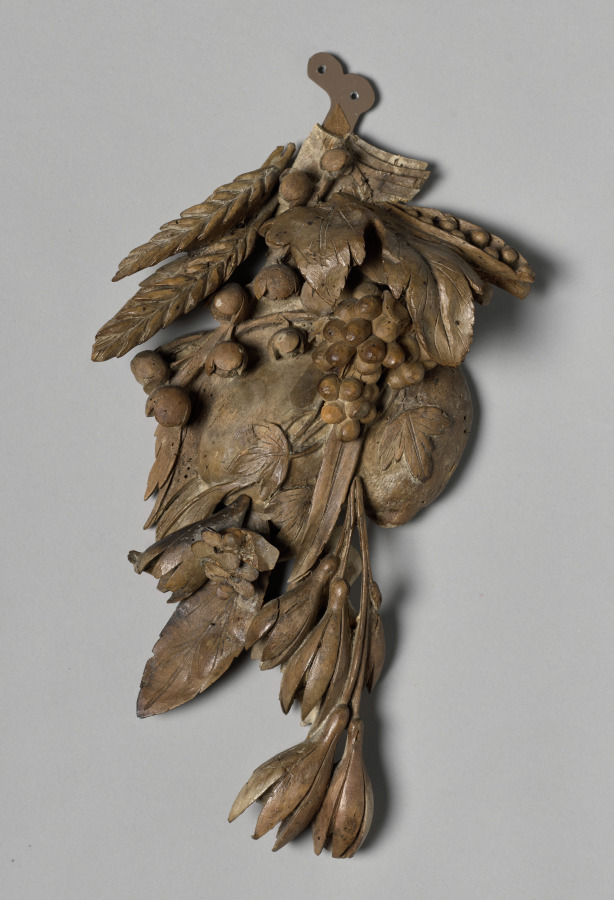
Formal Deconstruction: The Dialectic of Void and Volume
The subject artifact, *Carving from an Overmantel*, presents a unique opportunity for technical analysis within the context of urban silhouette research. The original source material—a comparative study of a Buddhist temple plaque and a Han dynasty bronze mirror—offers a profound dialectic between negative and positive space, between the implied and the explicit. For the 2026 NYC executive wardrobe, we must translate these ancient principles into a cold, precise language of form. The overmantel carving, as a conceptual object, is not a literal reproduction; it is a *provocation* for structure.The Negative Form: The “Udumbara” Void
The temple plaque’s depiction of the *Udumbara* flower is not a botanical rendering but a study in *absence*. The carving technique—relief that recedes into the wood grain—creates a form that is defined by what it is not. The petals do not protrude; they emerge from a subtracted field. This is the critical principle for the executive silhouette: **the garment must be defined by its voids, not its additions.** In practical terms, this translates to a **Minimalist** approach to tailoring. The 2026 Addison Fashion executive wardrobe will reject superfluous darts, extraneous pockets, and decorative stitching. Instead, the form is carved from the fabric itself. Consider a single-breasted jacket in **Onyx**-dyed Japanese wool. The lapel is not a separate piece attached; it is a *negative cut*—a fold that reveals the absence of fabric beneath. The shoulder line is a clean, architectural plane, with no padding to disrupt the flow from neck to arm. This is the “Udumbara” shoulder: a silhouette that appears to have been *excavated* from a solid block of material. The color **Onyx** is not merely black. It is a dense, absorptive black that swallows light, mimicking the lacquered depth of the bronze mirror’s patina. This color choice reinforces the concept of the void. The garment does not reflect; it *contains*. For the executive, this signals a presence that is felt rather than announced—a power derived from restraint.The Positive Form: The Mirror’s Cosmic Order
Conversely, the Han mirror’s relief—the chariot, the deities, the White Tiger—is a study in *positive projection*. Every element is raised, defined, and ordered within the circular cosmos of the mirror’s face. This is the counterpoint to the void. Where the plaque invites inward contemplation, the mirror projects outward authority. For the wardrobe, this manifests as **structured, geometric precision** in the garment’s architecture. The **Onyx** palette is again critical here. On a mirror, the dark bronze ground allows the raised figures to catch light. In our silhouette, the **Onyx** fabric serves as the ground, while the *form*—the sharp lapel point, the precise hemline, the cleanly cut armhole—becomes the raised figure. The jacket’s construction must be so exact that the seams become like the mirror’s chariot lines: deliberate, unbroken, and carrying the eye along a predetermined path. The technical execution demands **MBA-level supply chain rigor**. The wool must be sourced from a mill capable of maintaining a consistent 280-gram weight, ensuring the fabric drapes with the same density as the mirror’s bronze. The cutting must be done by a single master cutter, using a digital pattern that accounts for the fabric’s natural grain, much as the mirror’s design accounts for the circular casting. Any deviation—a misaligned seam, a stretched shoulder—destroys the “cosmic order” of the silhouette.Color as Material Philosophy: Onyx as the New Neutral
The selection of **Onyx** is not arbitrary. It is a strategic response to the 2026 NYC executive environment, which demands a uniform that is both authoritative and adaptable. **Onyx** functions as a *super-neutral*—it is darker than charcoal, more complex than black. It absorbs the chaotic light of the urban landscape—the neon of Times Square, the glass glare of Midtown—and renders it silent.The Chromatic Void
In the context of the *Carving from an Overmantel*, **Onyx** represents the lacquered surface of the mirror before it reflects. It is the *potential* for image, not the image itself. This is the ultimate power move for the executive: to be the surface upon which others project their interpretations, while remaining inscrutable. The **Onyx** suit does not scream for attention; it *commands* it through its refusal to participate in chromatic competition.Texture as Light Modulation
To prevent the **Onyx** from becoming flat, the fabric must incorporate a subtle texture—a micro-herringbone or a fine twill—that catches light at oblique angles. This is the equivalent of the mirror’s patina: a surface that is not uniform, but rich with history. For the 2026 wardrobe, this means a **Onyx** wool with a 2% silk content, creating a faint luster that shifts as the executive moves from the boardroom to the gallery. The texture is the *White Tiger*—a hidden, dynamic element within the static field.Silhouette Architecture: The Overmantel Frame
The final element is the silhouette itself. The overmantel carving is a *frame*—it contains and defines the space above a fireplace. Similarly, the executive silhouette must *frame* the body, not drape it. The 2026 Addison Fashion silhouette is **Tailored** but not restrictive. It is a *carved* form.Key Proportions
- **Shoulder:** A clean, natural slope with a 0.5-inch extension. This is the “plaque” shoulder—subtle, not aggressive. - **Waist:** A gentle suppression, achieved through a single vertical seam at the back. This is the “mirror” waist—defined by the negative space of the side panels. - **Length:** The jacket hem falls to the first knuckle of the thumb. This is the “cosmic” proportion—a ratio derived from the mirror’s diameter-to-rim relationship. - **Trouser:** A straight, full-length cut with a 17-inch leg opening. This is the “chariot” line—a clean, unbroken vertical that carries the eye from hip to shoe.Conclusion: The Executive as Artifact
The *Carving from an Overmantel* is not a decorative object; it is a *system* of form and void, of projection and absorption. For the 2026 NYC executive, the wardrobe must function as a similar system. The **Minimalist** silhouette, rendered in **Onyx**, is the modern equivalent of the bronze mirror and the wooden plaque. It is a tool for navigating the urban cosmos—a surface that both reflects and contains, that projects authority while inviting contemplation. This is not fashion. This is *architectural dressing* for the executive who understands that power is not in what you add, but in what you carve away.
Technical Insight
NYC Perspective: Translating Onyx tones into Minimalist silhouettes.