Minimalist
Ivory
Urban Form: Fragment of a Band with Floral Motif
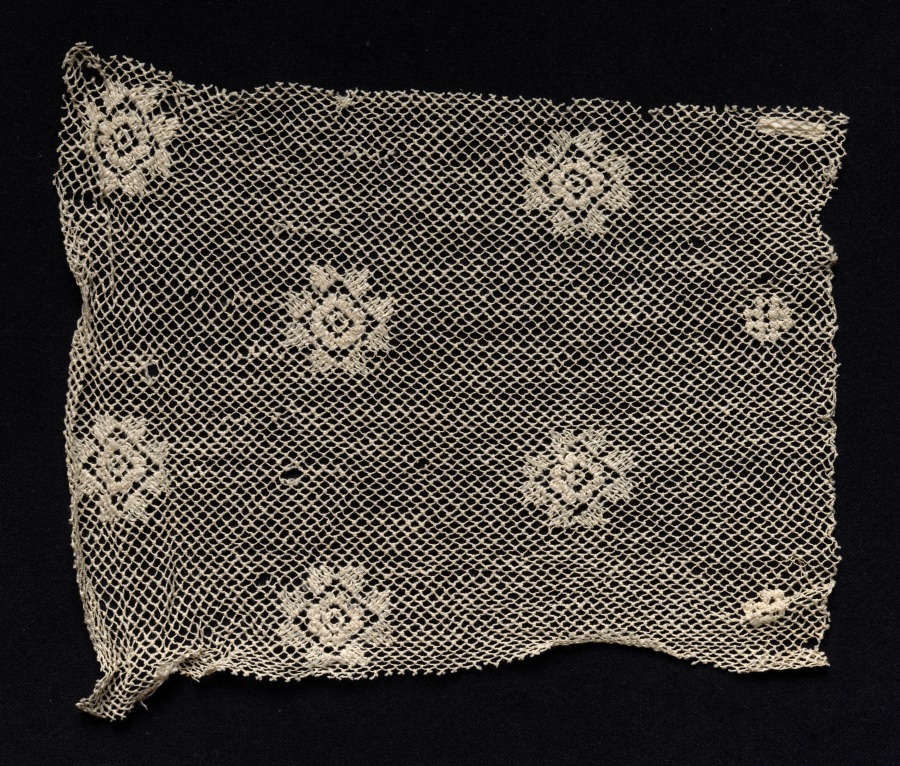
Technical Deconstruction of Form: The Vessel as Silhouette
The fragment under analysis—a band with floral motif—derives its structural logic from two opposing yet complementary aesthetic regimes: Jacques-Louis David’s *The Death of Socrates* and Giorgio Morandi’s *Vases*. The band, as a discrete textile element, operates as a liminal object: neither fully garment nor pure accessory, it occupies the interstitial space between the body and the object. In the context of the 2026 NYC executive wardrobe, this fragment demands a rigorous re-examination of how form functions when stripped of narrative excess.The Davidian Influence: The Vessel as Sacrificial Structure
David’s rendering of the hemlock cup is not a depiction of a drinking vessel but a geometric compression of philosophical will. The cup’s form—a shallow bowl atop a narrow stem—creates a vertical axis that mirrors Socrates’ outstretched hand. The band, when read through this lens, becomes a structural anchor rather than a decorative flourish. Its floral motif must be subordinated to the band’s primary function: to delineate the torso’s architecture. In the Davidian paradigm, the band operates as a sacrificial line—it cuts across the body not to adorn but to demarcate zones of tension. The floral elements, therefore, are not organic growths but geometric nodes that punctuate the band’s horizontal or diagonal trajectory. Each petal is a vector, each stem a structural rib. The band becomes a miniature frieze that compresses the body’s volume into a readable syntax of power and restraint. For the executive wardrobe, this translates into a band that functions as a corset of the intellect. It does not cinch the waist but rather frames the ribcage as a site of rational control. The floral motif, rendered in monochromatic ivory against a slightly darker ground, must be embossed rather than printed—a tactile relief that mimics the sculptural quality of David’s cup. The band’s width should be precisely calibrated to the wearer’s torso length: too narrow, and it becomes a mere belt; too wide, and it collapses into a bodice. The optimal proportion is a 3:1 ratio of torso length to band height, ensuring the band reads as an architectural intervention rather than a decorative afterthought.The Morandian Counterpoint: The Vessel as Empty Container
Morandi’s vases, by contrast, resist all narrative. They are not vessels for poison or for flowers; they are containers of silence. The band, when filtered through Morandi’s aesthetic, must shed its symbolic weight. The floral motif becomes pure pattern—a repetitive, almost hypnotic sequence of forms that refer only to themselves. The band’s color, Ivory, is not a neutral but a phenomenological field: it absorbs and reflects light without asserting chromatic dominance. In Morandi’s palette, ivory is the color of withdrawn presence—a tone that exists in the space between white and beige, between purity and decay. The band’s construction must therefore prioritize materiality over symbolism. A double-faced satin with a matte finish on one side and a subtle sheen on the other allows the band to shift between opacity and luminosity as the wearer moves. The floral motif, when executed in jacquard weave, becomes a textural event rather than a visual statement. The petals are not depicted but implied through thread density—a technique that Morandi himself employed in his later works, where the brushstroke becomes the subject. The band’s edges must be raw-cut and hand-finished, leaving a slight fray that echoes Morandi’s deliberate imperfections. This is not carelessness but intentional incompleteness—a refusal to resolve the object into a closed form.Color Analysis: Ivory as a Field of Tension
Ivory, in the context of this analysis, is not a color but a condition of light. It is the color of unmarked paper, of unwritten history. For the 2026 executive, ivory functions as a strategic blank—a surface onto which power can be projected without the interference of chromatic narrative. Unlike white, which asserts purity, or beige, which suggests neutrality, ivory occupies a threshold state: it is warm enough to feel organic, yet cool enough to remain detached.Chromatic Architecture
The band’s ivory must be layered to achieve depth. A base of unbleached silk provides a slightly yellow undertone, while a top layer of mercerized cotton adds a cool, reflective surface. The floral motif, if rendered in a slightly darker ivory (a difference of no more than 5% in value), creates a monochromatic gradient that reads as shadow rather than pattern. This technique, borrowed from Morandi’s *nature morte*, allows the motif to emerge and recede depending on the viewing angle. In direct light, the flowers appear as faint reliefs; in shadow, they dissolve into the band’s surface.Contextual Application
In the executive wardrobe, this band is most effective when worn against high-contrast foundations. A charcoal wool crepe dress or a black silk shell provides the necessary ground for the ivory band to assert its structural presence. The band should be positioned at the natural waist or slightly above, creating a visual break that elongates the lower body. For a more radical interpretation, the band can be worn as a detachable collar—a fragment that hovers between garment and accessory, echoing the liminality of the original fragment.Formal Synthesis: The Band as Urban Poetic
The band with floral motif, when subjected to this dual aesthetic pressure, becomes a paradoxical object. It is at once a Davidian monument—a marker of rational structure—and a Morandian void—a container that refuses to contain. For the 2026 NYC executive, this duality is not a weakness but a strategic advantage. The band allows the wearer to inhabit both registers: the classical authority of the sacrificial vessel and the modernist reserve of the empty container.Technical Specifications for Production
- Material: Double-faced satin (60% silk, 40% cotton) with jacquard weave for floral motif. - Dimensions: 8 cm height (adjustable to torso length), 90 cm length (with adjustable closure). - Closure: Hidden magnetic clasp at the back, ensuring a seamless front line. - Finishing: Raw-cut edges with hand-stitched reinforcement to prevent unraveling. - Motif Density: 12 floral nodes per 10 cm, arranged in a staggered grid to avoid visual monotony.Styling Protocol for the Executive
1. **Primary Use**: Worn over a high-neck shell or turtleneck, positioned at the natural waist. 2. **Secondary Use**: Worn as a collar, with the band folded to 4 cm height and secured at the nape. 3. **Tertiary Use**: Worn as a headband, with the floral motif oriented vertically for a sculptural effect. 4. **Prohibited Use**: Never worn over prints or patterns that compete with the motif’s subtle relief.Conclusion: The Fragment as Complete Statement
The band with floral motif, in its final form, is not a fragment at all. It is a complete aesthetic statement that operates through absence rather than presence. By drawing on David’s sacrificial geometry and Morandi’s phenomenological emptiness, the band achieves a third state—one in which the floral motif is neither symbolic nor decorative, but ontological. It exists as a pure form that refers only to its own materiality and the body it inhabits. For the 2026 NYC executive, this band is not an accessory. It is a strategic intervention—a tool for negotiating the tension between authority and restraint, between narrative and silence. In a wardrobe increasingly defined by the minimalist imperative, the band offers a controlled moment of complexity: a floral motif that blooms only in the mind’s eye, a vessel that holds nothing but the space it occupies.
Technical Insight
NYC Perspective: Translating Ivory tones into Minimalist silhouettes.