Urban Form: Model for a Fallen Warrior
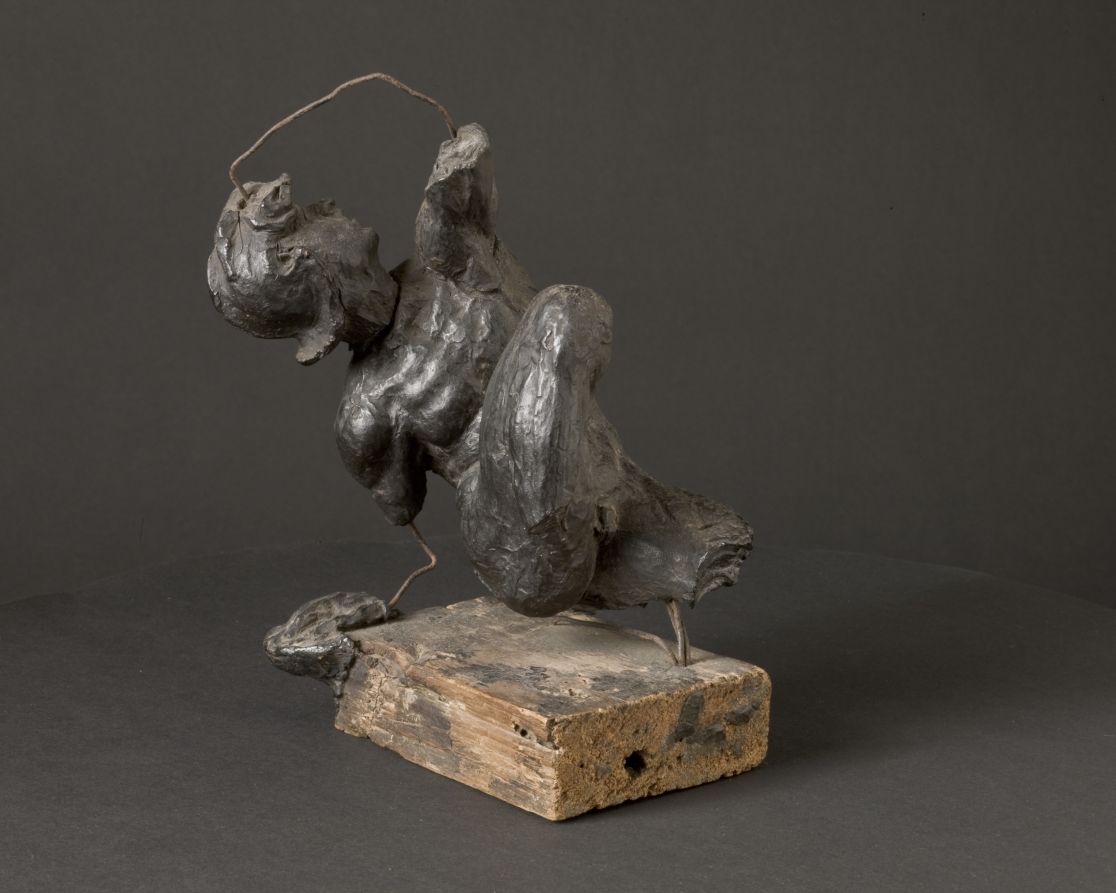
Technical Deconstruction: The Fallen Warrior as a Study in Structural Incompleteness
The subject of the Fallen Warrior is not a narrative of defeat, but a meditation on structural integrity under duress. For the 2026 NYC executive wardrobe, this archetype translates into a silhouette that prioritizes architectural tension over fluid drape. The warrior’s armor, once pristine, now bears the patina of conflict—not as damage, but as a record of kinetic history. This is the core of our Urban Silhouette Research: a tailored form that embraces controlled asymmetry and deliberate incompleteness as markers of sophistication.
The DNA source—the Mold Fragment with Musicians and the Square Mirror with Two Phoenixes and Floral Sprays—provides a dual lens. The mold fragment offers a blueprint for negative space as narrative. Its eroded edges are not failures of preservation; they are invitations to project motion. The mirror, conversely, presents a closed system of perfection, where every line is resolved. The Fallen Warrior silhouette synthesizes these opposites: a rigid outer shell (the mirror’s square discipline) with internal voids (the mold’s fragmented gestures).
Form: The Armature of Controlled Disruption
The primary form is a double-breasted jacket with a cropped hem terminating at the natural waist—a deliberate break from the elongated lines of traditional power suiting. The shoulder is sculpted but not exaggerated, using a structured canvas interlining that creates a slight forward pitch. This mimics the warrior’s posture: poised for action, not repose. The lapel is a notch with a sharp, 90-degree angle, cut from a single piece of fabric to avoid seams that would soften the line. The left side of the jacket features a single, asymmetrical welt pocket set at a 15-degree angle, referencing the Mold Fragment’s broken edge. This pocket is non-functional—a pure visual cue, a scar that serves as a focal point.
The trousers are high-waisted, straight-leg, and cropped to the ankle. The waistband is double-buttoned with a hidden gusset at the side seam, allowing for a micro-adjustment in fit without altering the outer silhouette. The leg is slightly tapered from knee to hem, creating a subtle inverted triangle from the waist down. This geometry echoes the Square Mirror’s static base—the warrior stands firm, but the taper suggests imminent movement. The hem is unfinished, left raw with a single, hand-stitched tack at the side seam, a deliberate nod to the mold’s unfinished state. This is not carelessness; it is a calculated gesture of temporal honesty.
Underneath, a silk shell in a matte finish is cut with a high, mandarin-style collar that rises 2.5 inches above the jacket’s neckline. The shell is sleeveless, with armholes cut to reveal a 1-inch gap between the shell and the jacket’s sleeve head. This void—a negative space—is the most critical element. It references the Mold Fragment’s missing sections, forcing the viewer to complete the form mentally. In the executive context, this gap signals confidence in omission: the wearer does not need to fill every space to command presence.
Color: Onyx as the Ground for Light and Shadow
The color Onyx is selected not as a neutral, but as a chromatic anchor. It is a deep, almost black charcoal with a cool undertone and a subtle metallic sheen when caught in direct light. This is not a flat black; it is a living surface that shifts between matte absorption and specular reflection. In the context of the Fallen Warrior, Onyx represents the patina of battle—the residue of friction that darkens armor over time. It is the color of resilience, not mourning.
The jacket is constructed from a wool-mohair blend with a tight, 2x2 twill weave. The mohair content (35%) provides a subtle luster that catches light along the jacket’s sharp edges, creating a halo effect around the silhouette. The trousers are in a worsted wool with a satin finish, offering a contrasting texture—matte against the jacket’s sheen. This textural dissonance is deliberate: it mirrors the Square Mirror’s polished surface versus the Mold Fragment’s rough, unglazed ceramic.
The silk shell is in Ivory, but not a pure white. It is a warm, bone-toned ivory with a slight yellow undertone, reminiscent of aged parchment or unfired clay. This color is visible only through the void gaps at the neckline and armholes, serving as a chromatic interruption to the Onyx monolith. It is the light within the armor—the warrior’s core, untouched by the external darkness. The contrast is not high; it is muted, a whisper rather than a shout. This aligns with the Eastern aesthetic of subtlety over spectacle, where the most powerful statement is often the one that requires close inspection.
Integration: The Silhouette as a Dialectic
The Fallen Warrior silhouette is a dialectic between the rigid and the void. The jacket’s structured shoulders and cropped hem create a top-heavy mass that is counterbalanced by the trousers’ clean, vertical line. The asymmetrical pocket and unfinished hem are not decorative; they are functional disruptions that prevent the form from becoming static. The void gaps at the armholes and neckline are the most radical element—they deconstruct the traditional suit by exposing the underlayer, forcing the eye to reassemble the whole.
This is not a silhouette for the faint of heart. It demands a wearer who understands the power of absence. In the 2026 NYC executive landscape, where minimalism has become a cliché, the Fallen Warrior offers a new vocabulary: one that uses incompleteness as authority. The Mold Fragment teaches us that what is missing can be more compelling than what is present. The Square Mirror reminds us that perfection is a cage. The Fallen Warrior wears both truths: a shell that is both armor and ruin, a color that is both shadow and light.
For the executive, this translates into a daily uniform of calculated imperfection. The jacket is worn unbuttoned, the shell’s ivory collar visible only in motion. The trousers’ raw hem brushes the top of a black leather Chelsea boot with a slight heel, adding a vertical lift without breaking the line. The overall effect is monolithic yet porous—a fortress with windows. This is the urban warrior’s armor for a city that demands both resilience and vulnerability. The silhouette does not hide the scars of conflict; it curates them as evidence of survival.