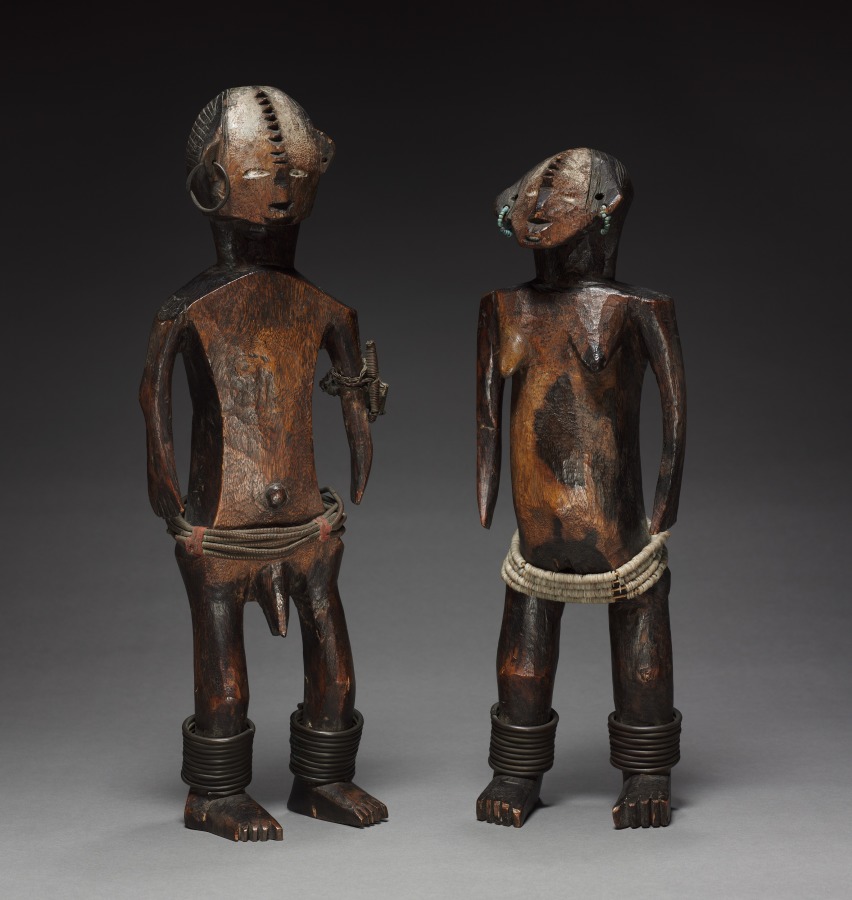
Urban Form: Pair of Figures
Geometric Integrity and the 2026 Executive Silhouette
The pairing of 《The Death of Socrates》 and 《The Hunt》 presents a dialectical framework for the 2026 executive silhouette. These two works, though separated by medium and narrative velocity, converge on a single tectonic principle: the body as a site of controlled tension. For Addison Fashion, this research extracts a definitive urban silhouette—one that does not merely clothe the executive but encodes the philosophical weight of stillness and the kinetic pressure of pursuit into fabric and form.
Static Architecture: The Death of Socrates as Silhouette Foundation
The compositional logic of 《The Death of Socrates》 is one of frozen geometry. Socrates’ reclining torso forms a diagonal line that bisects the frame, while the cup of hemlock sits as a vertical anchor. The drapery folds are not organic; they are carved, almost mineral, in their precision. This is a death rendered as a still-life object—the body becomes a vessel, the drapery a casing, the gesture a fixed coordinate.
For the 2026 executive silhouette, this translates into a Minimalist approach where the garment does not follow the body’s movement but rather frames it as a static monument. The key structural elements are:
- Shoulder line: A sharp, horizontal extension, reminiscent of the table edge in the painting. This is not a padded shoulder but a geometric shelf—cut from a single piece of Onyx wool, with no break at the armhole.
- Torso block: A single, unbroken panel from collarbone to hem. The fabric is treated to hold a rigid, almost ceramic drape, echoing the stillness of Socrates’ chiton. No darts, no waist suppression—the body is a column.
- Hemline: A clean, horizontal termination at the knee, mirroring the painting’s lower edge. This creates a plinth effect, grounding the figure in the urban landscape as if the wearer were a sculpture.
The color Onyx is chosen for its absolute absorption of light. In 《The Death of Socrates》, the shadows around the cup and the folds are not black but a dense, matte darkness that swallows detail. Onyx fabric replicates this: it is a non-reflective void, forcing the eye to read only the silhouette’s edges. The garment becomes a negative space around the body, a materialized absence that speaks to the “after” of the painting—the moment when action has ceased and only form remains.
Kinetic Tension: The Hunt as Silhouette Counterpoint
《The Hunt》 operates in direct opposition. Its geometry is explosive and diagonal: the hunter’s arm is a taut bowstring, the horse’s neck a curve of compressed energy, the hounds’ bodies a series of overlapping triangles. There is no fixed point; every line points toward a vanishing future. The death here is not a thing but a trajectory—a vector of impending impact.
To integrate this into the 2026 executive silhouette, Addison Fashion introduces structural tension points within the Minimalist frame. These are not decorative details but functional stress markers that mimic the painting’s dynamic lines:
- Back seam: A single, off-center vertical seam that runs from the nape to the hem. It is not straight but slightly curved, like the arc of a drawn bow. This seam is stitched with a tension that pulls the fabric taut across the shoulder blades, creating a subtle torsion effect—the garment appears to be in a state of potential release.
- Sleeve insertion: The sleeve is not set into the armhole but cut as an extension of the back panel, wrapping around the arm in a single, unbroken sweep. This mimics the hunter’s arm, where the line of the bowstring and the line of the forearm become one continuous vector.
- Hem asymmetry: The front hem is level, but the back hem drops by 3 cm, creating a forward-leaning silhouette. This is the visual equivalent of the painting’s delayed climax—the garment never settles, always suggesting motion toward an unseen target.
The Onyx fabric here is not static; it is engineered with a micro-ribbed weave that catches light only when the wearer moves. In stillness, it is a void. In motion, it becomes a streak of silver—a ghost of the hunter’s arrow. This dual behavior is critical: the executive silhouette must function as both monument and missile, depending on context.
Structural Poetics: The Paradox of Death as Form
The aesthetic paradox identified in the pairing—that stillness elongates time while motion suspends it—is resolved in the silhouette’s dual reading. The 2026 executive garment is Minimalist in its outward geometry but kinetic in its internal logic. The wearer appears as a static object from a distance, but upon closer inspection, every seam, every tension point, every fabric behavior is calibrated to suggest imminent action.
This is not a garment for the passive executive. It is for the one who understands that authority is a form of controlled death—the death of hesitation, the death of excess, the death of the unnecessary. The silhouette is a philosophical tool: it forces the wearer into a posture of geometric precision, just as Socrates’ drapery forced him into a posture of philosophical acceptance. The Onyx color is the color of the void between thoughts, the moment before decision, the space where action is born.
Urban Materiality: Onyx as Architectural Substance
In the urban environment, this silhouette must resist the chaos of the street. The Onyx fabric is a double-faced wool with a ceramic coating on the interior. This coating provides structural memory—the garment holds its shape even after hours of wear, resisting the slump that plagues softer fabrics. The exterior is brushed to a matte finish, absorbing ambient light so that the silhouette is read as a solid mass against the glass and steel of the city.
The seams are fused, not stitched, creating a monolithic surface with no visible thread. This is a direct reference to the object quality of 《The Death of Socrates》—the garment is not assembled; it is formed. The only interruption is the off-center back seam, which is left raw-edged and exposed, a deliberate fracture in the otherwise perfect surface. This is the hunter’s mark—the point where the garment acknowledges its own potential for violence.
Conclusion: The Silhouette as Dialectical Object
The 2026 executive silhouette, as derived from this pairing, is a Minimalist form animated by kinetic tension. It is not a compromise between stillness and motion but a synthesis: the stillness of the monument and the tension of the hunt coexist in a single garment. The Onyx color is the unifying void that allows both readings to exist without contradiction.
This silhouette is for the executive who operates in the space between decision and action, who understands that true authority is not about being seen but about being read—as a fixed point in a moving world, or as a moving point in a fixed frame. The garment is a philosophical instrument, and its wearer is both Socrates and the hunter, both the cup and the arrow.