Urban Form: Waist Cloth (Kain Panjeng)
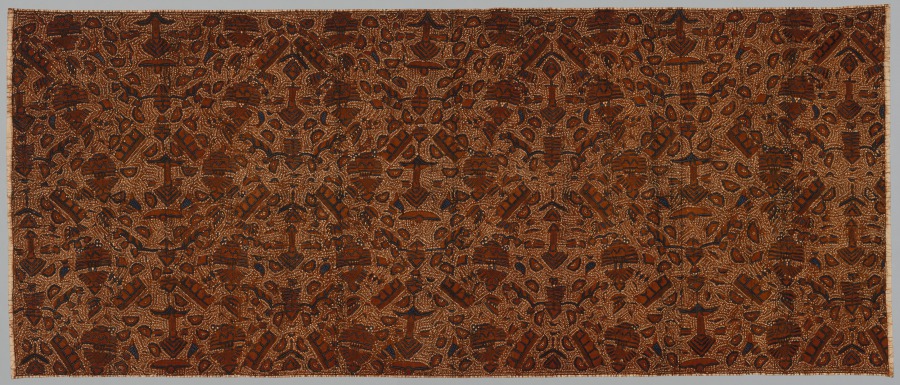
Technical Deconstruction of the Waist Cloth (Kain Panjeng) as Urban Silhouette Architecture
The Kain Panjeng, a traditional Javanese waist cloth, presents a paradox of form: a rectangular textile that, through draping and tension, generates a volumetric, sculptural silhouette. For the 2026 NYC executive wardrobe, this object is not a heritage relic but a functional diagram of spatial negotiation. Its core logic—a single, unseamed plane that wraps the lower body—offers a radical departure from Western tailoring’s reliance on darts, seams, and structured waistbands. Instead, it proposes a fluid, gravity-driven architecture where fabric becomes a second skin, responsive to movement and posture.
Formal DNA: From Static Rectangle to Dynamic Volume
The Kain Panjeng’s formal genesis lies in its uncompromising planarity. Unlike a skirt or trousers, which are pre-constructed enclosures, the waist cloth is a blank canvas of 2.5 to 3 meters of fabric. Its transformation into a wearable form relies entirely on the wearer’s body as the armature. The cloth is wrapped around the waist, overlapped, and secured via a fold or a belt. This creates a tension gradient: the upper edge is cinched, compressing the fabric into a rigid band, while the lower edge cascades freely, generating a dynamic, asymmetrical hemline.
This structural logic mirrors the “Udumbara Flowers” wood plaque’s aesthetic of subtractive presence. Just as the artist carves away wood to reveal the flower’s form, the Kain Panjeng’s silhouette is defined by absence—the absence of seams, the absence of rigid structure. The volume is not built up but released from the fabric’s own weight. The resulting silhouette is neither tailored nor oversized; it is fluid, a term that in this context denotes a controlled, gravity-responsive drape. The waist cloth does not impose shape on the body; it negotiates shape with the body, creating a silhouette that is unique to each wearer and each moment of wear.
Color and Materiality: The Slate Spectrum as Urban Camouflage
The selection of Slate as the color field is deliberate. Slate—a deep, muted gray with cool undertones—operates as a visual neutralizer in the urban landscape. It absorbs light rather than reflecting it, creating a matte, non-reflective surface that reduces visual noise. This aligns with the “Mirror with Deities, Chariot, and the White Tiger” bronze mirror’s logic of cosmic order through density. The mirror’s surface is a field of high-contrast imagery, yet the bronze itself is a unifying, dark material. Similarly, Slate provides a grounding base for the Kain Panjeng’s fluid form, allowing the texture and weight of the fabric to become the primary visual language.
In the 2026 executive wardrobe, Slate functions as urban camouflage. It is not a color of retreat but of strategic invisibility. The executive who wears a Slate waist cloth is not making a statement of color but of material intelligence. The fabric’s weight and drape—ideally a wool-cashmere blend or a heavy silk twill—become the sole carriers of form. The absence of pattern or ornamentation forces the eye to read the silhouette’s geometry: the fall of the fabric, the tension at the waist, the asymmetry of the hem. This is a minimalist aesthetic that derives its power from subtraction, echoing the “Udumbara Flowers” principle of “less is more” as a pathway to presence.
Silhouette Mechanics: The Waist as Fulcrum
The Kain Panjeng’s silhouette is anchored at the waist, which acts as the fulcrum of the entire form. The waistband—whether a simple fold or a leather belt—creates a compression point that defines the upper boundary of the volume. Below this point, the fabric is released into a cascade. The resulting shape is trapezoidal in its most basic form, but the asymmetry of the overlap introduces a dynamic, non-linear edge.
This is where the “Mirror with Deities” aesthetic of dynamic flow becomes operational. The bronze mirror’s rotating, interlocking imagery of deities, chariot, and tiger creates a sense of perpetual motion within a static frame. The Kain Panjeng achieves a similar effect through fabric manipulation. The overlap and twist at the waist generate directional folds that guide the eye downward in a spiral or diagonal trajectory. The hem, instead of being a straight line, becomes a series of broken, cascading planes that shift with each step. This is not a static silhouette; it is a kinetic sculpture that changes with the wearer’s gait.
Integration into the 2026 NYC Executive Wardrobe
For the NYC executive, the Kain Panjeng must be recontextualized as a modular lower-body garment that replaces the traditional trouser or skirt. Its fluid silhouette pairs optimally with structured upper-body pieces: a tailored blazer in Onyx, a crisp white shirt, or a minimalist shell. The tension between the rigid upper and fluid lower creates a dialectic of control and release that mirrors the “Udumbara Flowers” vs. “Mirror with Deities” opposition. The upper body is the domain of order and precision; the lower body is the domain of flow and spontaneity.
The Slate color ensures that the waist cloth reads as professional and subdued, not as costume. The fabric’s weight and opacity must be sufficient to maintain the silhouette’s integrity without clinging. A mid-weight wool crepe or a heavy silk faille would provide the necessary drape and body. The finish should be matte, rejecting the sheen of synthetic fabrics, to align with the “Udumbara Flowers” aesthetic of raw, unadorned materiality.
Conclusion: The Waist Cloth as a Proposition for Urban Poetics
The Kain Panjeng, when analyzed through the lens of form and color, offers a radical rethinking of the lower-body silhouette. It is not a garment but a system of draping that generates a fluid, asymmetric volume anchored at the waist. The Slate color grounds this form in a neutral, urban palette, allowing the material and silhouette to speak without distraction. This is a minimalist approach that derives its power from subtraction and tension, echoing the “Udumbara Flowers” principle of emptiness as presence and the “Mirror with Deities” principle of dynamic order within a static frame.
For the 2026 NYC executive, the waist cloth is not a trend but a strategic tool for spatial and visual negotiation. It allows the wearer to command attention through form rather than ornament, to move with fluidity in a rigid urban environment, and to project an aesthetic of controlled spontaneity. This is the urban silhouette of the future: one that is rooted in tradition but reimagined for the executive’s daily navigation of power, space, and time.