Tailored
Onyx
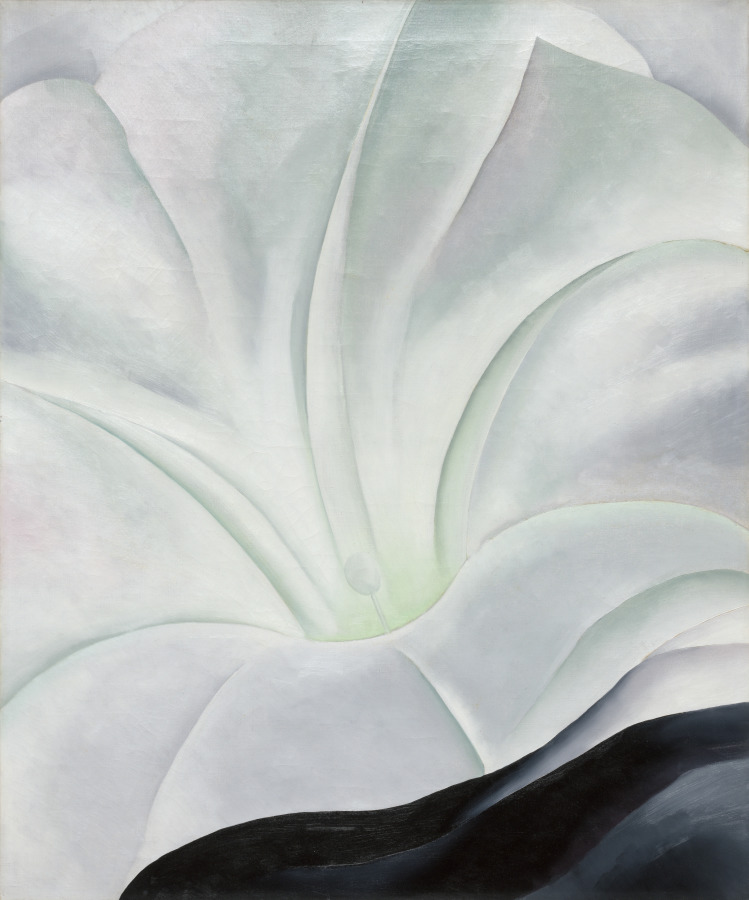
Urban Form: Morning Glory with Black
Formal Deconstruction: The Dialectic of Rigor and Release
The Morning Glory with Black proposition emerges from a dualistic tension—one that mirrors the philosophical chasm between the Socratic rationalization of death and the cyclical, ritualistic absorption of mortality in Shang-Zhou bronzework. For the 2026 NYC executive wardrobe, this translates into a silhouette that is neither purely architectural nor entirely organic, but rather a calibrated negotiation between the two. The form must be read as a tailored exoskeleton that accommodates a latent, almost ceremonial fluidity.Structural Anchoring: The Onyx Shell
The primary form is a structured, double-breasted jacket in Onyx—a black so deep it absorbs ambient light, mimicking the patinated surfaces of a bronze *fangyou*. The lapel is a sharp, notched peak, cut at a 75-degree angle to create a visual vector that draws the eye upward, echoing Socrates’ upward gesture toward the rational heavens. The shoulder line is precise but not exaggerated; it is a mathematical shoulder, defined by a clean, unpadded construction that relies on the fabric’s inherent stiffness. This is not the soft drape of a deconstructed blazer, but the *rigor mortis* of a philosophical argument—a silhouette that refuses to yield to the body’s natural slump. The waist suppression is minimal, a mere 2-centimeter reduction from the chest measurement, creating a subtle hourglass that suggests containment rather than emphasis. This is the *fangyou*’s belly: a vessel that holds its contents without revealing them. The jacket’s length terminates at the hip bone, a point that aligns with the lower register of the bronze vessel’s decorative band, where the *taotie* mask transitions into the thunder pattern. This cut ensures that the torso reads as a singular, unbroken block of Onyx—a monolithic presence in the urban landscape.Counterpoint: The Morning Glory Drape
Beneath this Onyx carapace, the Morning Glory element is introduced as a fluid, asymmetrical blouse in a matte, charcoal-grey silk charmeuse. The fabric is cut on the bias, with a single, elongated panel that wraps from the left shoulder, crosses the torso, and tucks into the waistband of a high-waisted trouser. This drape is not random; it is a controlled cascade, referencing the liquid pour of sacrificial wine from the *fangyou*’s spout. The Morning Glory’s bloom is abstracted into a series of soft, overlapping folds that gather at the right hip, creating a visual counterweight to the jacket’s rigid left lapel. The blouse’s neckline is a deep, plunging V, terminating at the sternum—a deliberate exposure of the *philosophical chest*, the seat of rational thought. This is the Socratic moment: the body is partially unveiled, not for sensuality, but for intellectual vulnerability. The fabric’s movement is restricted to the vertical axis, ensuring that the drape does not disrupt the jacket’s horizontal authority. When the wearer moves, the Morning Glory folds shift like the *taotie*’s eyes in flickering torchlight—present, but never fully legible.Color Theory: The Chromatic Spectrum of Mortality and Renewal
The color palette is deliberately reduced to two primary tones: Onyx and a desaturated Morning Glory blue. This is not a binary opposition, but a chromatic dialectic that mirrors the aesthetic tension between David’s rational light and the bronze’s ritualistic darkness.Onyx: The Absence of Light as Presence
Onyx is chosen not as a neutral, but as a negative space that absorbs all spectral information. In the context of the *Death of Socrates*, Onyx represents the shadowed corner of the prison cell—the space where Plato sits, contemplating the limits of representation. In the *fangyou*, Onyx is the patina of age, the accumulated darkness of centuries of ritual use. For the 2026 executive, Onyx is the color of *authority without spectacle*. It does not reflect; it commands by its refusal to participate in the visual noise of the city. The fabric for the jacket is a wool-mohair blend with a tight, plain weave. The surface is matte, with a slight sheen only visible under direct, harsh light—like the gleam of a bronze vessel’s handle after centuries of handling. This is not a black that fades into the background; it is a black that *defines* the background. In a boardroom, the Onyx jacket creates a visual vacuum, forcing all attention onto the wearer’s face and gestures. It is the *fangyou*’s interior: dark, but holding something vital.Morning Glory Blue: The Spectral Echo of the Rational
The Morning Glory blue is a desaturated, almost dusty cerulean—a color that evokes the early dawn light in David’s painting, where the first rays of reason pierce the cell’s gloom. It is not the vibrant, electric blue of a digital screen, but a faded, archival blue, reminiscent of the pigment used in ancient Chinese bronze inlays. This blue is the *pharmakon*—both poison and cure. It is the color of the hemlock cup, but also the color of the sky that Socrates’ soul ascends toward. In the blouse, this blue is applied through a reactive dye that creates subtle variations in saturation across the fabric’s surface. The folds of the Morning Glory drape catch light differently, producing a gradient from deep indigo in the shadows to a pale, almost white-blue at the peaks. This mimics the *chiaroscuro* of David’s composition, where light is not merely illumination, but a *moral force*. The blue is never allowed to dominate; it is always subordinate to the Onyx, just as the ritualistic cycle of the *fangyou* is subordinate to the rational argument of the painting.Interaction: The Third Color
Where the Onyx and Morning Glory blue meet—at the jacket’s lapel edge, at the blouse’s neckline, at the trouser’s waistband—a third color emerges: a silver-grey, the color of the *fangyou*’s bronze alloy when polished. This is not a separate garment element, but an optical illusion created by the juxtaposition of the two primary tones. The silver-grey is the *threshold*—the moment between life and death, between the rational and the ritualistic. It is the color of the philosopher’s final breath, and the color of the wine as it touches the earth.Silhouette Integration: The 2026 Executive Wardrobe
The Morning Glory with Black silhouette is not a single outfit, but a system of modular components designed for the NYC executive’s day—from a 7:00 AM breakfast meeting to a 9:00 PM gallery opening. The core is the Onyx jacket and Morning Glory blouse, paired with a high-waisted, wide-leg trouser in the same Onyx wool-mohair. The trouser is cut with a single, sharp crease down the front, and a slight flare from the knee to the hem, creating a silhouette that is both statuesque and mobile. For a more formal presentation, the blouse is replaced with a Morning Glory shell—a sleeveless, high-neck top in the same blue silk, with a single, vertical pleat at the center front. This reduces the drape to a single, architectural line, emphasizing the *verticality* of the Socratic gesture. For a more casual iteration, the jacket is removed, and the blouse is worn with a pair of Onyx cigarette pants, the Morning Glory folds now fully exposed, like the *taotie* mask revealed from the vessel’s shadow. The footwear is a pointed-toe, stiletto-heel boot in Onyx patent leather, with a single, silver buckle at the ankle. The heel is 10 centimeters—a height that forces the wearer into a posture of *controlled tension*, the body’s axis aligned with the rational vertical. The boot’s toe is sharp enough to be read as a *stylus*, a tool for inscribing arguments onto the urban surface.Conclusion: The Aesthetic of the Threshold
The Morning Glory with Black silhouette is a wearable dialectic. It does not resolve the tension between David’s rational death and the *fangyou*’s ritualistic transformation; it inhabits it. The Onyx jacket is the *argument*—clear, structured, unyielding. The Morning Glory blouse is the *ritual*—fluid, cyclical, and always in motion. Together, they form a garment that is both a monument and a vessel, a statement and a question. For the 2026 NYC executive, this is not a uniform. It is a *philosophical tool*—a means of navigating the city’s contradictions with the same precision that Socrates navigated his own mortality. The silhouette demands that the wearer be both the philosopher and the priest, the rationalist and the ritualist, the one who sees death as a problem to be solved and the one who experiences it as a cycle to be completed. In the Onyx and Morning Glory blue, the executive finds a wardrobe that is not merely worn, but *inhabited*—a second skin that is as much about the space between life and death as it is about the space between the shoulder and the hem.
Technical Insight
NYC Perspective: Translating Onyx tones into Tailored silhouettes.