Urban Form: The Cleveland Apollo: Apollo Sauroktonos (Lizard-Slayer) or Apollo the Python-Slayer
Geometric Integrity as Urban Armature
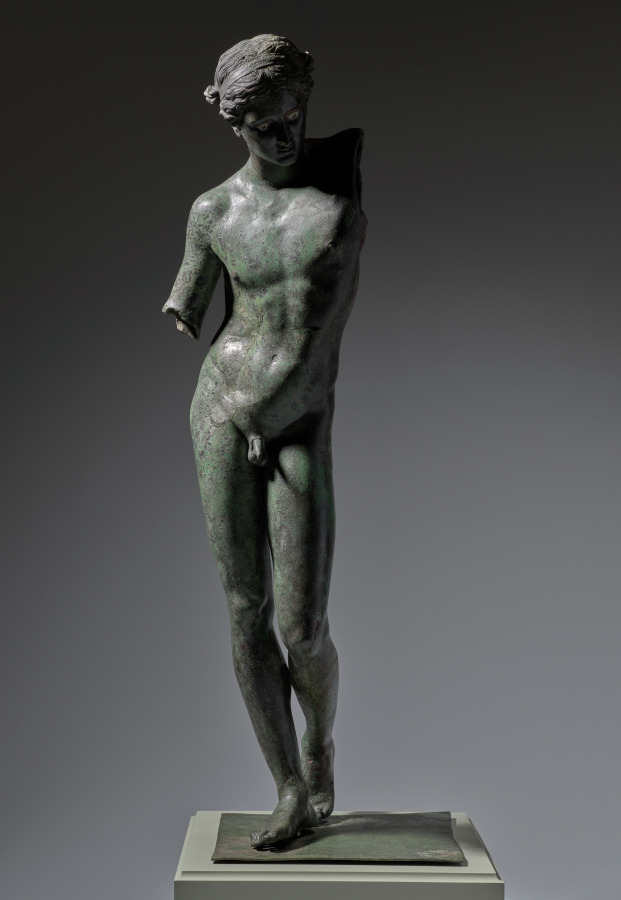
The Cleveland Apollo—whether identified as the Sauroktonos (Lizard-Slayer) or the Python-Slayer—presents a paradox of poised tension that directly informs the 2026 executive silhouette at Addison Fashion. The sculpture’s contrapposto stance, with the youth’s weight shifted onto one leg while the torso rotates in a subtle spiral, establishes a geometric armature of intersecting verticals and diagonals. This is not the static equilibrium of classical idealism; it is a dynamic balance held in suspension, a moment of predatory stillness before action. The Apollo’s left arm extends upward, the right hand poised to strike, creating an invisible triangle that anchors the figure in space. For urban materiality, this translates into a silhouette that prioritizes structural clarity over ornamentation—a minimalist shell that encloses the body while permitting micro-movements of controlled asymmetry.
The Contrapposto of the 2026 Executive
The Apollo’s weight distribution—70% on the standing leg, 30% on the forward foot—becomes a literal pattern for tailoring. The 2026 executive jacket must replicate this imbalance through engineered shoulder lines: a dropped shoulder on the non-dominant side, a sharp, extended peak on the dominant. The result is a silhouette that appears both grounded and poised to pivot. The fabric—Onyx-toned virgin wool with a 12% elastane core—must hold this geometry without sagging, mimicking the marble’s tensile strength. The hemline, asymmetrically cut, falls two centimeters longer on the weight-bearing side, echoing the Apollo’s lifted heel. This is not a garment for static display; it is a second skin for the urban predator who navigates glass-and-steel canyons with the same latent readiness as the god who hunts the lizard.
Structural Poetics of the Lizard-Slayer
The Apollo Sauroktonos is defined by its narrative of imminent action—the lizard, unaware, crawls up a tree trunk while the god calculates the precise arc of his strike. This temporal compression, the frozen moment between intention and execution, is the core structural poetics of the 2026 silhouette. The garment must not merely drape; it must hold potential energy. This is achieved through internal boning along the spine and lateral seams, creating a rigid exoskeleton that contrasts with the fluidity of the wearer’s natural movement. The collar, a high, architectural stand derived from the Apollo’s chiton drape, rises to the nape of the neck, framing the head as a sculptural object. The sleeves, cut with a slight forward pitch, terminate in a sharp, unbuttoned cuff that exposes the wrist—the point of action, where the hand will strike.
Urban Materiality: Onyx and the Void
Color is not decorative; it is structural. Onyx, as specified, is the only chromatic choice for this silhouette. It absorbs light, creating a void that emphasizes the garment’s geometric lines. The fabric’s surface must be matte, almost chalky, to avoid any reflection that would disrupt the monolithic presence. For the 2026 executive, this is a declaration of negative space—the garment becomes a shadow that the wearer inhabits. The lizard, in the Apollo narrative, is small, vulnerable, and unaware. In urban terms, the lizard is the distraction, the noise, the inefficiency that the executive must eliminate with a single, precise gesture. The Onyx silhouette is the tool for that elimination: a second skin of controlled aggression, where every seam is a line of sight, every dart a vector of intent.
The Python-Slayer’s Architectural Drape
If the Apollo is the Lizard-Slayer, the alternative reading—Python-Slayer—introduces a different scale of conflict. The Python, a serpent of mythic proportions, requires a broader, more enveloping form of containment. This duality informs the 2026 silhouette’s capacity for transformation. The jacket, when unbuttoned, falls into a wide, trapezoidal shape that references the Python’s coils—a soft, almost fluid geometry that can be cinched at the waist with a leather strap, mimicking the Apollo’s belt. The trousers, cut with a full, straight leg, pool slightly over the shoe, creating a continuous line from shoulder to floor. This is the silhouette of the urban myth-maker: the executive who does not merely react to the city but shapes its narrative. The fabric, a double-faced Onyx wool with a subtle herringbone weave, provides the necessary weight to hold the drape without collapsing into formlessness.
Internal DNA: The Maid Asleep and the Frontier Vignette
The two artworks referenced—Vermeer’s A Maid Asleep and Bingham’s A Vignette of Life on the Frontier—share a preoccupation with the transitional moment. The maid sleeps in the pause between domestic duties; the frontiersmen gather at the edge of civilization. The Apollo, too, exists in a transitional state: between boyhood and godhood, between stillness and violence. The 2026 executive silhouette must embody this liminality. The garment is not a uniform for a fixed role but a mobile architecture for the interstitial spaces of urban life—the elevator, the taxi, the conference room threshold. The Onyx color, like the maid’s shadowed chamber or the river’s muddy bank, absorbs context, allowing the wearer to remain undefined until the moment of action.
Conclusion: The Silhouette as Urban Armature
The Cleveland Apollo, whether slaying lizard or python, offers a definitive model for the 2026 executive silhouette: a geometry of poised tension, a materiality of absorbed light, and a narrative of controlled potential. The garment is not a costume but a structural system—a second skeleton that aligns the wearer with the city’s vertical and horizontal axes. The Onyx palette, the Minimalist category, the precise asymmetry of the cut—all converge to create a silhouette that is both timeless and urgently contemporary. The executive who wears this does not merely occupy space; they define it, as the Apollo defines the tree trunk, the lizard, and the moment of the strike.