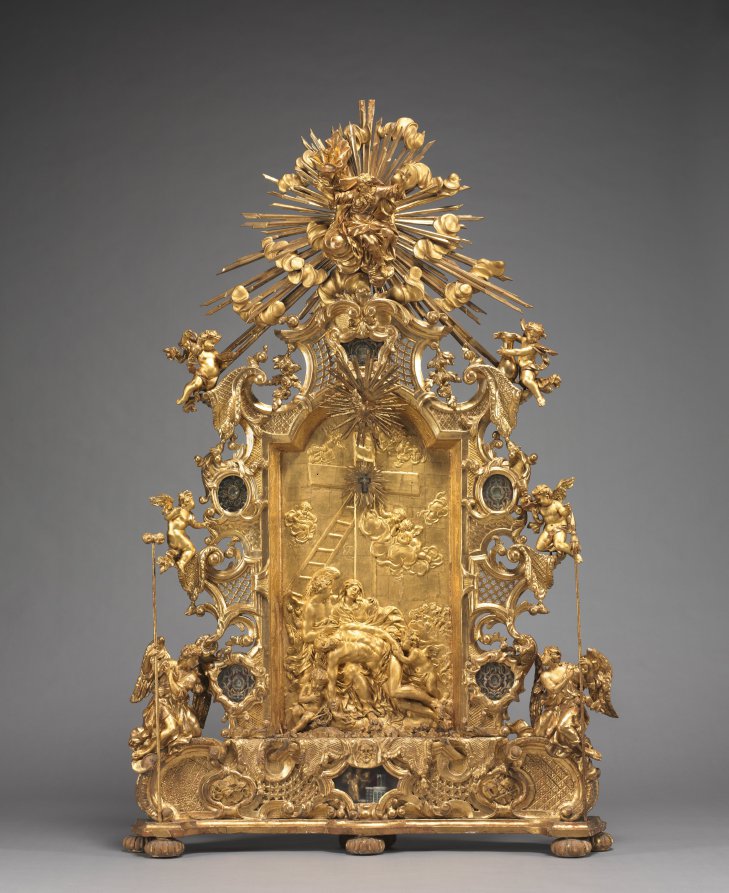
Urban Form: Altarpiece with Relics
Structural Poetics: The Bodhisattva as Architectural Archetype
The Bodhisattva figure, in its canonical stillness, presents a masterclass in geometric integrity. The vertical axis is paramount—a plumb line of spiritual gravity that descends from the cranial apex through the sternum to the lotus pedestal. This is not mere symmetry; it is axial alignment as a metaphysical statement. For the 2026 executive silhouette, this translates into a rigorous columnar structure. The torso is a monolithic block, unbroken by superfluous draping. Shoulders are squared but not padded—the architecture emerges from the cut, not the fill. The silhouette is tectonic: a series of stacked planes (shoulder yoke, chest panel, skirt or trouser column) that articulate the body as a series of cantilevered volumes.
The Bodhisattva’s hand gestures, or mudras, are precise vectors. The vitarka mudra (teaching gesture) creates a right-angle triangle between thumb and forefinger, a geometric anchor that defines the spatial boundary of the gesture. In garment construction, this informs the sleeve architecture: a sharp, angular cut at the cuff that mirrors the mudra’s triangular precision. The neckline follows the ushnisha (cranial protuberance) logic—a clean, horizontal band that frames the face as a sacred aperture, leaving the clavicle exposed as a structural lintel.
Urban Materiality: Onyx as a Field of Tension
The Onyx palette is not a color but a material condition. It is the black of polished basalt, of obsidian mirrors, of the void between stars. For the 2026 executive, this is the urban ground—the asphalt, the glass curtain wall, the shadow of a skyscraper at dusk. The fabric must possess a density that absorbs light rather than reflects it. We specify a double-faced wool crepe with a matte finish, its weight calibrated to fall in rigid, unyielding folds. The surface is monolithic, devoid of pattern, so that the eye reads only the pure geometry of the cut.
This materiality echoes the Bodhisattva’s patina—the way centuries of incense and touch have burnished the stone to a laconic sheen. The urban equivalent is the weathered steel of a bridge, the burnished concrete of a brutalist facade. The garment must feel archaeological, as if excavated from a future ruin. Seams are flat-felled and invisible, creating a seamless envelope that denies the body’s interiority. The Onyx becomes a second skin of compressed carbon, a protective carapace that shields the wearer from the city’s chaos.
Structural Poetics: The Bovine-Headed Amulet as Compressed Power
The Amulet in the Form of a Seated Figure with Bovine Head introduces a diametrically opposed geometric logic: compression. Where the Bodhisattva expands vertically, the amulet contracts into a dense, cubic mass. The bovine head is a geometric wedge—a triangular face with a horizontal muzzle, the horns forming a V-shaped crown. This is the silhouette of latent force, of energy held in reserve. For the 2026 executive, this translates into shoulder articulation: a sharp, angular dolman sleeve that cuts across the torso like a bull’s horns, creating a triangular negative space at the underarm.
The seated posture of the amulet is a crouched, coiled spring. The knees are drawn up, the spine curved into a C-shape of potential release. In garment construction, this informs the back panel: a curved seam that follows the scapula, allowing the fabric to tension and release with movement. The waist is cinched not by a belt but by a structural dart that mimics the amulet’s compressed core. The silhouette is top-heavy, with volume concentrated in the upper body, tapering to a narrow, columnar base—a pyramid of power.
Urban Materiality: The Amulet’s Patina of Protection
The Onyx palette for the amulet-inspired piece takes on a different texture: lacquer. The surface must be glossy, reflective, and hard, like the polished stone of the amulet itself. We specify a coated cotton or bonded leather that has a vitreous sheen, catching light in sharp, specular highlights. This is the urban armor—the rain-slicked street, the headlight glare on a limousine’s hood. The garment is impermeable, a second epidermis that repels the city’s moisture and grime.
The hardware is critical: oxidized silver or blackened brass zippers and grommets that echo the amulet’s ritualistic fastenings. These are not decorative but functional anchors, points of tension and release. The closure is asymmetrical, a diagonal zip that mimics the amulet’s seated twist. The pockets are hidden, blade-like slits that do not disrupt the monolithic surface. The garment is a reliquary, a portable sanctuary that contains the wearer’s power within its compressed geometry.
Synthesis: The Dual Silhouette of 2026
The Bodhisattva and the Bovine-Headed Amulet are not opposites but complementary poles of the same spiritual spectrum. The former is vertical, expansive, and luminous; the latter is horizontal, compressed, and protective. For the 2026 executive wardrobe, these two principles must be synthesized into a single, coherent silhouette.
The daytime uniform takes the Bodhisattva’s axial column—a long, unstructured coat in matte Onyx wool, falling to the ankle. The shoulder is soft but defined, a gentle cantilever that frames the face. The neckline is a clean, horizontal band, leaving the throat exposed as a vulnerable, sacred space. The sleeve is straight and narrow, terminating in a sharp, triangular cuff that echoes the mudra.
The evening piece inverts the logic, drawing from the amulet’s compressed power. A cropped, sculptural jacket in lacquered Onyx leather, with exaggerated, horn-like shoulders that create a V-shaped silhouette. The waist is cinched by a structural corset, the back panel curved to follow the spine. The trousers are narrow and columnar, a dark, liquid base that grounds the explosive upper volume.
This is the urban silhouette of 2026: a dialectic between expansion and compression, between the sacred and the protective. The Onyx palette unifies these forces, rendering them in a single, monolithic key. The garment is not worn; it is inhabited. It is a portable altarpiece, a reliquary for the self, a geometric prayer spoken in the language of urban materiality.