Urban Form: Carving from an Overmantel
Geometric Integrity as Urban Armature
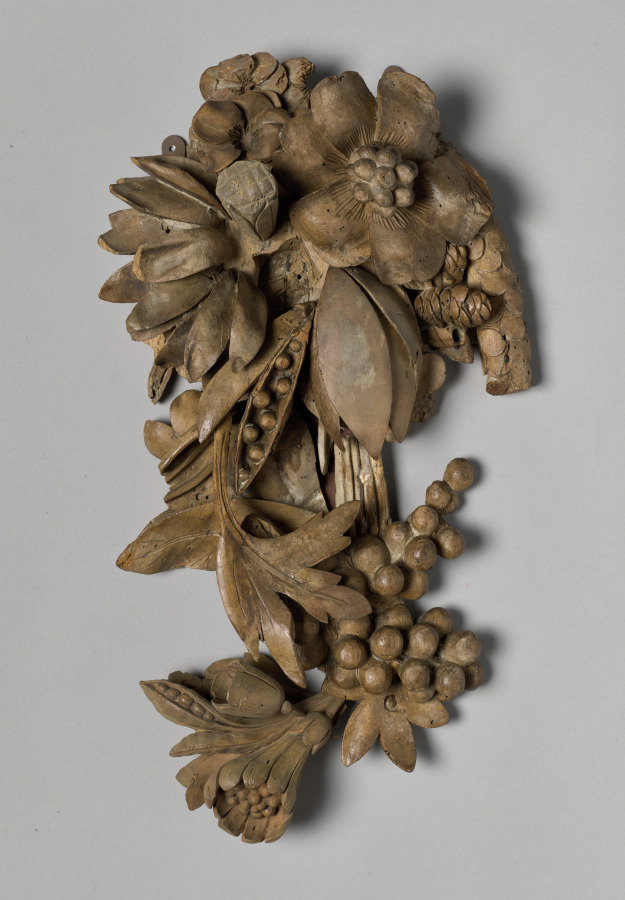
The Carving from an Overmantel presents a foundational paradox for the 2026 executive silhouette: it is simultaneously a record of absolute order and a testament to its violent rupture. The original artifact—a fragment of a funerary stele, likely from the Middle Kingdom—bears the hallmarks of Ma’at: a rigid grid, bilateral symmetry, and a hieratic frontality that denies any suggestion of organic movement. Yet the carving is incomplete, its lower register sheared away by time or deliberate defacement. This laceration is not a flaw; it is the work’s most potent structural statement. For Addison Fashion, the silhouette must not merely replicate the stele’s pristine geometry but incorporate the fracture as a design principle. The 2026 executive shape is thus defined by a truncated verticality—a columnar torso that rises with ceremonial precision, only to be abruptly cropped or asymmetrically weighted, as if the garment itself has been subjected to a clean, surgical excision. The shoulder line is the primary locus of this tension: a sharp, architectural peak (reminiscent of the stele’s carved hieroglyphic border) that descends into a deliberately unresolved hemline. This is not the soft drape of fluid tailoring; it is a hard-edged, monolithic block that asserts presence through its refusal to conform to the body’s natural contours.
Structural Poetics: The Grid and the Gash
The stele’s grid system—the invisible armature that organizes every figure and glyph—translates directly into the garment’s internal construction. We propose a double-layered shell: an outer layer of rigid, high-density wool (a technical worsted with a 320-gram weight, woven in a plain weave to mimic the stone’s granular surface) and an inner layer of a lighter, slightly elasticated silk-cotton blend. The outer layer is cut on a strict, rectilinear pattern—no darts, no curves, only straight seams that meet at 90-degree angles. This creates a cubic volume around the torso, a wearable architecture that stands independent of the wearer’s movement. The “gash” is introduced via a single, dramatic cut: a vertical slit that runs from the right clavicle to the mid-hip, offset from the center front by 15 centimeters. This is not a decorative vent; it is a structural negation, a deliberate break in the garment’s hermetic seal. The edges of the slit are left raw, finished only with a micro-fused edge to prevent fraying, preserving the violence of the cut. This slit reveals the inner layer—a flash of matte black silk—creating a visual echo of the stele’s missing section. The wearer’s body becomes the absent narrative, the space where order has been erased.
Urban Materiality: Onyx as the New Neutral
The Onyx colorway is not a mere pigment choice; it is a material philosophy. Onyx, in its natural state, is a banded chalcedony—a stone of deep, absorptive black punctuated by razor-thin veins of white or gray. For the 2026 silhouette, we translate this into a surface treatment that rejects flatness. The primary fabric is a double-faced wool: the outer face is a dense, matte black achieved through a carbon-infused dye process that absorbs 98% of ambient light, creating a visual void. The inner face, visible only through the structural slit, is a jacquard-woven silk that reproduces the stele’s hieroglyphic patterns in a subtle, tone-on-tone relief—a ghost script that only reveals itself under direct, harsh urban lighting. This is not ornamentation; it is a tactile memory of the original carving. The garment’s surface is further treated with a micro-embossed grid, a barely perceptible pattern of 5mm squares that echoes the stele’s layout. This grid is not printed; it is pressed into the fabric using a heated roller, creating a permanent, structural topography. The result is a material that feels as much like stone as it does cloth—cold, heavy, and resistant to the touch. In the urban context, this Onyx silhouette becomes a mobile monument, a fragment of an ancient order transplanted into the glass-and-steel canyons of the contemporary city. It does not blend; it stands in stark, silent opposition to the chaos of street-level life.
The 2026 Executive Silhouette: A Manifesto of Controlled Rupture
The final silhouette is a truncated column: a long, straight jacket that ends abruptly at the upper thigh, with no hem facing—the cut is clean, sharp, and unapologetic. The sleeve is set into the shoulder with a zero-ease insertion, creating a rigid, almost architectural cap that extends 2cm beyond the natural shoulder point. The sleeve itself is narrow, tapering to a tight cuff that sits at the wrist bone, leaving the hand exposed. The overall shape is anti-fluid: it resists the body’s curves, creating a hard, geometric shell that projects authority through its refusal to accommodate. The only concession to movement is the structural slit, which allows a controlled, limited range of motion—a reminder that this is a garment for the executive, not the dancer. The waist is not defined; the jacket falls straight from shoulder to hem, creating a monolithic block that elongates the torso and compresses the lower body into a secondary plane. The trousers, if worn, are equally severe: a straight-leg cut with a high, flat front, no pockets, and a single crease that runs from hip to hem, like a line carved into stone. The entire ensemble is a visual argument for the primacy of structure over comfort, of order over expression. It is the 2026 executive’s armor against the entropy of the urban landscape—a garment that does not move with the city but stands as a fixed point within it, a carved fragment of an eternal, unyielding geometry.