Urban Form: Study of Honoré de Balzac
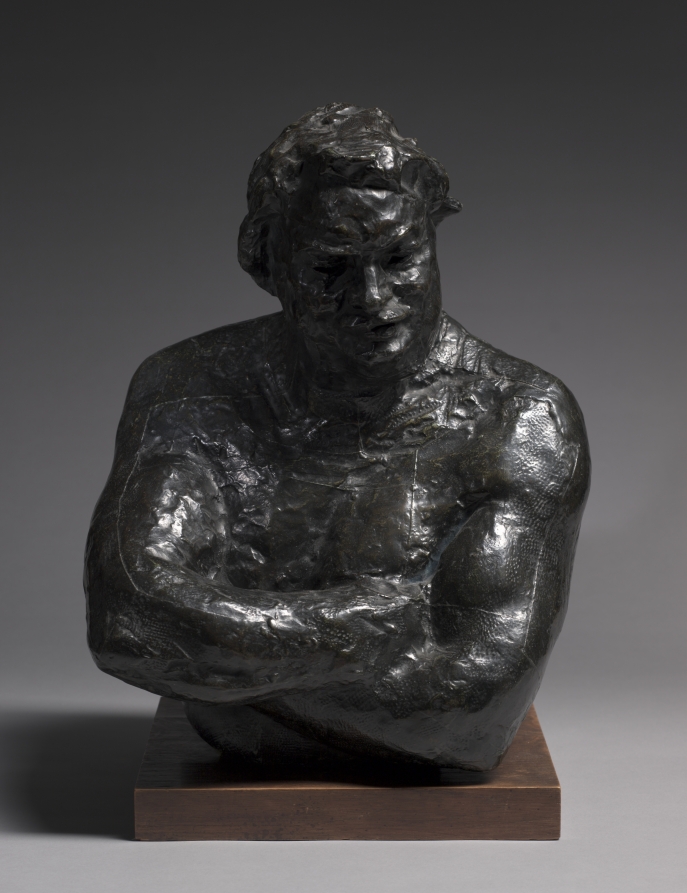
Structural Poetics: The Balzacian Void as Urban Silhouette
The study of Honoré de Balzac, when filtered through the internal DNA of Addison Fashion, reveals a profound architectural thesis. The juxtaposition of Jacques-Louis David’s The Death of Socrates with an ancient Greek Jar is not merely an art-historical exercise; it is a blueprint for the 2026 executive silhouette. Balzac, the novelist of the urban labyrinth, understood that the modern subject is defined not by what they display, but by what they contain. The urban silhouette, therefore, must be a study in negative space—a container for the chaos of the city, rendered in slate-toned, mineral stillness.
Geometric Integrity: The Container as Armature
The Jar’s geometry is the foundational principle. Its form is a pure, unadorned cylinder, a vertical axis that resists narrative. Unlike David’s painting, which is a pyramid of dramatic diagonals—Socrates’s outstretched arm, the anguished disciples, the receding architectural backdrop—the Jar is a static monolith. Its integrity lies in its refusal to gesture. For the 2026 executive silhouette, this translates into a rigid, columnar structure. The shoulder line is not padded but architecturally cantilevered, a horizontal plane that echoes the lip of the Jar. The torso is a single, uninterrupted volume, cut from a fabric that holds its shape like fired clay. The waist is not cinched; it is implied through absence, a negative space between the chest and the hip. This is the Balzacian void—the silent, capacious center that absorbs the city’s noise.
The Jar’s surface, whether painted with geometric meanders or left raw, is a field of tension. It does not illustrate; it encloses. In the urban context, this demands a fabric that is both opaque and tactile. A double-faced wool, felted to a density that resists drape, or a bonded cashmere that mimics the matte, absorbent quality of fired terracotta. The color Slate is chosen for its urban neutrality—it is the color of wet pavement, of limestone facades, of the sky between skyscrapers. It is a non-color, a background that allows the wearer’s presence to become the foreground. The silhouette is not about the body; it is about the volume of air the body displaces.
Urban Materiality: The Weight of Silence
David’s Socrates is a study in heroic materiality—the marble-like flesh, the dramatic chiaroscuro, the theatrical folds of the toga. It is a materiality that performs. The Jar, by contrast, is a study in material honesty. Its clay bears the marks of the potter’s wheel, the kiln’s heat, the user’s hands. It is a material that records time. For the urban executive, this translates into a fabric that wears its construction. Seams are not hidden but exposed as structural lines, like the joints in a steel frame. Buttons are mineral discs—slate, onyx, or sand-blasted brass—that function as architectural fasteners, not decorative elements. The garment’s weight is its gravity; it hangs from the shoulders with the inevitability of a plumb line.
The Jar’s emptiness is its most radical feature. Laozi’s dictum—“the value of the vessel lies in its emptiness”—is the operative principle of the 2026 silhouette. The executive’s garment must be a vessel for the day. The pockets are not sewn shut but left as open voids, ready to receive a phone, a card, a key. The interior is lined in a contrasting, absorbent fabric—a raw silk or unbleached cotton—that absorbs the residue of urban life. The exterior remains impenetrable, a slate-colored shield against the city’s visual onslaught. This is not a garment for display; it is a garment for containment.
The Silhouette as a Philosophical Statement
David’s painting is a theatricalization of death. It turns mortality into a spectacle, a lesson, a moral drama. The Jar is death as a quiet fact. It does not explain; it persists. The 2026 executive silhouette must embody this persistence. It is a silhouette that does not age in the conventional sense. It does not follow trends; it endures. The cut is timeless—a single, unbroken line from shoulder to hem. The length is ankle-grazing, a deliberate grounding that connects the wearer to the earth, to the pavement, to the urban substrate. The sleeve is set in a continuous arc, not a separate piece, so that the arm’s movement is contained within the volume, never breaking the silhouette’s integrity.
The color Slate reinforces this philosophy. It is the color of unfinished surfaces—the raw concrete of a Brutalist tower, the leaden sky before rain, the patina of a bronze statue. It is a color that absorbs light rather than reflecting it, creating a matte, non-reflective presence that is both authoritative and anonymous. The executive who wears this silhouette is not a protagonist in a drama; they are a fixed point in the urban flux. They do not gesture; they stand. They do not narrate; they contain.
Conclusion: The Silhouette as a Jar for the City
The Balzacian urban silhouette for 2026 is a radical act of subtraction. It strips away the heroism of David’s painting, the narrative folds, the dramatic lighting, the emotional excess. It retains only the essential geometry of the Jar: the vertical axis, the open void, the mineral surface. It is a silhouette that does not perform death but lives with it—as a container lives with the emptiness that defines it. The executive who wears this garment is not a Socrates, dying for a principle. They are the Jar itself: silent, capacious, enduring. In the noise of the city, they are the unspoken space. In the rush of time, they are the still point. This is the definitive urban silhouette: a minimalist vessel in Slate, built to hold the weight of the world without ever showing its strain.