Minimalist
Sand
Urban Form: Courtyard, Alhambra
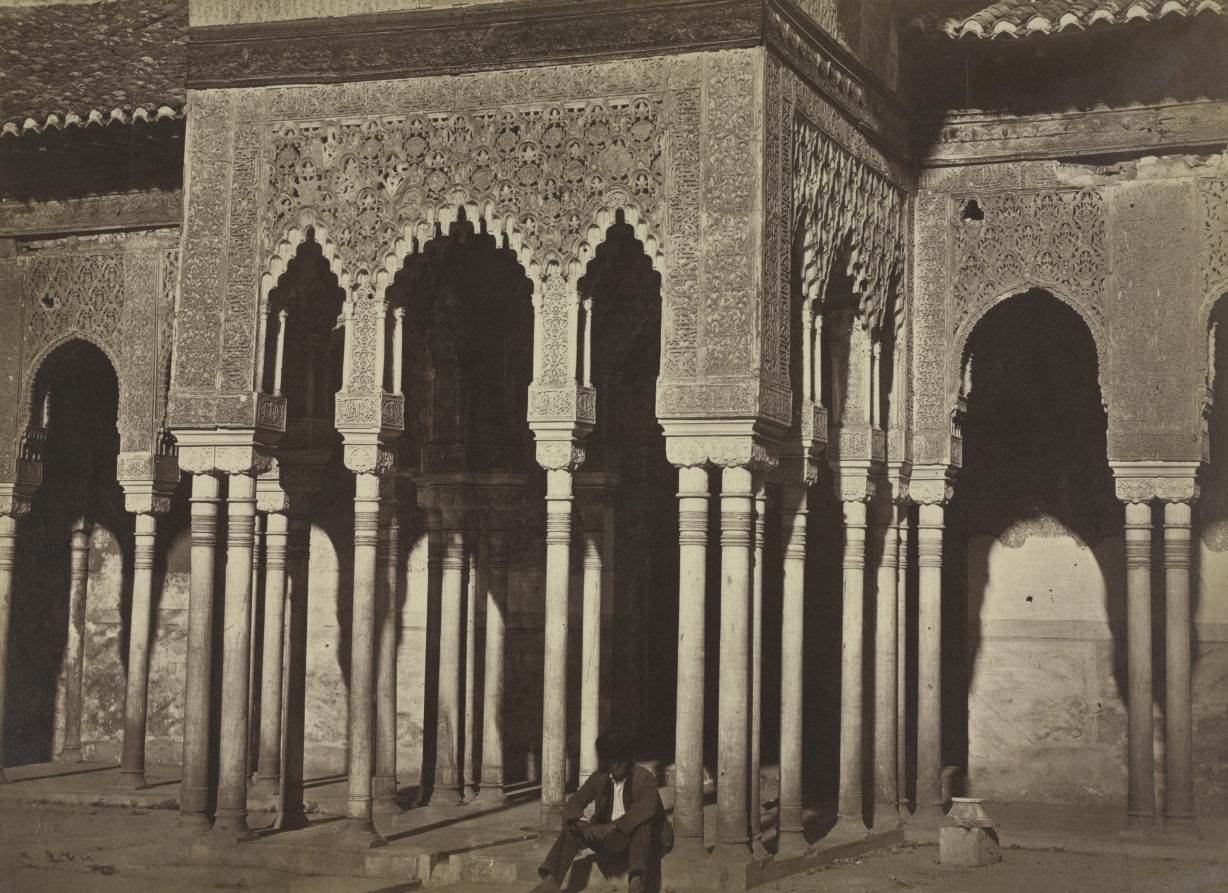
Geometric Integrity as Urban Poetics
The Courtyard of the Alhambra presents a definitive case study in architectural minimalism—a space where geometry is not merely decorative but structural, where every line and plane serves a dual function of load-bearing and aesthetic containment. For the 2026 executive silhouette, this translates into a rigorous study of negative space, planar layering, and the tension between enclosure and release. The Alhambra’s courtyard is a paradox: it is both a sanctuary and a stage, a void defined by its surrounding solids. This duality becomes the foundational principle for a new urban uniform—one that prioritizes structural poetics over narrative excess.Planar Layering and the Architecture of the Garment
The Alhambra’s courtyard is composed of interlocking horizontal and vertical planes: the reflective pool, the arcaded walkways, the stucco walls, and the open sky above. Each plane is distinct yet interdependent, creating a rhythm of light and shadow that changes with the movement of the sun. In garment construction, this translates to a silhouette built from clean, unbroken panels—a coat that falls from the shoulder without interruption, a skirt that skims the body without clinging, a top that creates its own internal architecture through precise seaming. The key is the elimination of superfluous detail. No darts, no pleats, no decorative stitching. Instead, the garment’s structure is revealed through the way fabric meets fabric—a seam becomes a line, a hem becomes a boundary. The shoulder is not padded but defined by the cut of the armhole. The waist is not cinched but implied by the fall of the fabric. This is the urban materiality of the 2026 executive: a suit that reads as a single, continuous surface, interrupted only by the necessary openings for movement.Negative Space as a Design Element
In the Alhambra, the courtyard is defined as much by what is absent as by what is present. The empty space of the pool, the gap between columns, the open sky—these are not voids but active participants in the spatial experience. Similarly, in the minimalist silhouette, negative space becomes a critical design tool. A jacket cut with a deep V-neckline creates a vertical void that elongates the torso. A sleeve that ends three inches above the wrist introduces a sliver of skin that breaks the monotony of fabric. A hem that stops at the ankle rather than the floor allows the shoe to become part of the silhouette. This approach requires precision. The ratio of covered to uncovered skin must be calculated with the same rigor as the ratio of courtyard to building. Too much negative space, and the garment becomes fragmented. Too little, and it becomes oppressive. The 2026 executive silhouette operates within a narrow band of tolerance: the neckline should expose the clavicle but not the sternum; the sleeve should reveal the wrist bone but not the forearm; the hem should graze the top of the foot but not the ankle.Materiality and the Phenomenology of Surface
The Alhambra’s surfaces—the cool limestone, the reflective water, the intricate stucco—are not merely visual but tactile. They invite touch, they respond to light, they change with the weather. In the context of urban fashion, this translates to a focus on fabric that is both substantial and responsive. For the 2026 executive, the ideal material is a heavyweight wool-cashmere blend with a matte finish—dense enough to hold a sharp crease, soft enough to drape without stiffness. The color palette is equally restrained: Sand, Slate, Onyx, Ivory, Silver—each a neutral that absorbs and reflects light in subtle ways. The surface of the garment must be uninterrupted. No logos, no patterns, no texture beyond the weave itself. This is the urban equivalent of the Alhambra’s stucco: a surface that appears simple but reveals complexity upon close inspection. The fabric’s weight, its hand, its drape—these become the only ornamentation. The garment does not tell a story; it simply exists, a three-dimensional object in space.Structural Poetics: The Balance of Rigor and Release
The Alhambra’s courtyard is a study in controlled asymmetry. The arcades are not perfectly symmetrical; the columns are not identical; the reflections in the pool are distorted by ripples. This is not chaos but a deliberate loosening of geometry—a reminder that structure can be both rigorous and organic. In the 2026 executive silhouette, this translates to garments that are constructed with mathematical precision but worn with a degree of ease. A jacket that is cut to exact measurements but left unbuttoned. A pant that is tailored to the body but falls with a slight break at the shoe. A dress that is fitted through the torso but flares gently at the hem. This is the balance between the classical and the phenomenological—between the ideal form and the lived experience. The garment must be perfect in its construction but imperfect in its presentation. It must be both a sculpture and a second skin.Urban Materiality: The Garment as Architecture
The 2026 executive silhouette is not a costume but a structure. It is designed for the city—for the concrete, the glass, the steel, the asphalt. It is a response to the verticality of the skyscraper, the horizontality of the plaza, the geometry of the grid. The garment must move with the body but also against it, creating a dialogue between the wearer and the environment. The Alhambra’s courtyard teaches us that the deepest beauty is not in what is said but in what is left unsaid. The garment that does not narrate, that does not symbolize, that does not perform—this is the garment that achieves true presence. It is an object in space, a plane in light, a line in shadow. It is, in the end, a thing of pure geometry—and that is enough.
Technical Insight
Technical Insight: Translating Sand palettes into Minimalist silhouettes for the modern metropolis.