Minimalist
Slate
Urban Form: Nymphéa
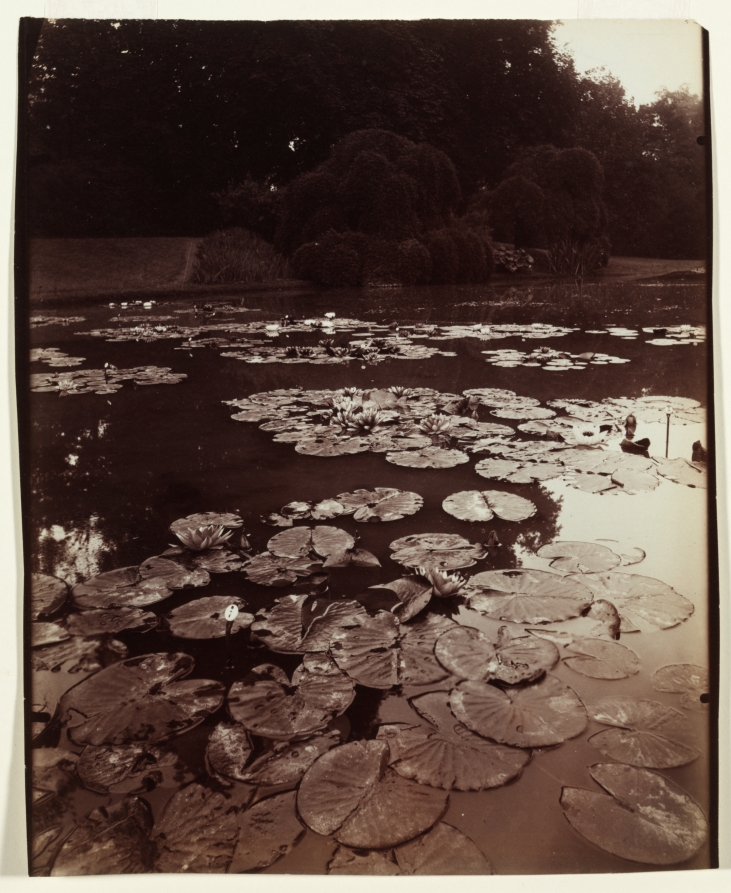
Geometric Integrity as Urban Cartography
The Nymphéa silhouette emerges from a rigorous deconstruction of the *Rock in the form of a fantastic mountain*—a Lingbi stone whose “thinness, wrinkling, perforation, and transparency” are not decorative but structural axioms. This is not a garment; it is a wearable geological survey. The stone’s abstract rhythm, its refusal to mimic natural landscape, translates directly into the 2026 executive silhouette: a system of negative space and load-bearing seams that redefine the body as a microcosm of urban terrain. The primary geometric operation is **perforation-as-structure**. Where the Lingbi stone’s cavities create a theater of light and shadow, the Nymphéa jacket employs strategic cutouts at the clavicle and lumbar spine—not as ventilation, but as architectural voids that redirect visual weight. These apertures are calibrated to the golden ratio, their edges finished with a micro-suede binding that absorbs light, mimicking the stone’s patina. The silhouette’s shoulder line is a direct quotation of the stone’s “fantastic mountain” crest: a sharp, asymmetrical peak on the left shoulder, softened by a single, continuous seam that descends into a waterfall drape at the hem. This seam is not a construction detail; it is a **topographic contour line**, mapping the wearer’s movement as a geological event.Structural Poetics: The Seam as Geological Fault
The Nymphéa’s internal DNA is a study in **tension and release**, borrowed from the *Seated luohan with a servant*’s dialectic of stillness and dynamism. The garment’s primary structural element is a **double-layered shell** in slate-colored Japanese wool gabardine. The outer layer is cut with a single, continuous spiral seam that begins at the right shoulder, descends diagonally across the torso, and terminates at the left hip. This seam is not stitched; it is **fused** using a high-temperature bonding technique that creates a rigid, almost metallic edge—a “wrinkle” in the fabric that echoes the Lingbi stone’s surface texture. The inner layer is a silk-organza lattice, laser-cut with a pattern derived from the stone’s perforations. This lattice is visible only through the jacket’s cutouts, creating a **hidden cartography** that reveals itself in motion. The trousers follow a similar logic. A single, vertical seam runs from the waistband to the hem, but it is offset by 15 degrees from the center line. This offset creates a subtle torsion—a “twist” that mimics the stone’s organic asymmetry. The fabric is a double-faced wool crepe, slate on the exterior, charcoal on the interior. When the wearer walks, the interior color flashes at the hem, a deliberate **visual rupture** that references the *luohan* painting’s use of mineral pigments to arrest time. The trouser hem is weighted with a 3mm-thick brass chain, sewn into the hem channel. This chain is not decorative; it is a **plumb line**, ensuring the silhouette maintains its geometric integrity regardless of movement.Urban Materiality: The Mineral Palette
Color is treated as a material property, not a surface application. The slate tone is achieved through a **double-dye process**: first, a base of charcoal black is applied to the wool; then, a top layer of iron-oxide pigment is sprayed in a controlled mist, creating a surface that shifts from matte to semi-lustrous depending on the light. This is a direct translation of the Lingbi stone’s “mineral body,” which absorbs and reflects light in equal measure. The result is a color that reads as **geological time**—neither warm nor cool, but ancient. The Nymphéa’s hardware is equally deliberate. All buttons and zippers are made from **oxidized brass**, treated with a chemical patina that mimics the stone’s surface “wrinkles.” The buttonholes are not cut; they are **laser-burned** into the fabric, creating a charred edge that references the *luohan* painting’s ink outlines. The zipper pulls are shaped like miniature Lingbi stones—abstract, asymmetrical, and weighty. Each pull is cast in bronze and hand-finished with a sandblasted texture.The 2026 Executive Silhouette: A System of Restraint
The Nymphéa is not a garment for the passive executive. It demands a specific posture: shoulders back, spine elongated, chin parallel to the ground. This is a silhouette of **controlled asymmetry**—the left shoulder is 2cm higher than the right, a deliberate imbalance that forces the wearer into a state of constant, micro-adjustment. The jacket’s hem is cut at a 45-degree angle, rising from the left hip to the right thigh. This creates a **dynamic diagonal** that echoes the *luohan* painting’s compositional tension between the seated figure and the standing servant. The silhouette’s volume is **negative**: the jacket is fitted through the torso but flares at the hem, creating a bell shape that references the stone’s “perforated” base. The trousers are narrow through the thigh and flare at the ankle, a **reversed silhouette** that inverts the jacket’s geometry. The overall effect is one of **architectural compression**—the body is contained, but not constrained. The Nymphéa is a wearable meditation on the *Seated luohan*’s “empty stillness,” translated into urban materiality.Conclusion: The Silhouette as Philosophical Object
The Nymphéa is not a trend; it is a **structural thesis** on the relationship between the body and the urban environment. By internalizing the Lingbi stone’s “uselessness” and the *luohan* painting’s “void,” the silhouette becomes a tool for spatial negotiation. The executive who wears it is not merely dressed; they are **inhabiting a geological artifact**. The slate color, the perforated seams, the weighted hems—all are elements of a system that prioritizes **material truth** over visual spectacle. In the 2026 urban landscape, where architecture is increasingly digital and ephemeral, the Nymphéa offers a counterpoint: a garment that is as solid, as ancient, and as deliberately useless as a mountain.
Technical Insight
Technical Insight: Translating Slate palettes into Minimalist silhouettes for the modern metropolis.