Minimalist
Slate
Urban Form: Covered Teapot
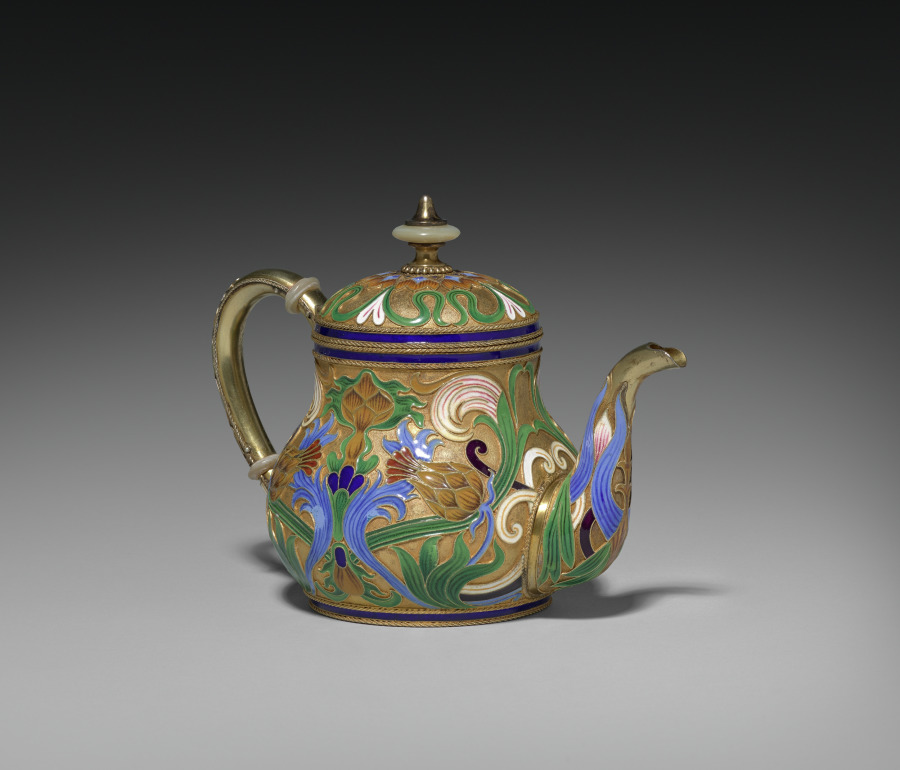
Formal Deconstruction: The Teapot as a Study in Contained Tension
The covered teapot, when stripped of its domestic familiarity, presents a masterclass in volumetric restraint. Its form is not a passive object but an active negotiation between opposing forces: the convex swell of the body versus the concave lid, the horizontal plane of the rim versus the vertical thrust of the spout, the solid mass of the vessel versus the void it encloses. This is not mere pottery; it is a dialectic rendered in clay. The body, typically a sphere or a truncated ovoid, establishes a gravitational anchor. Its fullness suggests abundance, yet its containment implies a strict boundary. The lid, often a shallow dome with a finial, completes the form not as a closure but as a capstone—a punctuation mark that resolves the curve without disrupting its flow. The spout, a linear projection, introduces directional energy, while the handle, a negative-space loop, provides counterbalance. Together, these elements create a silhouette that is both complete and dynamic, a closed system with a single point of egress. This is the essence of the minimalist silhouette: every line must justify its existence. There is no room for ornament, for narrative flourish, for the decorative. The teapot’s beauty lies in its refusal to apologize for its geometry. It is a form that has been reduced to its functional essence, and in that reduction, it achieves a kind of austere poetry.Color as Material Logic: Slate as the New Neutral
Slate is not a color of comfort. It is the color of wet stone, of industrial rooftops, of the sky before a storm. It is a color that refuses to be warm, that insists on its own materiality. In the context of the teapot, slate is the logical choice: it echoes the fired clay, the unglazed surface, the raw earth from which the vessel was born. It is a color that does not distract from form but amplifies it. For the 2026 executive wardrobe, slate functions as a structural anchor. It is the color of a tailored overcoat, a double-breasted blazer, a wide-leg trouser cut from wool crepe. It is not black, which can feel funereal or overly severe; it is not gray, which can drift into anonymity. Slate has a density, a weight, a sense of permanence. It absorbs light rather than reflecting it, creating a surface that feels both matte and tactile. In the urban landscape, slate performs as a backdrop. It allows the wearer to exist in the visual field without competing with it. It is the color of the executive who does not need to announce her presence—she simply occupies space. This is the paradox of the minimalist palette: the quieter the color, the louder the form.Technical Analysis: The Silhouette as a Container of Meaning
The teapot’s form offers a direct analog to the modern executive silhouette. Consider the body of the vessel as the torso of a tailored jacket. The curve of the shoulder seam must mirror the arc of the lid’s dome—a continuous line that suggests both support and release. The waist suppression, if present, corresponds to the narrowing of the teapot’s neck, creating a visual rhythm that draws the eye downward. The handle, in its negative-space loop, is the armhole of a coat. It is not a solid mass but an opening, a void that defines the boundary of the form. In tailoring, this is the scye—the curve that allows the arm to move freely while maintaining the jacket’s structure. A poorly cut armhole disrupts the silhouette; a well-cut one disappears into the garment’s logic. The spout, as a linear projection, is the lapel. It is the only element that breaks the vessel’s symmetry, introducing a diagonal line that creates tension. In a jacket, the lapel serves the same function: it is the point where the garment opens, where the interior is revealed. The width, the angle, the roll of the lapel—all of these are decisions that affect the silhouette’s overall balance.The Void as Volume: Negative Space in the Executive Wardrobe
The teapot’s most profound lesson is its interior. The vessel is defined not by its walls but by the space they enclose. This is the principle of negative space, and it is the most underutilized tool in contemporary dressing. In the 2026 executive wardrobe, negative space manifests as the gap between the collar and the neck, the drape of a pant leg over the shoe, the air between the sleeve and the wrist. These are not absences but presences—volumes that shape the silhouette as much as the fabric itself. A jacket with a high armhole and a narrow sleeve creates a different negative space than one with a dropped shoulder and a wide cut. The former suggests precision, control; the latter, ease, flow. The teapot’s lid, when removed, reveals the void. In the same way, the executive’s silhouette is revealed when the outer layer is shed. The blouse, the shell, the camisole—these are the inner forms that must be as considered as the outer. A minimalist wardrobe is not a single garment but a system of nested volumes, each one designed to be seen in sequence.Application: The 2026 NYC Executive Silhouette
The covered teapot, in its silent perfection, offers a blueprint for the urban uniform. The silhouette for 2026 is not about novelty but about refinement. It is about taking the familiar—the blazer, the trouser, the coat—and reducing it to its essential geometry. The key pieces are as follows: - **The Slate Overcoat**: Cut from a heavyweight wool-cashmere blend, with a single-breasted closure, a notched lapel, and a hem that falls just below the knee. The shoulder is structured but not padded, creating a line that echoes the teapot’s dome. The sleeve is set in, with a slight taper to the wrist. The coat is a container, a shell that defines the wearer’s volume. - **The Onyx Trousers**: A wide-leg cut in a matte wool crepe, with a high waist and a single pleat. The leg falls straight from the hip, breaking just above the shoe. The fabric’s weight creates a column of color, a vertical line that elongates the silhouette. The waistband is finished with a hidden button and a side zip—no visible hardware, no distraction. - **The Ivory Shell**: A silk-cotton blend, cut close to the body with a crew neck and a sleeveless armhole. The fabric is opaque but not heavy, creating a second skin that sits beneath the coat. The shell is the teapot’s interior—the void made visible. - **The Silver Scarf**: A square of silk twill, folded into a narrow band and tied at the neck. The scarf introduces a single point of contrast, a flash of light against the slate and onyx. It is the finial on the teapot’s lid—a small, deliberate accent that completes the form.Conclusion: The Form as a Statement
The covered teapot, in its silent geometry, teaches us that the most powerful statements are often the most restrained. The 2026 executive wardrobe is not about self-expression in the traditional sense; it is about self-possession. It is about occupying space with intention, about allowing the form to speak for itself. Slate is the color of that intention. It is the color of the vessel that does not need to be filled, of the silhouette that does not need to be explained. In a city of noise, the minimalist form is a kind of silence—a silence that commands attention precisely because it refuses to compete. The teapot is not a metaphor. It is a lesson in material logic. And for the executive who understands that lesson, the wardrobe becomes not a collection of clothes but a system of volumes, a study in contained tension, a form that is both complete and open, both full and empty, both silent and profound.
Technical Insight
NYC Perspective: Translating Slate tones into Minimalist silhouettes.