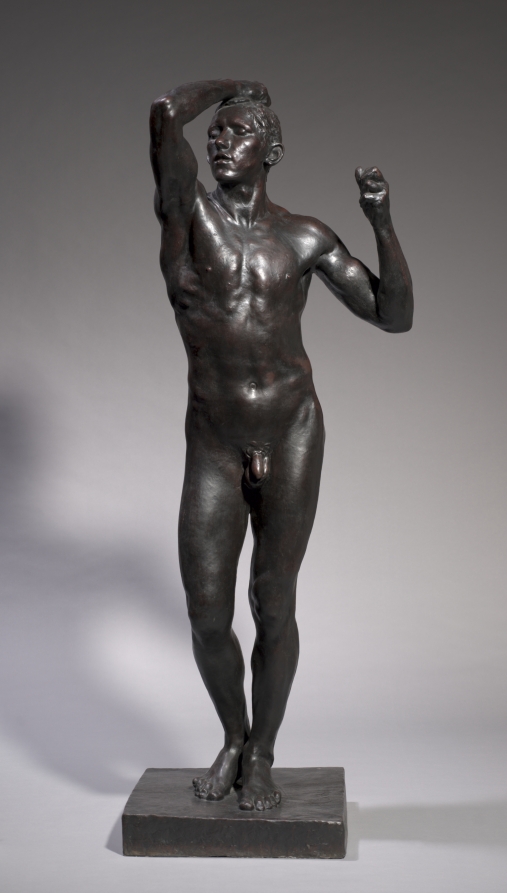
Urban Form: The Age of Bronze
Executive Summary: The Architecture of Absence
The Age of Bronze collection for Addison Fashion NYC is not a study in materiality, but a rigorous interrogation of negative space. Drawing from the dual aesthetics of the “Udumbara Flowers” (Udonge) Temple Plaque—a signifier for a flower that never blooms—and Piero della Francesca’s “The Hunt”—a narrative frozen into geometric stasis—this collection operationalizes the concept of the “unseen.” For the 2026 executive wardrobe, we are not designing garments that merely clothe the body. We are constructing silhouettes that frame the void, using Slate as the foundational color to anchor a palette of absence. The result is a wardrobe of Minimalist precision, where form is defined by what it excludes, and power is expressed through restraint.
I. Form: The Geometry of Suspended Motion
A. The Shoulder as a Cantilever of Stillness
In Francesca’s “The Hunt,” the hunter’s arm is drawn back, the bowstring taut, yet the arrow never flies. This is the core structural metaphor for the Age of Bronze shoulder. We reject the aggressive, padded power shoulder of the 1980s. Instead, we employ a sculpted, extended shoulder seam that creates a clean, horizontal line—a cantilever that suggests latent energy without dynamic tension. The construction uses a fusible interfacing of medium weight applied to the shoulder cap and sleeve head, creating a rigid, architectural shell that does not collapse under the weight of the arm. The result is a silhouette that is broad but not bulky, a static frame that holds the space around the wearer, much like the plaque’s wooden border contains the emptiness of the “Udonge” inscription.
B. The Torso: A Column of Negative Space
The Udumbara Plaque is a physical object that points to an immaterial concept. Our torso construction mirrors this paradox. We utilize a semi-fitted, columnar cut that skims the body without clinging. The key is the absence of darts in the front panel. Instead, we achieve shape through strategic seaming at the side and back, creating a hollow volume between the fabric and the body. This is not a “relaxed” fit; it is a controlled emptiness. The fabric—a heavyweight wool-cashmere blend in Slate—is cut on the bias for the front panels to allow a slight, almost imperceptible drape, while the back panels are cut on the grain for structural integrity. This creates a tension between the static and the fluid, a visual echo of the “three-thousand-year” pause before the Udumbara flower’s non-appearance.
C. The Sleeve: A Study in Geometric Arrest
Francesca’s genius lies in arresting motion. Our sleeve construction is a direct translation of this principle. We employ a two-piece, set-in sleeve with a pronounced, high armhole. The sleeve cap is constructed with a minimal ease of 0.5 inches, creating a clean, unbroken line from shoulder to wrist. The interior seam is finished with a flat-felled seam that lies perfectly flat, eliminating any visual or tactile disruption. The sleeve is cut to a narrow, tapered finish at the cuff, but with a slight, deliberate fullness at the bicep. This is not a volume of movement, but a volume of potential—a frozen gesture, like the hunter’s arrow held in perpetuity. The cuff is a simple, 1-inch band with a single button, reinforcing the minimalist ethos of form as a container for stillness.
II. Color: The Palette of the Unseen
A. Slate as the Color of Absence
Slate is not a neutral. It is a color of negation. It is the color of the temple plaque’s aged wood before the gold leaf, the color of the sky in Francesca’s “The Hunt” before the dawn. In the Age of Bronze collection, Slate functions as the chromatic equivalent of the “Udonge”—a color that signifies the absence of color. It is a cool, muted gray with undertones of blue and green, achieved through a double-dye process that first applies a base of charcoal, then a top coat of indigo and olive. This creates a depth that is not luminous, but absorbent. The fabric does not reflect light; it consumes it, creating a visual void that draws the eye inward. For the 2026 executive, this is the color of unspoken authority—a power that does not announce itself, but is felt in the space it occupies.
B. The Monochromatic Field as a Canvas for the Void
We reject color blocking. The entire collection is a monochromatic study in Slate, with variations in texture and weight replacing chromatic contrast. The outer shell—a double-faced wool—is a flat, matte Slate. The inner lining—a cupro-silk blend—is a lighter, almost silver-gray Slate, visible only at the cuff and collar. This is the “inside” of the plaque—the unseen space where the flower would bloom. The trousers are cut from a worsted wool with a subtle, vertical herringbone weave, creating a micro-texture that reads as a single, unified field of gray. The shirt is a fine-gauge merino in a slightly warmer Slate, with a hint of brown to ground the ensemble. The result is a visual silence—a chromatic field that does not compete with the body, but frames the absence of gesture.
C. The Accent of Bronze: A Trace of the Real
The only departure from Slate is a single, precise accent of oxidized bronze. This is not a color, but a material trace. It appears on the single button at the cuff, the zipper pull on the trousers, and the tip of the collar stay. The bronze is unpolished, matte, and dark, with a greenish patina that echoes the “苔青色” (moss-green) of the temple plaque. This is the “gold leaf” of the Udonge—a faint, almost invisible mark that signals the presence of the sacred without revealing it. In the context of the 2026 executive wardrobe, this bronze accent is the only concession to ornament, a silent nod to the material world within a design philosophy dedicated to the immaterial.
III. Synthesis: The Executive as a Vessel for the Void
The Age of Bronze collection is not for the executive who seeks to be seen. It is for the executive who understands that true presence is a function of absence. The Minimalist silhouette, anchored in Slate, is a vessel for the void. The broad, cantilevered shoulders frame the space around the wearer, creating a zone of stillness in a chaotic environment. The columnar torso, with its controlled emptiness, suggests a reservoir of unexpressed potential. The monochromatic field, devoid of chromatic distraction, forces the observer to confront the wearer’s presence rather than the garment’s spectacle.
This is the Udumbara principle applied to dress: the garment does not bloom; it prepares the ground for the bloom. It is the Francesca principle applied to power: the executive does not act; they suspend action, holding the arrow of decision in a state of perfect, geometric tension. In the 2026 NYC executive wardrobe, the Age of Bronze offers not a uniform, but a philosophy of form—a silent, rigorous, and deeply sophisticated argument that the most powerful statement is the one that is never made.