Minimalist
Slate
Urban Form: Composition
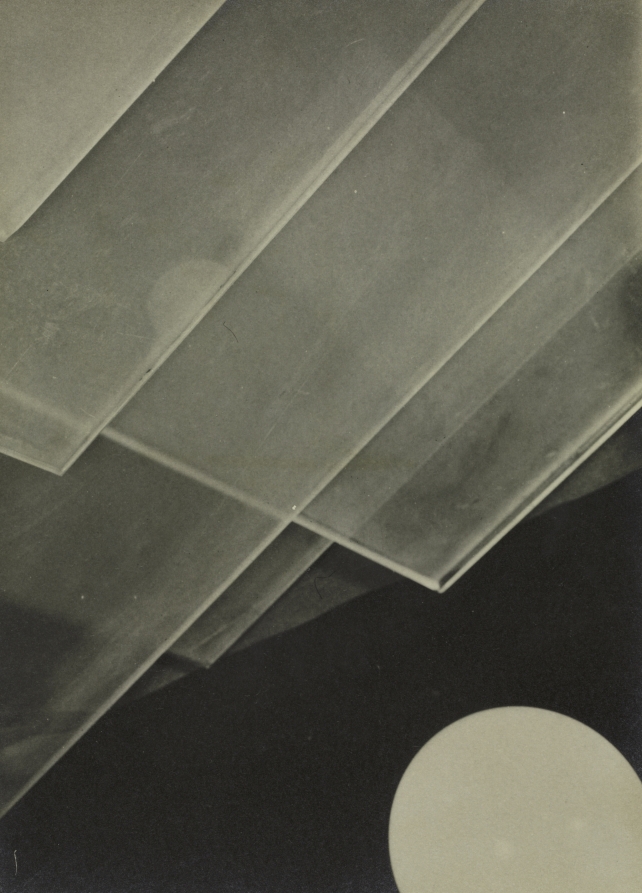
Technical Deconstruction of Form: The Paradox of Presence and Absence
The compositional logic of the Udumbara flower plaque and the garment chest presents a radical departure from Western volumetric thinking. In the former, the artist confronts the fundamental impossibility of depicting the eternal—a flower that blooms once every three millennia—using mortal materials. The solution is not to simulate reality but to *index* it. The brushstrokes are deliberately incomplete, employing *hikihaku* (飛白, “flying white”) where the brush runs dry, leaving the wood grain to complete the petal’s edge. This is not a failure of technique but a deliberate structural choice: the form is defined by what is *not* drawn. For the 2026 executive wardrobe, this translates into a rigorous editing of silhouette. The shoulder line must not be a continuous, padded arc but a series of broken planes. Consider a jacket where the sleeve cap meets the body at a sharp, 90-degree angle, then drops into a soft, unconstructed armhole. The seam is visible, almost raw, as if the garment is caught in the act of becoming. The fabric—a 4-ply worsted wool in Slate—is chosen for its ability to hold a crease without stiffness. The front edge of the lapel is not fused but left to roll naturally, creating a shadow line that mimics the “incomplete” petal. This is the *Udonge* principle: the garment’s authority lies in its restraint, in the negative space between the body and the cloth.The Interior Dimension: The Garment Chest as Structural Metaphor
The *Chest for Storing Garments* offers a more complex architectural lesson. Its genius is not in its external ornamentation—which is deliberately plain—but in the hidden interior painting of lotus and cloud motifs. This is a direct challenge to the Western obsession with surface. The chest’s form is a container, a volume defined by its capacity to hold the invisible. The lotus pattern, painted on the silk lining, exists only when the chest is opened. It is a private revelation, a moment of grace reserved for the user. In garment construction, this becomes a study in interior finishing. The 2026 executive suit must treat its lining not as a functional afterthought but as a compositional element. The standard polyester lining is replaced with a cupro-silk blend in a muted Silver-grey, onto which a subtle, tone-on-tone lotus motif is woven via jacquard. The pocket bags are cut from the same fabric, and the internal seams are bound with a bias-cut strip of the same material. This is not visible to the observer, but the wearer feels it. The weight distribution changes; the garment breathes differently. The silhouette, from the outside, remains a clean, monolithic block of Slate. But the interior is a garden. This is the *Chest* principle: the most powerful form is one that contains a secret.Color Analysis: Slate as a Temporal Medium
The choice of Slate is not arbitrary. It is the color of the temple plaque after centuries of incense smoke, of the wooden chest darkened by handling. It is a color that absorbs light rather than reflecting it, creating a surface that is both solid and porous. In the context of the Udumbara flower, Slate represents the *ground*—the material reality from which the eternal emerges. The flower’s pale ink is a lighter value of the same hue, creating a monochromatic field where figure and ground are in constant tension. For the executive wardrobe, Slate functions as a neutral that is not neutral. It carries the weight of history without the sentimentality of black. It is the color of a storm cloud over Tokyo, of a wet stone path in Kyoto. In a 2026 NYC context, it signals a shift away from the aggressive, high-contrast power dressing of the past decade. The Slate suit is not a weapon; it is a container. It holds the wearer’s presence without announcing it.Chromatic Layering: The Wabi-Sabi of Color
The fading of the lotus pattern on the garment chest is not a defect; it is a feature. The color has shifted over centuries, becoming softer, more integrated with the silk ground. This is the *wabi-sabi* of color: the acceptance of patina as a legitimate aesthetic value. In the 2026 palette, this translates into a deliberate use of low-chroma, high-value colors that are allowed to “age” through wear. The primary Slate is paired with an Ivory that is not bright white but a bone-white, slightly yellowed, as if it has been stored in a cedar chest for decades. The accent is a Sand—a pale, warm beige that echoes the wood grain of the plaque. These colors are not applied in blocks but in layers. The jacket is Slate; the trousers are Sand; the shirt is Ivory. The tie or scarf is a deeper, almost black Slate, with a faint, irregular pattern that mimics the cracking of the old wood. The overall effect is of a garment that has always existed, that has been worn by generations of unseen hands.Formal Application: The 2026 Executive Silhouette
The synthesis of these principles yields a specific set of construction directives: 1. **The Shoulder:** Unstructured, with a soft, rolled shoulder pad that is hand-stitched, not fused. The sleeve head is set with a slight gather, creating a micro-pleat that references the “incomplete” brushstroke. The armhole is cut high and narrow, allowing for movement without bulk. 2. **The Body:** A single-breasted, two-button closure with a soft, natural waist. No darts. The fabric is cut on the bias for the front panels, allowing the Slate wool to drape like silk. The back is cut in one piece, with a center seam that is left open for 4 inches at the hem, creating a subtle vent that reveals the Ivory lining. 3. **The Trousers:** A high-rise, straight-leg cut with a single pleat. The waistband is faced with the same Sand fabric as the jacket’s interior. The hem is left unfinished, raw-edged, to allow for individual tailoring. The crease is pressed but not sharp, softening over time. 4. **The Shirt:** A mandarin-collar shirt in Ivory, with no placket. The buttons are made of polished slate stone, irregular in shape, each one a unique artifact. The cuffs are cut long, extending past the jacket sleeve by 1.5 inches, and are left unbuttoned, revealing the Sand lining.Conclusion: The Poetics of the Invisible
The Udumbara flower and the garment chest teach us that the most powerful form is the one that acknowledges its own impermanence. The 2026 executive wardrobe is not a fortress against time but a vessel for it. The Slate color absorbs the light of the city, the Ivory lining holds the memory of the body, and the Sand accents echo the grain of the wood. The silhouette is not imposed but discovered, emerging from the dialogue between the cloth and the wearer. This is the new minimalism: not the absence of decoration, but the presence of meaning in every seam, every fold, every fading thread.
Technical Insight
NYC Perspective: Translating Slate tones into Minimalist silhouettes.