Urban Form: Portrait of Philip II, King of Spain
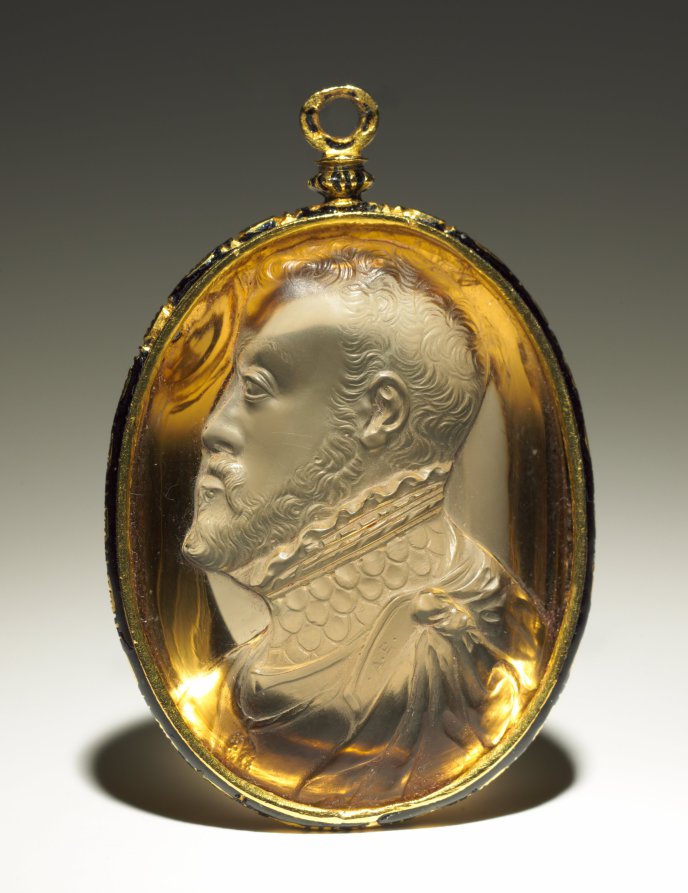
Geometric Integrity and the 2026 Executive Silhouette
The portrait of Philip II, King of Spain, presents a paradox of power: a sovereign rendered in rigid formality, yet whose psychological depth emerges from the negative space of his attire and the architectural precision of his posture. For the 2026 executive silhouette, this work offers a definitive departure from volume and ornamentation, returning to a minimalist luxury defined by structural poetics and urban materiality. The king’s black doublet, white ruff, and unadorned background are not absences of design but deliberate geometric constraints that amplify the subject’s presence. This analysis deconstructs the painting’s formal language to prescribe a new urban uniform: one that prioritizes silhouette as armor, fabric as architecture, and color as restraint.
I. The Silhouette as a System of Tension
The painting’s core geometric integrity lies in its triangular composition. Philip’s torso forms a solid, inverted pyramid, anchored by the broad shoulders of his doublet and tapering to a narrow waist. This is not a natural human form but a constructed geometry—a deliberate exaggeration of the male torso through padded shoulders, a stiffened bodice, and a rigid collar. For the 2026 executive, this translates into a silhouette that rejects fluidity in favor of controlled angularity. The jacket shoulder should be extended by 2–3 cm beyond the natural acromion, creating a horizontal line that visually widens the upper body. The waist is sharply cinched, not through tailoring alone, but through the use of internal boning or structural canvas that mimics the doublet’s stiffness. The result is a trapezoidal torso that projects authority without bulk—a form that is urban armor for the boardroom.
The painting’s vertical axis is equally critical. The king’s stance is symmetrical, with his hands resting on a table edge, creating a stable base. The 2026 coat should follow this logic: a single-breasted closure with a high button stance (two buttons, placed at the natural waist) to elongate the torso. The hem should fall to the mid-thigh, avoiding the elongating effect of a longer coat, which would disrupt the visual weight of the upper body. The trousers, in contrast, should be straight and narrow, with a slight break at the shoe—a vertical line that echoes the painting’s background columns, grounding the silhouette in urban geometry.
II. Structural Poetics: The Ruff as a Case Study in Negative Space
The most radical element in Philip’s portrait is the white ruff. It is not merely a collar but a sculptural ring that isolates the head from the body. Its radial pleats create a series of concentric circles, each fold a precise geometric unit. This is not decorative excess; it is a structural device that frames the face as the sole focal point. For the 2026 executive, the ruff inspires a minimalist collar—a stand collar or a mandarin collar—that rises 3–4 cm from the neckline, constructed from starched cotton or rigid nylon. This collar does not lie flat; it stands away from the neck, creating a negative space between fabric and skin. This gap is not a flaw but a deliberate void, echoing the painting’s use of empty background to emphasize the subject. In urban materiality, this translates to a collar that breathes—a structural poetics where absence defines presence.
The painting’s lace cuffs offer another lesson in controlled excess. They are not soft or flowing but starched into geometric fans, each fold a linear extension of the arm. For the 2026 silhouette, this inspires a cuff detail—a sharp, folded edge at the wrist, perhaps in a contrasting fabric like matte satin or bonded leather. This cuff should be 3 cm wide, with a single button closure, creating a visual anchor that terminates the sleeve’s vertical line. The effect is architectural: the sleeve becomes a column, the cuff a capital.
III. Urban Materiality: Fabric as a Field of Tension
The painting’s black doublet is not a flat void but a textured surface. The fabric—likely velvet or brocade—absorbs light, creating a matte depth that contrasts with the reflective sheen of the armor beneath. For the 2026 executive, this demands a fabric that performs—a heavy wool or worsted suiting with a tight weave that resists wrinkling and holds its shape. The color must be Ivory, not as a neutral but as a deliberate absence—a non-color that reflects light without glare, echoing the painting’s white ruff and pale skin. This is not a warm ivory but a cool, architectural ivory—a shade that reads as stone or bone, evoking urban minimalism.
The texture of the fabric must mimic the painting’s geometric precision. A herringbone weave or a micro-check pattern in the same tonal range creates a subsurface geometry—a visual rhythm that is only perceptible at close range. This is urban materiality at its most refined: a fabric that rewards scrutiny without demanding attention. The lining should be a contrasting texture—a silk charmeuse in a deeper ivory or pale slate—visible only when the jacket is opened, a secret geometry that mirrors the painting’s hidden armor.
IV. Color as Restraint: The Ivory Spectrum
The painting’s color palette is severely limited: black, white, and the flesh tones of the face and hands. This is not a lack of color but a deliberate reduction to value contrast. The 2026 executive silhouette must follow this logic: Ivory as the dominant hue, with black accents in the form of buttons, belt, and shoes. The Ivory should be matte on the jacket and trousers, with a slight sheen on the shirt or blouse—a textural shift that creates visual depth without introducing a second color. The black accents should be matte leather or polished horn, echoing the painting’s black doublet and dark background.
This monochromatic scheme is not static but dynamic in its tonal range. The Ivory must shift from a cool, almost blue-white in the jacket to a warmer, creamier white in the shirt, mimicking the painting’s flesh tones against the white ruff. This micro-variation is the essence of minimalist luxury: a color system that breathes through subtle gradation, not contrast.
V. Conclusion: The Silent Authority of Geometry
The portrait of Philip II is not a historical artifact but a blueprint for power in the 21st century. Its geometric integrity—the triangular torso, the radial ruff, the vertical axis—offers a definitive silhouette for the 2026 executive: one that is armored yet refined, rigid yet breathing. The Ivory palette is not a retreat from color but a strategic absence, a field of tension where structure and materiality converge. This is not fashion; it is urban poetics—a silent authority that speaks through negative space and controlled geometry. The Addison Fashion executive silhouette for 2026 is not about what is added, but what is subtracted: the void that defines the form, the restraint that amplifies presence.