Urban Form: Pietà
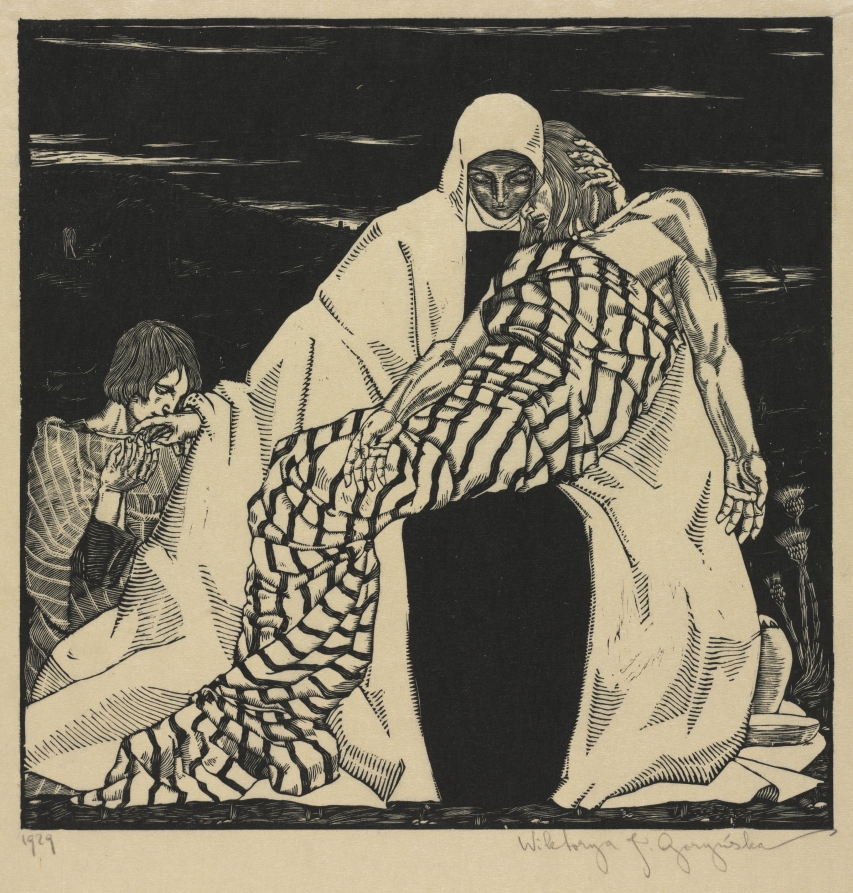
Technical Deconstruction of Form: The Pietà as a Study in Draped Volumes
The Pietà, in its canonical Michelangelo iteration, presents a paradox of mass and weightlessness. The Virgin’s lap is a structural cradle, yet the drapery folds cascade with the liquidity of water. This is not static sculpture; it is a frozen moment of gravitational negotiation. For the 2026 NYC executive wardrobe, this translates into a critical interrogation of *draped volume*—not as excess fabric, but as controlled, engineered flow.The primary formal principle at play is asymmetrical tension. Mary’s left shoulder is higher, her torso twisted, creating a diagonal axis that pulls the eye from the crown of Christ’s head down to his dangling right arm. In garment construction, this translates to a bias-cut shell over a structured foundation. The shell—a double-faced wool crepe in Slate—is cut on the bias to achieve a liquid drape that mimics the marble’s softness. The foundation is a micro-sculpted bodysuit in 4-way stretch nylon, providing the necessary anchor. The result is a silhouette that appears to be in perpetual, slow motion: the fabric pools at the hip, then breaks into a sharp, asymmetrical hemline that falls just below the knee. This is not a dress; it is a wearable study in equilibrium.
Color as Material Philosophy: Slate as the New Neutral
Slate is not gray. Gray is passive, a compromise between black and white. Slate is active—it is the color of wet stone, of the sky before a storm, of the philosopher’s robe in a dimly lit cell. In the context of the Pietà, Slate functions as a chromatic bridge between the marble’s cold white and the shadowed recesses of the drapery. It absorbs light without reflecting ego.For the executive wardrobe, Slate operates on two levels. First, it is a psychological neutral. It does not demand attention; it commands respect. In a boardroom, a Slate wool crepe jumpsuit with a sculpted, asymmetric neckline signals authority without aggression. Second, it is a material truth. Slate reads as dense, tactile, and weighty—qualities that align with the Pietà’s physical presence. The color must be achieved through a double-dye process: a base of charcoal black, overlaid with a wash of muted blue-gray. This creates depth, a subtle iridescence that shifts under fluorescent and natural light. The finish is matte, not flat. It is the finish of a stone that has been polished by centuries of rain.
Urban Poetics: The Silhouette as a Response to the Void
The Pietà is a study in negative space. The void between Mary’s left arm and Christ’s torso is as significant as the carved flesh. This is the Eastern concept of *ma*—the interval that gives form meaning. In urban dressing, this translates to strategic cutouts and layered transparency.The 2026 silhouette is not about covering the body; it is about framing the void. Consider a Slate silk georgette blouse with a single, vertical slit from the collarbone to the sternum. The skin beneath is not exposed; it is suggested. The slit is a line of tension, a visual pause. Paired with a high-waisted, fluid trouser in the same Slate—cut with a wide leg but a tapered ankle—the ensemble creates a continuous vertical line, broken only by the slit. This is the urban equivalent of the Pietà’s diagonal axis: a controlled disruption that prevents the silhouette from becoming monolithic.
Minimalist Aesthetics: The Reduction to Essential Gestures
Minimalism in the context of the Pietà is not about stripping away; it is about distillation. Michelangelo carved away marble until only the essential gesture remained. For the executive wardrobe, this means eliminating all non-functional details. No buttons. No zippers. No pockets that are not integral to the drape.The key garment is a Slate cashmere-blend coat with a single, sculpted shoulder seam that extends into a cape-like back panel. The front is clean, with a single hidden magnetic closure at the waist. The coat is not meant to be buttoned; it is meant to be worn open, the cape panel falling like the Virgin’s mantle. Underneath, a Slate silk charmeuse slip dress with a cowl neck that mirrors the drape of the coat. The hem of the dress is cut on the bias, creating a slight flare that mimics the marble’s fluidity. The entire ensemble is a single color, a single texture, a single gesture. It is the visual equivalent of a held breath.
Materiality and Construction: The Engineering of Drape
The Pietà’s drapery is not random; it is mathematically precise. Each fold is a function of the underlying anatomy and the gravitational pull. To replicate this in fabric, we must engineer the drape through weight distribution and fabric density.The Slate fabric for the primary garments is a 380gsm double-faced wool crepe. This weight is critical: too light, and the fabric will float, losing the marble’s gravity; too heavy, and it will pull the silhouette down, losing the sense of lift. The double-face construction allows for a clean finish on both sides, enabling the asymmetric hems and cutouts without visible seams. The lining is a 12mm Slate silk charmeuse, which provides a second layer of drape without adding bulk. The seams are French-seamed, flat and invisible, to maintain the illusion of a single, continuous surface.
The bodysuit foundation is a 200-denier Slate nylon-spandex blend, bonded to a micro-silicone grip at the hem to prevent riding up. This is the structural armature, the unseen support that allows the outer shell to move freely. The entire construction is a dialogue between the visible and the invisible, the draped and the structured—a direct translation of the Pietà’s marble flesh and stone support.