Urban Form: Avenue of the Banian Trees, Seringham, India
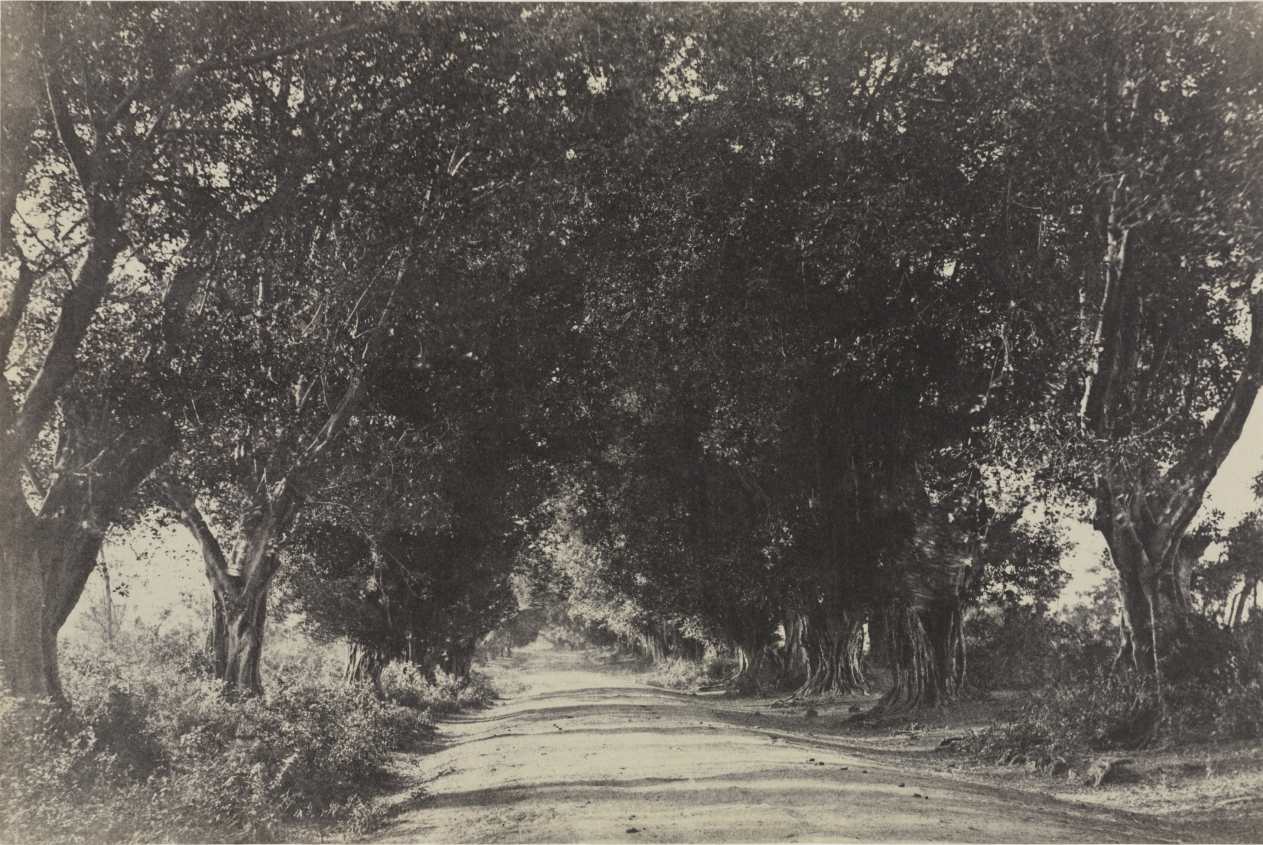
Structural Poetics: The Banian Tree Avenue as Architectural Silhouette
The Avenue of the Banian Trees in Seringham, India, presents a living colonnade of aerial roots and interwoven trunks—a natural architecture that defies conventional structural logic. For the 2026 executive silhouette at Addison Fashion, this botanical phenomenon translates into a rigorous study of negative space and vertical elongation. The Banian’s multiple trunks, descending from a single canopy, create a visual rhythm of repeated vertical lines punctuated by horizontal shadow bands. This geometric integrity is not one of rigid symmetry but of organic modularity: each root column varies in thickness and curvature, yet collectively they form a unified, breathable screen.
The executive silhouette derived from this research is defined by layered vertical panels that mimic the Banian’s root system. A double-breasted jacket, cut in Ivory wool-cashmere, features seams that descend from the shoulder yoke to the hem in a staggered, asymmetrical pattern. These seams are not merely decorative; they function as structural darts that allow the fabric to fall in clean, uninterrupted planes. The collar is a high, standaway crescent—reminiscent of the Banian’s aerial roots curving away from the main trunk—creating a frame for the face that is both protective and ascetic. The overall effect is one of minimalist monumentality: the garment does not cling to the body but rather stands as an independent architectural volume, with the wearer moving through it as a figure moves through a colonnade.
Urban Materiality: From Natural Bark to Engineered Textiles
The material palette for this silhouette is anchored in Ivory, chosen for its ability to absorb and reflect light in the same manner as the Banian’s pale, weathered bark. The primary fabric is a double-faced wool crepe, milled to a density that holds sharp edges without sacrificing drape. Its surface is matte, almost chalky, evoking the dry, textured skin of the tree. To echo the aerial roots’ tensile strength, a secondary material—a technical silk organza bonded with a micro-thin layer of polyurethane—is used for internal structuring. This invisible armature allows the jacket’s lapels and hem to maintain a crisp, cantilevered geometry, as if suspended by invisible threads.
The urban context demands that this silhouette function in transit—between glass towers, concrete plazas, and climate-controlled interiors. Therefore, the fabric is treated with a nano-ceramic finish that repels moisture and resists staining, ensuring the Ivory surface remains pristine. The lining, a charcoal-grey cupro, is printed with a faint, repeating pattern of the Banian’s leaf venation—a hidden detail known only to the wearer, reinforcing the concept of interiority and private ritual.
Geometric Integrity: The “优昙花” Principle of Negative Space
The Japanese Zen calligraphy of the “优昙花” (Udonge) plaque—a single character carved into wood with deliberate, unadorned strokes—informs the silhouette’s approach to emptiness as a structural element. Just as the plaque’s carved letters exist in a sea of bare wood, the 2026 executive jacket features strategic voids: a keyhole cutout at the back of the neck, a slit at the side seam that reveals a sliver of the underlayer, and a hem that is deliberately unfinished, allowing the raw edge to fray slightly over time. These are not decorative apertures but architectural fenestrations that control airflow and visual weight. The wearer’s body becomes the “character” that fills the void, transforming the garment into a frame for movement.
The trousers, cut in the same Ivory wool, are wide-legged but anchored by a single, vertical pleat at the front—a direct reference to the Banian’s root columns. The pleat is pressed with surgical precision, creating a shadow line that extends from waist to hem. This line is the garment’s “calligraphic stroke,” a silent mark that organizes the volume. The waistband is high and fitted, with a hidden internal belt that cinches without external hardware, preserving the silhouette’s clean, unbroken surface.
The “衣箱” Ethos: Concealment and Revelation
The Joseon Dynasty clothing chest (衣箱) teaches that true luxury lies in what is concealed and slowly revealed. For the executive silhouette, this translates into a system of hidden pockets and reversible panels. The jacket’s interior features a silk-lined pocket large enough for a tablet, secured by a magnetic closure that is silent and invisible. The left sleeve contains a narrow, zippered compartment for a stylus—a detail that acknowledges the urban professional’s need for discreet utility. The jacket itself can be reversed: the outer Ivory face is for public presentation; the inner face, a deep Slate silk, is for private moments, when the wearer removes the jacket and reveals the darker, more intimate layer.
This duality echoes the chest’s function as a container for precious textiles. The silhouette becomes a portable architecture that houses the body, with the Ivory exterior acting as a neutral, almost monastic shell, and the Slate interior representing the depth of personal history. The garment’s weight—approximately 1.2 kilograms for the full suit—is calibrated to feel substantial without being burdensome, like a well-made chest that holds its contents securely.
Conclusion: The 2026 Executive as a Walking Monument
The Avenue of the Banian Trees, the Zen plaque, and the Joseon chest converge in a single, coherent design philosophy: minimalism as a vessel for time and space. The 2026 executive silhouette is not a garment that follows the body; it is a structure that the body inhabits. Its Ivory surface is a blank canvas for the city’s light and shadow, its seams are calligraphic lines, and its hidden details are the quiet poetry of utility. This is fashion as urban materiality—cold, precise, and deeply respectful of the silence between forms.