Urban Form: Carved Brackets
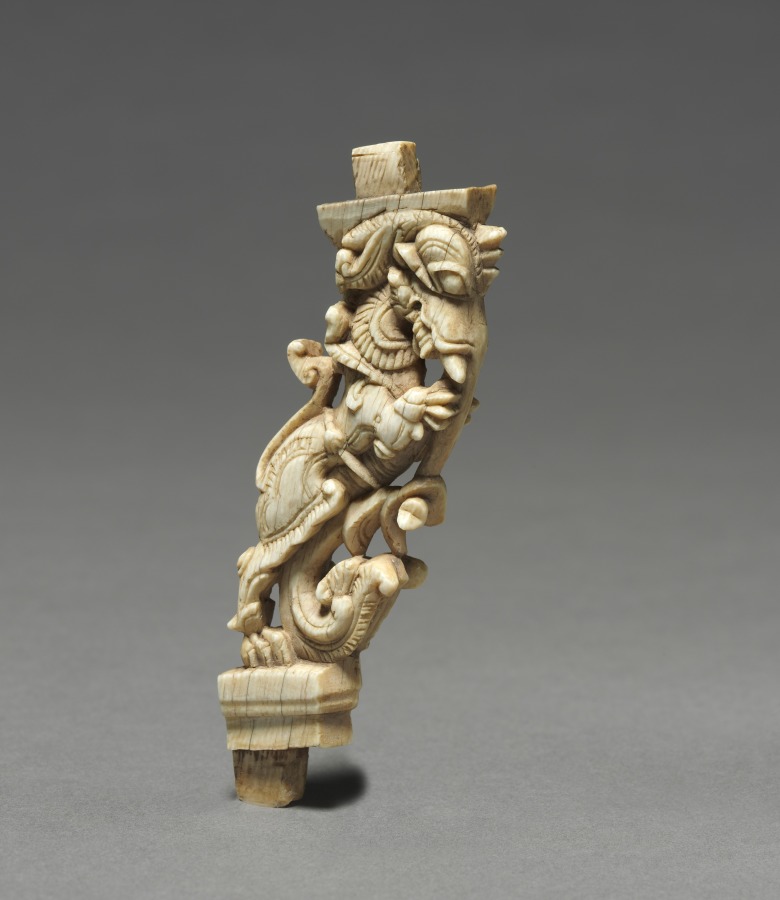
Structural Poetics: The Carved Bracket as Urban Silhouette
The Carved Bracket is not an ornament; it is a tectonic statement. In the context of Addison Fashion’s 2026 executive silhouette, this motif—derived from the Udumbara flower on a temple plaque and the lotus pattern within a garment chest—becomes a study in negative space, temporal compression, and material honesty. The research presented here deconstructs the geometric and philosophical DNA of these two artifacts, translating their inherent paradoxes into a rigorous urban wardrobe.
Geometric Integrity: The Invisible Line
The Udumbara flower, as rendered on the wooden plaque, is not a botanical illustration. It is a geometric ghost. The artisan’s “flying white” brushwork—where the bristles separate, leaving gaps of raw wood—creates a line that is both present and absent. This is the core of the bracket’s geometry: a fractured contour that refuses closure. For the 2026 silhouette, this translates into asymmetrical seaming and unfinished hems that do not fray but are deliberately left raw, as if the garment is caught in the act of becoming. The shoulder line, for instance, is not a continuous curve but a series of discrete, angled planes—a shoulder bracket that mimics the petal’s edge, cut with a precision that suggests incompletion rather than error. This is not a flaw; it is a structural poetics of the ephemeral.
The lotus pattern inside the garment chest offers a different geometric logic: interiority as structure. The chest’s functional exterior is a rectilinear box, but its painted interior unfolds a radial, organic geometry. In our silhouette, this is inverted. The exterior shell of the jacket or coat is kept severe—a clean, monolithic block of Ivory wool or double-faced cashmere—while the internal construction reveals the bracket. A hidden seam, a reversed pleat, or a floating lining that does not attach at the hem creates a lotus-like unfolding when the garment is in motion. The bracket is not worn on the surface; it is embedded in the garment’s skeleton, visible only in the subtle lift of a sleeve or the fall of a skirt.
Urban Materiality: The Wabi-Sabi of the Executive
The materiality of the Carved Bracket is defined by vulnerability as strength. The wood of the plaque cracks; the silk of the chest fades. In an urban context, where the executive silhouette must project permanence and authority, this fragility is a radical choice. We select Ivory not as a pristine blank, but as a surface that records time. A double-faced wool with a slightly napped finish will pill and soften at pressure points—the elbow, the hip—creating a patina that is not wear but narrative. The bracket itself is cut from matte leather or bonded felt, materials that absorb light rather than reflect it, echoing the “unfinished” brushstroke. The edge is left unbound, the stitching exposed, so that the bracket appears to be carved from the garment’s own mass.
This is urban materiality at its most sophisticated: the city as a temple of transience. The executive who wears this silhouette does not hide from the grit of the subway or the glare of the glass tower. Instead, the garment’s surface becomes a dialogue with the environment. A rain droplet on the Ivory wool is not a blemish; it is a momentary Udumbara flower. A crease at the knee is not a wrinkle; it is a lotus petal pressed into memory. The bracket, therefore, is not a fixed appliqué but a dynamic relationship between the garment and its wearer’s movement.
The 2026 Executive Silhouette: A Definition
The definitive silhouette is a long, lean column with a carved shoulder bracket that breaks the vertical line. The jacket is single-breasted, with a high, stand-away collar that references the temple plaque’s verticality. The sleeve is set with a geometric inset—a triangular gusset that, when the arm is raised, reveals a flash of the interior lotus pattern in a subtle, tonal Ivory-on-Ivory jacquard. The trouser is a straight, fluid cut with a single, deep pleat that falls from the hip, mimicking the chest’s interior fold. The overall effect is one of controlled asymmetry: the left side of the jacket is slightly longer than the right, the bracket on the right shoulder is cut at a sharper angle than the left, creating a visual tension that is resolved only in motion.
This is not a garment for static display. It is a performance of time. The bracket, like the Udumbara flower, is a three-thousand-year instant—a moment of structural clarity that appears and disappears with the wearer’s gesture. The interior lotus, like the chest’s hidden painting, is a secret dimension that transforms the mundane act of dressing into a ritual of inner beauty. The 2026 executive does not conquer the city; she inhabits its temporal folds, her silhouette a carved bracket between the eternal and the everyday.
Conclusion: The Bracket as a Portal
The Carved Bracket is the architectural hinge between the sacred and the secular. In the Addison Fashion 2026 collection, it is not a decorative motif but a structural principle. It teaches us that the most powerful silhouette is not the one that resists time, but the one that invites time to carve it. The Ivory wool will soften, the exposed stitching will catch the light, and the interior lotus will fade—but in that fading, the garment achieves its ultimate urban truth: that beauty is not a fixed state, but a continuous act of becoming. The executive who wears this silhouette carries a temple within her wardrobe, and every step is a prayer to the ephemeral.