Urban Form: The Age of Bronze
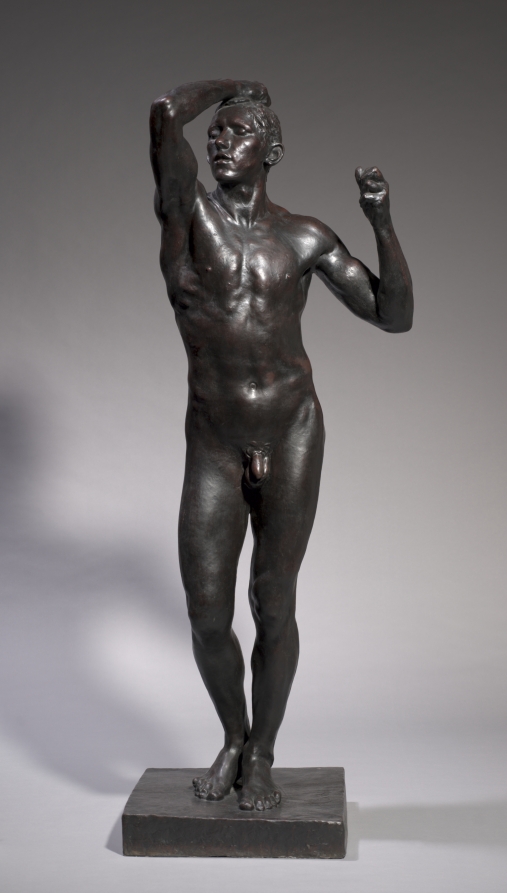
Technical Analysis: The Age of Bronze – Urban Silhouette Research
The provided internal DNA, The Age of Bronze, presents a profound conceptual framework for the 2026 executive silhouette. It is not a brief for ornamentation, but a rigorous treatise on integrated spatial philosophy. The core directive—transcending the boundaries between poetry, painting, and object to create a "habitable, traversable" space—demands a sartorial translation that moves beyond superficial reference into the realm of structural poetics. The 2026 silhouette for Addison Fashion will be defined by this principle of monolithic integration, where garment, body, and urban context engage in a silent, sophisticated dialogue. The analysis pivots on two artifacts: the painted vessel and the roundback chair, each deconstructed for their geometric and philosophical implications.
I. Geometric Integrity: From Roundback to Rigor
The geometric foundation is extracted from the Pair of Roundback Armchairs: Lohan Type. Its "roundback" is not a mere curve; it is a contained arc, a segment of a perfect circle implying infinite continuity. This is the antithesis of the aggressive, angular power shoulder. For 2026, we translate this into the dorsal parabola. Jackets and coats will be engineered with a single, seamless curve from the cervical vertebrae to the mid-thoracic region, achieved through advanced, minimally padded shoulder construction and precision-cut back panels. This arc provides structural integrity and a sense of enclosed, personal space—a "micro-universe" for the wearer—while allowing for dynamic, unencumbered movement. The silhouette is not oversized, but definitively spatial, creating a clean, negative-space halo around the body, much like the chair defines the space of the sitter.
Furthermore, the chair’s "Lohan Type" designation implies a posture of contemplative readiness. This informs the silhouette’s vertical axis. We reject slouch or deliberate deconstruction. Instead, the line is one of serene verticality, broken only by the deliberate, architectural intersections of seams. The armhole is set high and precise, the sleeve falls in an uninterrupted line, and the hem terminates with the decisive finality of a brushstroke. The geometry is one of restrained intention: every line serves both a structural and a symbolic purpose, mirroring the chair’s fusion of "material beauty and structural wisdom."
II. Structural Poetics: The Vessel as Blueprint
The Landscapes with poems vessel provides the methodology for surface and depth. Its "intertextuality of poetry and painting" translates sartorially as the integration of texture, seam, and void. The garment surface becomes a canvas, but the "painting" is achieved through technical construction. Seams are not hidden; they are elevated to graphic lines that map the topography of the body. A single, continuous seam may travel from shoulder to hem, describing a path akin to the mountain ridges on the vessel. This is the "poem" inscribed on the "landscape" of the cloth.
The concept of a "text to be repeatedly read, with layers of meaning" dictates our approach to urban materiality. We will employ fabrics with a latent narrative: heavyweight Japanese slate-grey wool that reveals a subtle, moss-like texture upon close inspection; technical matte jacquards woven with geometric patterns derived from latticework, visible only at specific angles or in movement. The "poetry" is not printed; it is structurally encoded into the material itself. Pockets are not afterthoughts but are conceived as integral architectural recesses—the "grottoes" in the sartorial landscape. A coat’s placket may fasten with magnetic closures concealed behind a minimalist wrap, creating a clean plane that, upon interaction, reveals a hidden functional complexity—the "unrevealed realm" hinted at by the poem.
III. The 2026 Executive Silhouette: A Habitable Architecture
Synthesizing these principles, the definitive 2026 silhouette is a minimalist vessel for urban existence. It embodies the dialectic of "wandering" and "dwelling." The clean, parabolic back and vertical rigor provide a sense of anchored calm, of "dwelling"—a portable sanctuary for the executive psyche. Simultaneously, the integrated linear detailing and intentional materiality invite a tactile, engaged "wandering" of both the hand and the eye across the garment’s form.
The silhouette is deliberately anti-layered. Where traditional tailoring adds, we subtract to reveal essence. A single-breasted blazer is cut with such precision that it requires no inner lining, allowing the interior seam architecture and the hand of the primary fabric to be appreciated—the "wood grain and structural lines" of the chair made manifest. Trousers maintain a slight, consistent volume from hip to ankle, a columnar form that echoes the vessel’s shape, ensuring both physical comfort and a powerful, uninterrupted visual line.
Ultimately, this approach achieves the stated ideal of "blurring the boundaries between art and life, utility and appreciation, material and spirit." The Addison Fashion 2026 executive does not wear art; they inhabit a calibrated environment. The slate color palette—cool, mineral, and inherently architectural—grounds the collection in urban materiality, reflecting concrete, steel, and shadow. It is a color of intellect and depth, devoid of seasonal sentiment. This silhouette is not a costume for power but an instrument for it—a seamless extension of a mindset that values integration, contemplation, and the profound impact of unspoken geometric integrity. It is, in essence, the realization of "object and spirit wandering as one" within the contemporary metropolitan sphere.