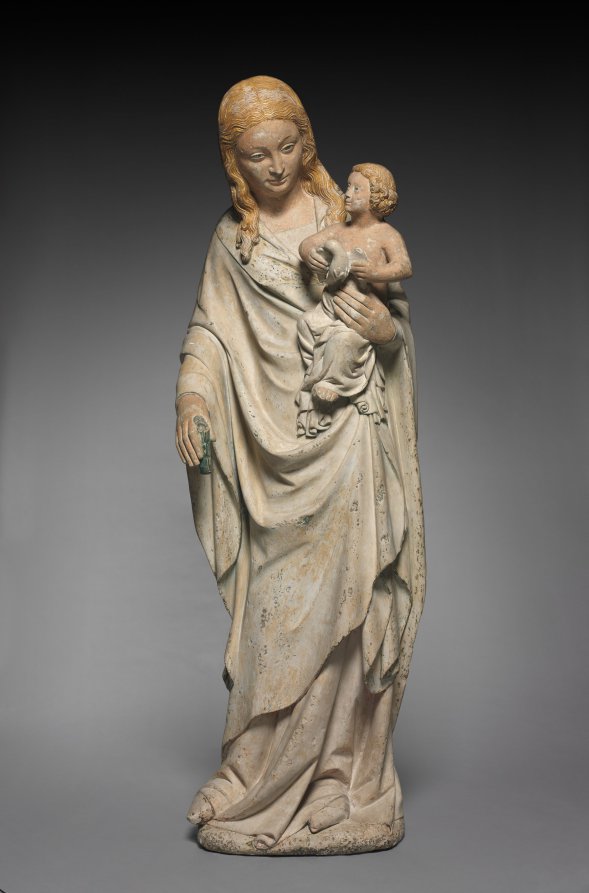
Urban Form: Virgin and Child
Technical Deconstruction: Form as Theological Architecture in Urban Silhouettes
The proposed aesthetic convergence—between Gauguin’s post-impressionist, primitivist sacred scene and the rigid symbolic formalism of an ancient Egyptian coffin fragment—presents a profound case study in the construction of meaning through form. For the 2026 NYC executive wardrobe under the Addison Fashion NYC ethos, this is not merely an artistic reference but a foundational blueprint. It instructs a design philosophy where silhouette becomes a vessel for modern secular belief systems: integrity, intentionality, and a calibrated personal authority. The core technical takeaway is the dialectic between organic planar composition and ritualistic geometric containment, a tension that defines the next generation of minimalist power dressing.
The Gauguin Principle: Subjective Planarity & The Internalized Silhouette
Gauguin’s Ia Orana Maria deconstructs the European hierarchical silhouette through its deliberate flattening of pictorial space. The technical translation for urban tailoring abandons constructed, hyper-defined shaping in favor of strategic two-dimensionality. This manifests in garments engineered to fall from the shoulder or a single, precise point of tension, creating a clean, uninterrupted plane across the body. Think of a single-seam coat dress where the front and back are essentially parallel planes, subtly shaped through minimal darting or strategic fabric bias. The "sacred narrative" is internalized; the power of the garment derives not from aggressive waist suppression or padded structure, but from the serene, confident carriage of the form it creates. This aligns with a contemporary executive ethos where authority is demonstrated through composed presence rather than imposed rigidity. The silhouette becomes a modern "visual conversion"—traditional suiting codes are transplanted onto the "primordial soil" of minimalist, almost archaic, form.
The Egyptian Code: Ritualistic Containment & The Symbolic Line
In stark technical contrast, the Egyptian coffin fragment exemplifies form as eternal, symbolic law. The side-view rigidity (the "law of frontality") and the emphatic, unbroken contour line are paramount. Our sartorial interpretation moves beyond literal replication to embrace the principle of absolute clarity in outline. This dictates garments conceived as singular, iconic shapes. A tailored overshirt, for instance, is not a layered afterthought but a primary architectural shell, its silhouette—from the severe vertical line of the placket to the sharp, unadorned hem—designed to be read instantly and remembered. Seaming is minimized or strategically placed to reinforce the graphic perimeter. This approach creates a protective, ritualistic enclosure for the wearer, analogous to the coffin’s function. In an urban context, this translates to a wardrobe of "armorial" pieces: a coat with a definitive, sculptural collar that frames the face; trousers with a flawless, unwavering leg line. Each piece functions as a guardian of personal space and intention.
Synthesis for 2026: The Interface Silhouette
The 2026 executive silhouette emerges from the synthesis of these two formal paradigms. It is an Interface Silhouette—a garment that, like both source artworks, creates a mediated space between the individual and the external world. The technical execution lies in hybridizing Gauguin’s subjective plane with Egypt’s symbolic line. A practical manifestation is a modular suiting system built on a base of ritualistically pure, geometric pieces—a square-cut ivory vest, a perfectly rectangular wide-leg trouser. Over this, a planar, softly draped wrap-top or an unstructured duster coat in the same Ivory palette introduces organic fluidity. The color Ivory is critical here, serving as the neutral, timeless ground—neither the subjective color of Gauguin nor the polychrome of Egyptian art, but a sophisticated, elevated blank canvas that emphasizes form and texture. It carries connotations of sanctity, parchment (a vessel for code), and bone (architectural substrate), perfectly bridging the two sources.
The resulting form language is one of calibrated asceticism. Seam details are exaggerated to become the sole ornamentation, like the etched lines on the coffin fragment. Fabric choices juxtapose dense, matte wool crepes (Egyptian stone) against fluid, heavy silks (Gauguin’s pigment). The silhouette maintains a hieratic stillness in its overall outline while allowing for subtle, internal movement—the "sensual piety" of Gauguin contained within the "eternal grammar" of Egypt. For the NYC executive, this wardrobe does not shout; it prescribes a reality. It is a tool for focused engagement with the world, offering both the protective, identity-affirming armor of symbolic form and the intuitive, human-centric flexibility of organic composition. It answers the aesthetic question posed by the source materials: modern dressing is a spiritual practice of curating one’s own presence, where every line, plane, and hue is a deliberate element in a personal visual theology of efficacy and grace.