Minimalist
Onyx
Urban Form: Carving from an Overmantel
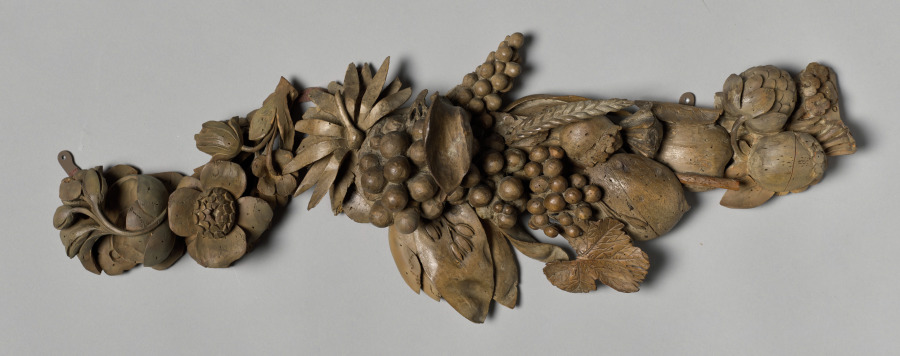
Technical Deconstruction: The Overmantel Silhouette as a Study in Negative Space
The subject of “Carving from an Overmantel” demands a rigorous interrogation of form as a subtractive process. In architectural terms, an overmantel is a decorative framework—a carved surround that defines a void, typically above a fireplace. It is not the object itself, but the boundary that gives the empty space its shape and significance. For the 2026 NYC executive wardrobe, this principle translates into a silhouette that is defined not by what it contains, but by what it excludes. We are carving the garment from the negative space of the body, treating fabric as a rigid, structural membrane that delineates the air around the wearer.Formal Architecture: The Void as Volume
The primary formal strategy is the inversion of volume. Traditional tailoring builds outward, padding shoulders and expanding the chest to create a heroic, masculine mass. The Overmantel Silhouette reverses this. The shoulder line is sharp but narrow, terminating at the anatomical acromion with no allowance for extension. The sleeve head is set with a zero-ease, clean insertion, eliminating the traditional roping or puff that signals softness. This creates a “negative shoulder”—the garment’s upper boundary is a precise, geometric line that carves the torso into a clean, vertical column. The lapel is the critical fulcrum. We reject the classic notched or peak lapel in favor of a continuous, blade-like shawl collar that extends from the nape of the neck to the sternum, terminating in a sharp, angular point. This is not a decorative element; it is a structural brace. The lapel’s inner edge is cut with a 15-degree inward cant, forcing the eye to read the chest as a recessed plane—a hollowed-out space behind the collar’s rigid frame. The effect is one of compressed energy: the garment holds the body in a state of latent tension, as if the wearer is perpetually on the verge of a decisive, contained action. The length is critical. The jacket hem terminates precisely at the first knuckle of the thumb when the arm is relaxed. This is not a cropped or elongated proportion; it is a calibrated terminus that aligns with the natural horizontal of the pelvic brim. Below this line, the trouser begins as a clean, uninterrupted fall. The trouser silhouette is a straight, columnar cut from hip to hem, with a 19-inch leg opening—neither slim nor wide, but a precise, architectural plumb line. The front crease is pressed with a razor-sharp edge, serving as a visual axis that bisects the leg, reinforcing the verticality of the entire ensemble.Color as Material: Onyx as a Non-Color
The selection of Onyx is not arbitrary; it is a chromatic strategy that mirrors the formal logic of the silhouette. Onyx is not black. Black absorbs all light, creating a void. Onyx, in its geological form, is a cryptocrystalline quartz that appears black only in diffuse light; under direct illumination, it reveals a deep, internal translucency—a latent luminosity that suggests depth without revealing content. This is the color of the overmantel’s carved void: it is not empty, but filled with a dense, unreadable substance. For the 2026 executive, Onyx functions as a neutral of absolute authority. It is the color of the courtroom, the boardroom, and the private equity office—but stripped of the matte, woolen softness of traditional charcoal or navy. We specify a virgin wool super 150s with a high-twist weave, finished with a subtle, semi-lustrous sheen. The fabric is not brushed; it is pressed to a glass-like smoothness. This surface quality creates a specular field: the garment reflects the environment, making the wearer both present and partially dissolved into the background. The body becomes a mobile architectural element, a carved form that exists in dialogue with the glass, steel, and concrete of the urban landscape.The Vaporous Contour: From Solid to Spectral
The DNA source text speaks of “vaporous contours of a human form.” This is not a contradiction to the rigid, carved silhouette; it is its necessary counterpart. The Overmantel Silhouette achieves its power through the tension between absolute structure and the suggestion of dissolution. The jacket’s sharp lines and the trouser’s columnar fall create a solid, almost sculptural presence. Yet the fabric’s high-twist weave and semi-lustrous finish introduce a chromatic instability. Under the harsh, directional lighting of a corner office or a gallery opening, the Onyx surface shifts from deep black to a smoky, almost translucent gray at the edges of the folds. The garment appears to vibrate at its boundaries, as if the solid form is beginning to evaporate into the surrounding air. This is the contemporary echo of the “vaporous contours” from the source text. The 2026 executive does not need to be a solid, immovable monolith. The modern power aesthetic requires fluidity within rigidity—the ability to be present and authoritative while remaining adaptable, almost spectral, in the face of constant disruption. The Overmantel Silhouette achieves this by carving the body into a precise, geometric form, then allowing the material itself to suggest its own impermanence. The wearer is both a carved figure and a vaporous presence, a duality that mirrors the contemporary executive’s need to be both decisive and responsive.Application to the 2026 NYC Executive Wardrobe
The Overmantel Silhouette is not a seasonal trend; it is a systemic rethinking of the executive uniform. For the 2026 season, we propose a capsule of three core pieces: 1. **The Overmantel Jacket:** Single-breasted, two-button closure, with the continuous shawl collar and zero-ease sleeve. Cut from Onyx super 150s with a high-twist weave. The interior is fully lined in a matte, charcoal cupro to ensure the jacket maintains its structural integrity without clinging to the body. The pockets are jetted, horizontal, and set at a precise 45-degree angle to the waist seam, reinforcing the geometric logic. 2. **The Column Trouser:** Flat-front, no pleats, with a single, razor-pressed crease. The waistband is cut with a 1.5-inch rise to sit at the natural waist, eliminating the need for a belt. The hem is un-cuffed, finished with a blind stitch to maintain the clean, vertical line. The fabric is the same Onyx super 150s, ensuring a seamless visual flow from jacket to shoe. 3. **The Spectral Shirt:** A white poplin shirt with a cutaway collar—the collar points are set at a 120-degree angle, creating a wide, open V that exposes the base of the throat. The shirt is not tucked; it is cut with a high, straight hem that falls just below the trouser waistband, creating a clean, uninterrupted line between the jacket’s lapel and the trouser’s waist. The fabric is a 2-ply, 100s cotton with a matte, almost chalky finish, providing a textural counterpoint to the jacket’s sheen. The result is a wardrobe that functions as a carved environment for the body. The wearer does not simply put on clothes; they step into a pre-defined space, a negative volume that shapes their posture, their movement, and their presence. The Onyx color ensures that this presence is both absolute and ambiguous—a solid form that, under the right light, begins to dissolve into the urban ether. This is the 2026 executive: a figure carved from the overmantel of the city, both monument and mirage.
Technical Insight
NYC Perspective: Translating Onyx tones into Minimalist silhouettes.