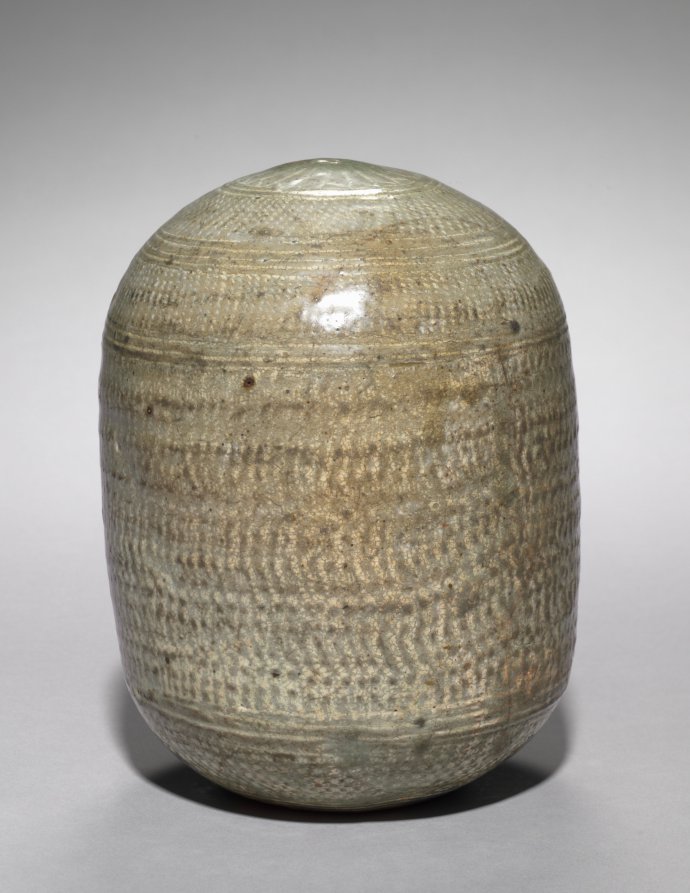
Urban Form: Wine Cask with Stamped Floral Decoration
Geometric Integrity and the 2026 Executive Silhouette
The wine cask with stamped floral decoration presents a paradox of containment and release, a study in controlled volume that defines the 2026 executive silhouette for Addison Fashion. Its structural poetics emerge from the tension between the cask’s rigid, cylindrical form and the organic, almost calligraphic floral stamp that disrupts its surface. This is not a decorative afterthought but a deliberate architectural intervention—a stamp that compresses the floral motif into a geometric code, transforming natural growth into a pattern of repetition and interval. The cask’s barrel shape, with its pronounced belly and tapered ends, mirrors the human torso in a state of poised expansion: the chest broadens, the waist cinches, the hips settle. This is the foundational geometry for the coming season’s power dressing—a silhouette that breathes without losing its structural nerve.
Structural Poetics: The Cask as Torso
The cask’s stamped floral decoration operates as a surface tension system. Each petal and stem is not carved or painted but impressed, creating a negative relief that catches light and shadow. This technique echoes the Addison DNA of minimalist luxury: the pattern exists not as applied ornament but as an integral deformation of the material itself. In the 2026 executive silhouette, this translates to garments where structure is not added but subtracted—seams that fold inward, darts that disappear into the fabric’s memory, and silhouettes that derive their shape from the body’s own architectural logic. The cask’s floral stamp, when read as a textile pattern, suggests a grid of organic intervals: the flowers are spaced with mathematical precision, their stems forming invisible axes that organize the surface into a rhythmic field. This is the urban poetics of the grid—the city block, the window pane, the subway map—but softened by the floral motif’s inherent asymmetry.
The cask’s materiality—aged wood, darkened by time and wine—introduces the concept of patina as narrative. For the executive wardrobe, this translates to fabrics that carry their own history: densely woven wool with a slight luster, matte silk that absorbs rather than reflects light, and leathers that develop a crease pattern unique to the wearer. The 2026 silhouette does not seek perfection but controlled imperfection. The floral stamp’s slight irregularity—the way the press may have shifted, the wood grain interrupting the pattern—becomes a design principle: asymmetry as a sign of authenticity. The executive jacket, therefore, will feature a single shoulder seam that deviates from the standard, a pocket placed off-axis, or a collar that folds with deliberate asymmetry. This is not chaos but calculated disruption, a nod to the cask’s handmade origin within a mass-produced world.
Urban Materiality: From Cask to Garment
The wine cask’s urban materiality lies in its functional austerity. It is a container designed for transport, storage, and aging—a tool of commerce that becomes a vessel for transformation. The stamped floral decoration, likely a maker’s mark or a symbol of origin, elevates this utilitarian object into a cultural artifact. For the 2026 executive silhouette, this duality is essential: the garment must serve as both armor and canvas. The Onyx color palette—deep black with undertones of charcoal and midnight blue—references the cask’s darkened wood, the shadows within its interior, and the ink-black wine it once held. Onyx is not a flat black but a dimensional void, absorbing light while revealing subtle textures: the grain of the wood, the impression of the stamp, the patina of age.
The silhouette itself is a study in compression and release. The cask’s widest point—the belly—corresponds to the executive blazer’s dropped shoulder and expanded chest, creating a powerful upper block that tapers to a narrow waist. This is not the exaggerated shoulder of the 1980s but a sculptural volume that respects the body’s natural proportions while amplifying them. The floral stamp’s vertical stems suggest a linear elongation, which translates to trousers with a high waist and a straight, almost columnar leg—a silhouette that extends the body’s vertical axis without clinging. The cask’s tapered ends inform the jacket’s hemline: a slight curve that mirrors the barrel’s bottom, creating a visual anchor that grounds the silhouette in the urban landscape.
Geometric Integrity: The Grid and the Gesture
The geometric integrity of the wine cask lies in its cylindrical precision. The staves are cut, shaped, and assembled to form a perfect curve, their joints hidden by the iron bands that bind them. This is a lesson in hidden construction: the garment’s internal structure—the canvas, the interfacing, the boning—must be as precise as the cask’s staves, creating a silhouette that appears effortless but is rigorously engineered. The floral stamp disrupts this geometry with its organic forms, introducing a counterpoint of gesture within the grid. For the 2026 executive, this means a garment that balances strict tailoring with moments of fluidity: a sleeve that drapes rather than cuts, a back panel that falls in a single, unbroken line, or a lapel that folds like a petal.
The stamp’s repetition—multiple flowers arranged in a pattern—creates a rhythmic module that can be scaled across the garment. In the Addison collection, this manifests as a repeating motif applied with restraint: a single flower at the collar, a cluster at the cuff, or a full pattern on a lining that remains hidden until the jacket is opened. This is the urban poetics of discovery: the garment reveals its narrative only to those who look closely. The cask’s floral decoration, when viewed from a distance, appears as a textured surface; up close, it becomes a garden. The 2026 executive silhouette operates on the same principle: from across the room, it is a block of Onyx; in proximity, it is a landscape of seams, folds, and impressions.
Conclusion: The Silhouette as Vessel
The wine cask with stamped floral decoration is ultimately a vessel for transformation. It holds wine, which ages and evolves within its confines, emerging as something greater than its components. The 2026 executive silhouette is likewise a vessel—not for liquid but for identity. Its geometric integrity provides the structure; its urban materiality provides the context; its floral stamp provides the soul. The Addison Fashion executive, clad in this silhouette, becomes a mobile architecture, moving through the city with the cask’s quiet authority. The silhouette does not shout; it impresses. Like the stamp on the wood, it leaves a mark that is both permanent and subtle, a signature of presence in the urban landscape.