Urban Form: Seated Buddha
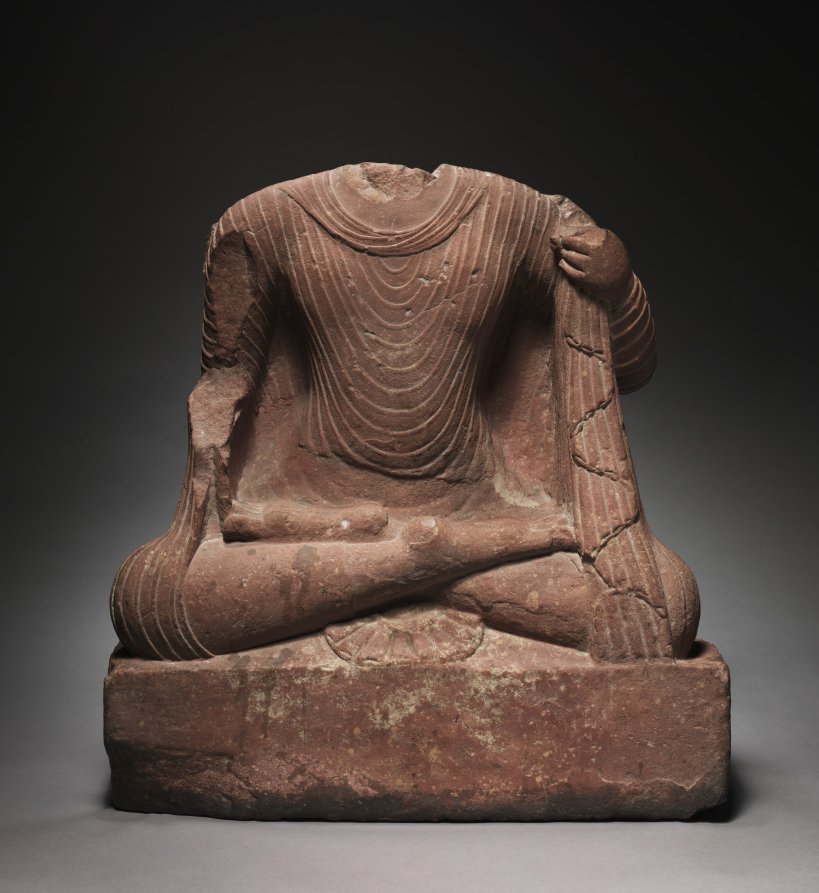
Structural Poetics of the Seated Buddha: A Definitive Urban Silhouette Analysis for 2026
I. Geometric Integrity and the Architecture of Stillness
The Seated Buddha, as a subject of urban silhouette research, presents a paradigm of geometric compression and vertical restraint. Unlike the dynamic torsion of the Musician Pottery Fragment, which captures a centrifugal burst of energy, the Buddha’s form is a study in centripetal stillness. The primary structural geometry is a truncated pyramid—the broad, grounded base of the crossed legs (the vajrasana posture) tapering upward through the torso to the apex of the head. This is not a passive form; it is an active, load-bearing architecture. The shoulders, often rendered with a slight inward curve, act as cantilevered brackets, distributing the weight of the upper body downward into the seated mass. The hands, in the dhyana mudra (meditation gesture), form a closed, oval loop—a negative space that functions as a visual anchor, a void that holds the eye. This geometry is the antithesis of the Fluid or Oversized categories. It demands precision, not volume; balance, not flow.
For the 2026 executive silhouette, this translates into a rejection of superfluous drape. The jacket shoulder must be sculpted—a clean, architectural line that mirrors the Buddha’s shoulder-to-hip ratio. The lapel should be a narrow, vertical blade, not a wide, expressive notch. The trouser is a straight, columnar form, tapering slightly at the ankle to echo the pyramidal base. The fabric must hold a rigid memory; it should not yield to the body but rather contain it. This is the urban poetics of self-containment—a garment that does not announce movement but rather presupposes stillness as a position of power.
II. Materiality and the Urban Monolith
The Seated Buddha’s materiality—whether in stone, bronze, or lacquered wood—is defined by density and surface tension. The Slate color palette is the only appropriate response. Slate is not a neutral; it is a geological statement. It carries the memory of compression, of sediment layered over millennia. In urban terms, it is the color of wet asphalt, of high-rise glass at dusk, of the non-reflective surface that absorbs light rather than dispersing it. This aligns with the Buddha’s internalized luminosity—the glow that comes from within, not from external illumination.
The fabric for the 2026 executive silhouette must be a technical wool or a micro-ribbed jersey with a matte finish. No shine. No texture that catches the eye. The weave should be tight, almost impermeable, like a second skin of compressed graphite. This is urban armor. The Seated Buddha teaches us that the most powerful presence is not the one that moves, but the one that remains immovable in the face of chaos. The garment must feel heavy on the body, not in weight but in intention. A jacket cut from this material will have a dead drop—it falls and stops, with no residual swing. The trouser will break cleanly over the shoe, forming a sharp, unbroken line.
III. The Dialectic of Dynamic Stillness
Drawing from the internal DNA of the Musician Pottery Fragment and the Arhat Paintings, the Seated Buddha represents the synthesis of their opposing forces. The Fragment is pure kinetic energy—a frozen moment of ecstatic motion. The Arhat is pure static energy—a transcendent calm that contains all motion within it. The Seated Buddha is the bridge: a figure that has absorbed the dynamic chaos of the world and transmuted it into stillness. This is not the stillness of death, but the stillness of maximum potential. The body is at rest, but the mind is in motion. The silhouette must convey this latent power.
In practical terms, this means the garment must have hidden structural elements. A concealed zip at the side seam. A stiffened collar that stands away from the neck, creating a negative space between fabric and skin. A double-layer sleeve that holds its shape even when the arm is bent. These are not decorative details; they are architectural joints. They allow the wearer to move without disturbing the overall geometry. The executive who wears this silhouette is not a performer; they are a monument in motion. The garment’s poetics lie in its resistance to the body’s own impulses.
IV. The 2026 Executive: A New Typology
The 2026 executive is not the frenetic, multi-tasking figure of the past decade. They are a strategic anchor—a point of stillness in a volatile market. The Seated Buddha silhouette serves this archetype by reducing visual noise. The Minimalist category is not about absence; it is about extreme selectivity. Every line, every seam, every pocket must be justified by the structural logic of the whole. The Slate color reinforces this by eliminating the distraction of hue. The eye is forced to read the form, not the color.
This silhouette is anti-trend. It does not respond to seasonal whims. It is a permanent form, like the Buddha’s own iconography. The jacket is single-breasted, with a high, narrow gorge and a straight, notched lapel. The shoulder is soft but defined, with no padding—the structure comes from the fabric itself. The trouser is high-waisted, with a flat front and no pleats. The hem is clean, with a slight break. The overall effect is one of compressed verticality—the body is elongated, but not stretched. It is grounded.
V. Conclusion: The Eternal in the Ephemeral
The Seated Buddha, as a research subject, offers a definitive counterpoint to the fluid, oversized, and tailored categories that have dominated recent seasons. It proposes a new rigor—a return to geometric purity and material honesty. The Slate palette and Minimalist construction are not choices; they are necessities. They allow the wearer to inhabit the urban landscape as a static monument, a point of reference in a world of constant flux. This is the ultimate luxury: the ability to be still, to be present, to be unmoved. The 2026 executive silhouette, derived from the Seated Buddha, is not a garment. It is a philosophy of space, time, and power.