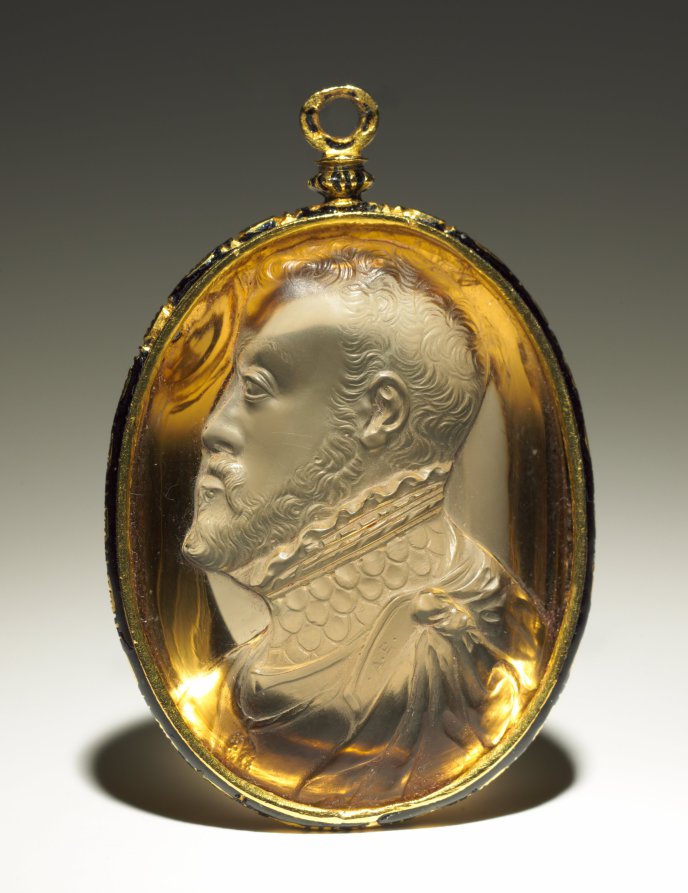
Urban Form: Portrait of Philip II, King of Spain
Executive Summary: The Architecture of Transition
The aesthetic DNA extracted from the comparative analysis of Johannes Vermeer’s “A Maid Asleep” (c. 1657) and George Caleb Bingham’s “A Vignette of Life on the Frontier” (c. 1852) yields a singular, high-value directive for the 2026 NYC executive wardrobe. Both works, separated by two centuries and an ocean, converge on a critical formal principle: the articulation of order within the liminal state. They do not depict climaxes or resolutions, but rather the “between”—the private pause and the public threshold. For the urban executive, this translates into a wardrobe architecture that is neither rigidly formal nor casually relaxed, but one that achieves controlled tension. The chosen silhouette is Tailored, and the foundational palette is Slate—a color that embodies the quiet, structural gravity of Vermeer’s interior light and the stoic, unpolished permanence of Bingham’s riverbank.
I. Form: The Dialectic of Stasis and Latency
A. The Vermeer Principle: Structured Stillness
Vermeer’s composition is a masterclass in geometric restraint. The sleeping maid is not a figure of collapse, but of poised suspension. The visual field is locked by a grid of verticals (door frame, table edge, picture frame) and horizontals (tabletop, floor line). The maid’s slumped posture—the “relaxed order”—is the only deviation from this rigid architecture. This is the core formal insight for the tailored garment: the body must be held by a structure that allows for a single, intentional point of release.
Application to the 2026 Silhouette:
- Shoulder Architecture: A sharp, slightly extended shoulder line (the “door frame”) that creates a clear, authoritative horizontal. This is non-negotiable. It provides the visual anchor, the stable grid against which all other elements are measured.
- Waist Suppression: A defined, but not cinched, waist. The garment should follow the torso’s natural line, creating a clean, unbroken vertical from shoulder to hem. This is the rational structure that prevents the silhouette from becoming amorphous.
- The “Sleeping Maid” Drape: The single point of release. A subtle, controlled drape at the back of the jacket—a soft, inverted pleat or a gentle cowl at the nape—that mimics the maid’s relaxed posture. This is not a sign of weakness, but of latent energy. It signals that the executive is not a static figure, but one in a state of poised readiness.
B. The Bingham Principle: Dynamic Equilibrium
Bingham’s frontier scene is a study in distributed weight. The figures are not isolated; they form a rhythmic, horizontal frieze across the canvas. Each individual is in a state of motion (loading, talking, resting), yet the overall composition is stable, almost frieze-like. The aesthetic power lies in the balance of disparate forces—labor, commerce, leisure—held in a single, coherent frame. For the executive wardrobe, this translates into a garment that can accommodate multiple, simultaneous functions without visual fragmentation.
Application to the 2026 Silhouette:
- Modular Layering System: The tailored jacket must function as a “frontier” shell—a unifying structure that contains and organizes the layers beneath. A structured vest or a high-neck knit in a contrasting texture (e.g., a fine-gauge cashmere in a slightly lighter slate) creates the rhythmic horizontal of Bingham’s figures, breaking the vertical line without disrupting the overall order.
- Pocketing as Narrative: Pockets are not merely functional; they are architectural details. A single, low-set patch pocket on the left side (asymmetrical, like the maid’s tilted head) introduces a point of visual interest. A second, hidden interior pocket (the “frontier’s secret”) suggests capacity and preparedness. The placement must be precise, creating a controlled asymmetry that echoes the dynamic balance of Bingham’s composition.
- Hem Line as Horizon: The jacket’s hem should fall at the mid-hip—a point that is neither too short (aggressive) nor too long (draped). This is the “riverbank” line, the threshold between the upper body (the structured, public self) and the lower body (the more fluid, private self). It is the edge of the frame.
II. Color: The Chromatic Grammar of Slate
A. The Vermeer Light: A Neutral with Depth
Vermeer’s light is not white; it is a cool, filtered grey that contains the memory of blue and the warmth of ochre. It is a color of interiority. Slate, as a color, is the perfect chromatic analogue to this light. It is not a flat grey, but a complex neutral that shifts between blue-grey, green-grey, and charcoal, depending on the weave and the light source. This complexity prevents the executive from appearing monochromatic or dull. Instead, the color becomes a field of subtle variation, a visual echo of the maid’s quiet, contemplative state.
Application to the 2026 Palette:
- Primary Fabric: A worsted wool suiting in a deep, cool slate (with a hint of indigo). This provides the base, the stable ground.
- Secondary Accent: A warm, dusty slate (with a hint of mushroom or putty) for the interior lining or a secondary layer. This introduces the “ochre” warmth of Vermeer’s light, preventing the palette from becoming cold or sterile.
- Trim Detail: A matte black (Onyx) for buttons, zippers, and stitching. This is the structural line—the equivalent of Vermeer’s door frame or picture frame. It defines the edges and reinforces the tailored architecture.
B. The Bingham Earth: A Neutral with Texture
Bingham’s palette is dominated by the earthy browns, greys, and muted greens of the frontier. Slate, when considered in this context, is not a city color but a terrestrial one. It is the color of wet river stones, of a stormy sky over the plains, of unbleached linen. This grounding quality is essential for the 2026 executive. The color must not feel like a corporate uniform; it must feel like a material truth.
Application to the 2026 Palette:
- Texture as Color: The same slate hue must be rendered in different textures to create visual interest without introducing new colors. A smooth, polished worsted for the jacket body; a ribbed, matte wool for the vest; a suede-like, napped finish for the interior pocket. This is the chromatic equivalent of Bingham’s rhythmic composition—variety within a single, unifying field.
- The “Frontier” Accent: A single, small accent in raw, unbleached linen (a natural, off-white) for the pocket square or the interior of the collar. This is the unpainted canvas of Bingham’s sky, a reminder of the raw materiality beneath the constructed form.
III. The 2026 Executive: A Synthesis
The final garment is not a costume. It is a functional system for navigating the liminal spaces of the contemporary city—the transition from the private commute to the public meeting, from the focused work to the networked event. The Tailored Slate silhouette achieves the following:
- Authority without Aggression: The sharp shoulder and defined waist project control, while the single, soft drape at the back signals a capacity for reflection and adaptation.
- Complexity without Chaos: The modular layering system and asymmetrical pocketing provide visual and functional depth, while the unified slate palette prevents fragmentation.
- Timelessness without Nostalgia: The formal principles are drawn from 17th and 19th century art, but the execution is rigorously modern—clean lines, precise construction, and a focus on material integrity.
This is the wardrobe for the executive who understands that power is not a static state, but a dynamic equilibrium—a poised suspension between action and reflection, between the private self and the public role. It is the architecture of the “between,” rendered in slate and tailored with the precision of a master painter.