Urban Form: Carving from an Overmantel
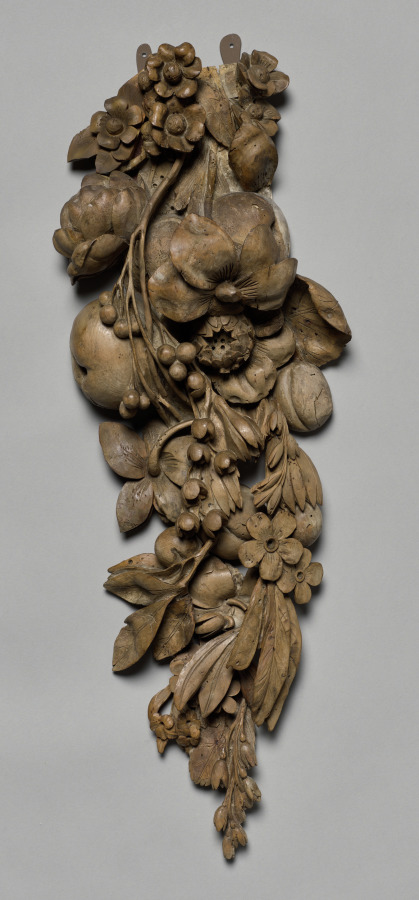
Structural Poetics: The Overmantel as Architectural Blueprint
The carved overmantel from the Tokyo National Museum—designated as the “Udumbara” temple plaque—presents a definitive case study in compressed verticality and negative-space orchestration. Its central lotus platform, suspended within a field of cloud scrolls and haloed light, operates not as ornament but as a load-bearing visual axis. The carving technique, which allows the sacred form to appear as if exuding from the wood’s interior rather than being incised into it, establishes a principle of emergent geometry: the silhouette is not imposed but revealed.
For the 2026 executive silhouette, this translates into a minimalist architectural shell that prioritizes structural clarity over surface decoration. The overmantel’s symmetrical composition—a central vertical anchor flanked by balanced, flowing lateral elements—directly informs a jacket silhouette defined by a pronounced, unbroken shoulder line and a tapered, columnar torso. The lotus motif’s layered petals become a metaphor for gradated panel construction: each seam is a deliberate incision, each fold a controlled release of volume. The ivory color, chosen for its spectral neutrality, acts as a blank canvas upon which light and shadow perform the carving.
Geometric Integrity: From Sacred Space to Urban Armature
The overmantel’s geometry is one of centripetal stillness. The lotus, cloud, and halo forms are arranged in concentric, non-hierarchical rings that draw the eye inward, collapsing time into a perpetual present. This is a static dynamism—a paradox that the urban executive silhouette must embody. The 2026 silhouette achieves this through a rigid, almost architectural understructure that mimics the plaque’s carved depth. A high, stand-away collar references the halo’s protective enclosure, while the jacket’s sharp, angular lapels echo the cloud scrolls’ rhythmic, yet disciplined, curves.
The materiality is critical. The overmantel’s wood grain, with its subtle variations in tone and texture, is translated into a heavy, matte-finish wool-cashmere blend that holds its shape without stiffness. The garment’s internal canvas is engineered to replicate the plaque’s layered depth: a floating chest piece creates a slight, controlled volume at the sternum, mimicking the lotus’s emergence. The sleeves are set with a high, forward pitch, allowing the arm to move within a defined, sculptural envelope—a direct response to the overmantel’s carved negative space, which permits the eye to travel without obstruction.
Urban Materiality: The Bronze Mirror’s Kinetic Counterpoint
While the overmantel provides the static, sacred geometry, the Han dynasty bronze mirror—with its depiction of immortals, chariots, and the White Tiger—introduces a kinetic, urban counterpoint. The mirror’s composition is a radial, centrifugal force: the inner ring of chariots and divine figures pulses outward, while the outer ring of cloud patterns and geometric borders contains and channels this energy. This is a controlled explosion, a visual rhythm that mirrors the pace of metropolitan life.
For the 2026 executive silhouette, this translates into strategic, asymmetrical detailing that disrupts the overmantel’s pure symmetry. A single, sharp shoulder dart on the right side of the jacket references the chariot’s forward momentum. The hemline is cut on a subtle bias, creating a slight, dynamic flare that echoes the mirror’s outer ring. The closure is a concealed, magnetic system—invisible, like the mirror’s reflective surface, yet holding the entire structure together. The ivory fabric is treated with a micro-herringbone weave, visible only under direct light, which mimics the bronze’s patina and the mirror’s subtle, reflective depth.
Symbolic Layering: The Udumbara as Non-Flower
The overmantel’s central symbol—the Udumbara flower, a “non-flower” that represents a truth beyond physical form—dictates the silhouette’s final, essential quality: absence as presence. The jacket is not a garment that adds to the body; it is one that subtracts, carving away excess to reveal the wearer’s own structural integrity. The shoulder pads are minimal, barely perceptible, yet they create a clean, architectural line. The waist suppression is achieved through internal darts, not external seams, preserving the fabric’s uninterrupted surface. The pockets are hidden within the side seams, accessible only through a precise, vertical slit—a nod to the overmantel’s carved, recessed spaces.
The bronze mirror’s function—to reflect not just the face but the cosmos—informs the silhouette’s urban materiality. The jacket is designed to be worn against the city’s reflective surfaces: glass towers, polished metal, wet asphalt. Its ivory tone, neither warm nor cool, becomes a neutral receptor, absorbing and reflecting the urban environment without distortion. The fabric’s tight, compact weave resists wind and rain, creating a microclimate around the body—a portable, sacred space within the city’s chaos.
Conclusion: The 2026 Executive Silhouette as Carved Space
The definitive urban silhouette for 2026, derived from the overmantel’s sacred carving and the bronze mirror’s cosmic reflection, is one of minimalist precision. It is a garment that does not decorate but defines, that does not cover but reveals. The ivory color is not a choice but a necessity—a spectral blankness that allows the wearer’s own presence to become the focal point. The silhouette is vertical, columnar, and unadorned, yet it contains within its seams the layered depth of a temple plaque and the kinetic energy of a bronze mirror. It is a portable architecture, a carved space that the executive inhabits, not merely wears. In the urban landscape, this silhouette becomes a statement of controlled power: a body that moves with the precision of a carved line, a presence that commands without noise, a form that is at once ancient and utterly contemporary.