Urban Form: Qur'an Manuscript Folio (Recto); Left Folio of Double-Page Illuminated Frontispiece
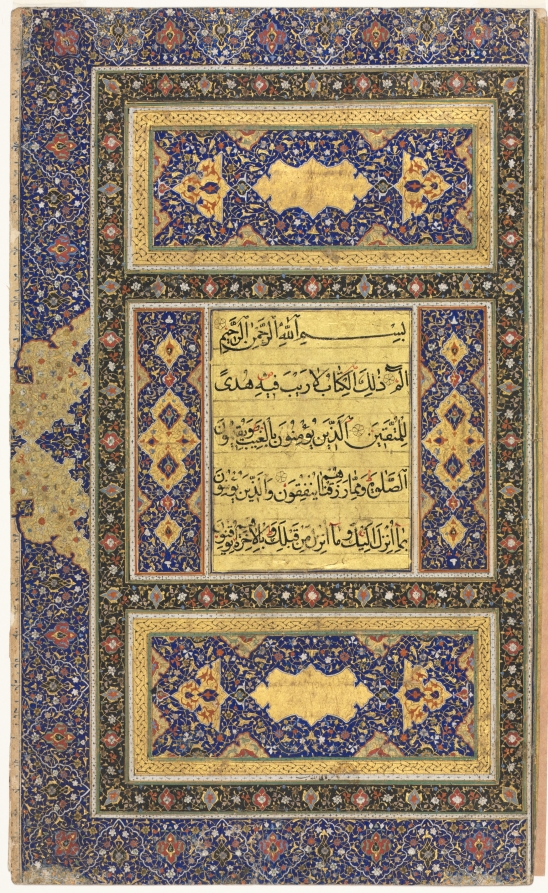
Technical Analysis: Geometric Integrity & The 2026 Executive Silhouette
The provided folio and its accompanying aesthetic DNA do not present as mere historical artifacts; they function as a profound blueprint for architectural form. The analysis of the Qur'an Manuscript Folio (Recto) and the conceptual framework of "dynamic stillness" extracted from the Eastern artifacts necessitate a translation from the spiritual and artistic plane to the corporeal and urban. For Addison Fashion's 2026 executive silhouette, this translation yields a paradigm of Tailored Rigor with Poetic Interruption. The core geometric principle is not one of fluidity or deliberate distortion, but of absolute integrity fractured by calculated, meaningful absence.
Structural Poetics: The Folio as Architectural Plan
The illuminated frontispiece of a Qur'an manuscript operates under a sacred geometry. Its structure is one of nested frameworks: the margin, the text block, the illuminated panel. Each element exists in a state of severe alignment, creating a visual hierarchy of immutable order. This mirrors the non-negotiable foundation of the 2026 executive silhouette: a sharp shoulder line, a precise neckline, a waist definition that is acknowledged, if not traditionally cinched. The silhouette's architecture begins with this uncompromising rectilinear framework, akin to the manuscript's page layout.
However, the "Left Folio" designation is critical. It implies a necessary, deliberate incompleteness. The geometric whole is understood but not physically present. This directly informs the silhouette's most sophisticated gesture: the strategic void. This manifests not as deconstruction for its own sake, but as a purposeful removal of material to reveal the body's own architecture. Consider a single-seam blazer where the traditional side seam is eliminated, the garment's structure instead defined by a single, parabolic cut from underarm to hem, creating a clean, geometric plane. Or a tailored dress with a precisely excised parallelogram at the torso, revealing a slate-colored underlay—a modern interpretation of the manuscript's illuminated panel, now framing skin or a contrasting base layer. The "residual dynamic" from the *Musician Pattern Pottery Fragment* is captured in these moments of absence; the body's movement within the rigid garment creates a living, breathing negative space.
Urban Materiality: From Illumination to Mineral Surface
The material response to this analysis is cold, sophisticated, and mineral. The designated Slate is not a mere color but a material philosophy. It references the folio's vellum—not as parchment, but as metamorphic rock. Fabrics must possess a dense, mute gravity: heavyweight wool crepes with a dry hand, technical matte jerseys with substantial body, double-faced wools that stand away from the frame. Surface treatment is paramount. We move from gold illumination to a subtler, more urban luminosity: micro-embossed geometric patterns (suggesting the implicit text of the folio), laser-cut perforations in strict, repetitive sequences (echoing the abstraction of musical notation from the pottery fragment), and heat-bonded seams that eliminate thread, presenting as sheer graphic lines on the garment's surface.
The "static eternity" of the *Arhat Paintings* informs the silhouette's emotional and tactile resonance. Garments will exhibit an imperturbable calm in their drape and finish. This is achieved through engineering: internal corsetry of power mesh and boning within a minimalist shell, not to restrict, but to create an unwavering external line—a "spiritual composure" in cloth. The silence of the罗汉 is translated into acoustic tailoring—fabrics that do not rustle, closures that are seamless or magnetic, a total absence of superfluous detail. The executive becomes a monolith of focused intent.
The 2026 Silhouette Definition: Calculated Asymmetry & Framed Negative Space
The resulting 2026 executive silhouette is defined by three core geometric principles derived from the folio's integrity and the DNA's dialogue between motion and stillness.
1. The Contained Dynamic: The silhouette acknowledges the body's axis but does not celebrate its curves. Movement is suggested through asymmetric hemlines that are geometrically derived—a single diagonal slice across the thigh, a parallelogram-shaped coat tail. These are not organic flares but architectural decisions, like the "frozen moment" of the musician's robe captured in the pottery fragment. A sleeve may be articulated with a single, sharp dart that rotates slightly, creating a helical tension around the arm without volume.
2. The Framed Void: The most critical element. The garment actively frames areas of the body or underlying layers. A severe, wide-neck collar on a coat acts as the "margin" of the folio, framing the collarbones and the minimalist garment beneath. A tailored tunic with a severe, vertical slit from sternum to navel functions as the "illuminated panel," a moment of revelation within the strict format. This framed negative space is the modern equivalent of spiritual illumination—it is personal, austere, and intellectually resonant.
3. The Monolithic Layering: Silhouettes are conceived as singular, monolithic forms, even when layered. A tailored sleeveless tunic-dress in slate wool, with a severe geometric cut-out at the side, is worn over a high-necked, full-length bodysuit in a slightly lighter shade of slate. The ensemble reads as one complex, layered form—a direct translation of the manuscript's layered creation (vellum, ink, gold leaf) into a single, powerful visual statement. The color story remains within the mineral spectrum, allowing form and void to be the sole narrators.
In conclusion, the geometric integrity of the Qur'an Manuscript Folio teaches us that structure is a form of reverence. For Addison Fashion's 2026 executive, this reverence is directed towards the intellectual and corporeal self within the urban landscape. The silhouette is a tailored sanctuary—a garment of severe geometric integrity, punctuated by purposeful, silent voids. It is armor rendered as poetry, where the absence of cloth speaks louder than its presence, and where stillness, as defined by millennia of aesthetic philosophy, becomes the ultimate expression of power and sophistication.