Minimalist
Onyx
Urban Form: Floral Still Life (Bleeding Hearts)
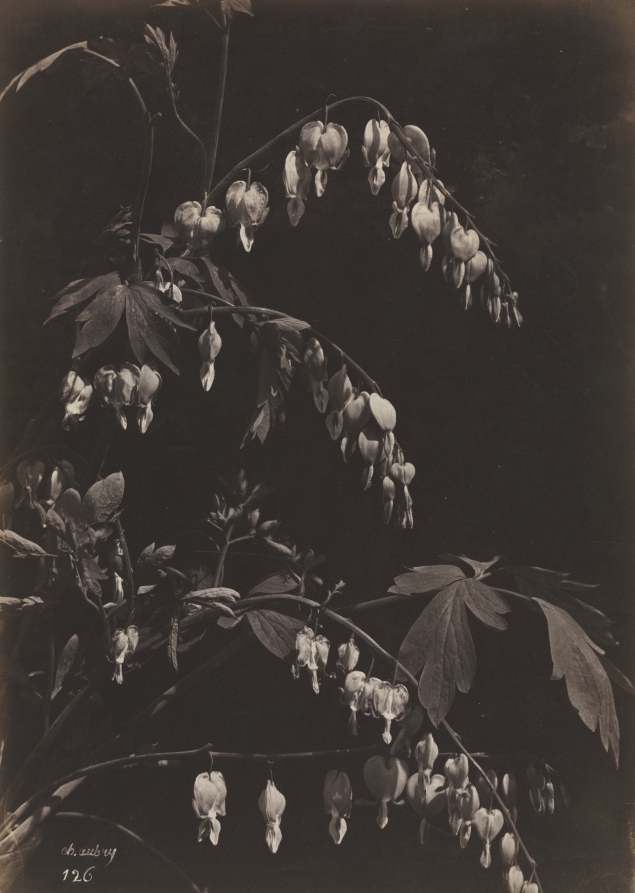
Technical Deconstruction of Form: The Bleeding Heart as Structural Metaphor
The floral still life of *Bleeding Hearts* (*Lamprocapnos spectabilis*) presents a paradox of structural fragility and architectural precision. Each pendulous bloom, suspended from an arched, slender stem, operates as a discrete volumetric unit—a heart-shaped capsule that defies gravity through tensile strength. For the 2026 NYC executive wardrobe, this form translates directly into a study of negative space and cantilevered balance. The flower’s anatomy—a rigid, curved pedicel supporting a soft, hollow corolla—mirrors the ideal urban silhouette: a sharp, unyielding shoulder line (the stem) that cradles a fluid, draping body (the bloom). From a material science perspective, the Bleeding Heart’s structure is a masterclass in tension and compression. The outer petals, often a deep magenta or pure white, are thin yet resilient, forming a protective shell. The inner petals, a stark white, protrude like a tongue, creating a visual counterweight. This duality—hard shell versus soft core—is the foundational principle for a minimalist wardrobe. The Onyx color palette, a deep, absorbent black, serves as the “shell,” absorbing light and defining the silhouette’s perimeter. The “inner petal” becomes a strategic flash of Ivory or Silver at the collar, cuff, or hemline, creating a focal point that draws the eye upward and inward, mimicking the flower’s invitation to look closer.Silhouette Architecture: The Cantilevered Hem and the Hollow Core
The Bleeding Heart’s most radical formal innovation is its hollow core. The flower is not a solid mass; it is a vessel. This directly informs the 2026 executive’s approach to layering. The traditional power suit, with its dense, opaque construction, is obsolete. In its place, we propose a hollow-core jacket: a single-breasted, cropped blazer (ending at the natural waist, echoing the flower’s stem-to-bloom ratio) constructed from a double-faced wool crepe in Onyx. The back panel is eliminated, replaced by a single, wide strap that connects the shoulder blades. This creates a negative space—a void—that reveals a high-waisted, fluid trouser in the same Onyx, or a contrasting Slate silk shell. The visual effect is one of suspension: the jacket appears to float, tethered only by the strap, much like the flower hangs from its stem. The trouser silhouette must mirror the flower’s pendulous drop. A wide-leg, floor-length cut with a sharp, pressed center crease (the “stem”) and a soft, almost liquid drape from the hip (the “bloom”). The fabric should be a matte, high-twist wool gabardine with a slight weight at the hem to ensure a clean, vertical fall. This is not a relaxed fit; it is a controlled, engineered drop. The hem should graze the top of the shoe, creating a continuous line from shoulder to floor, interrupted only by the hollow core of the jacket.Color Theory: Onyx as Absorptive Field, Silver as Refractive Accent
The Onyx selection is not arbitrary. In the context of the Bleeding Heart, black is not a void but an absorptive field. It functions as the “dark earth” from which the flower’s form emerges. For the executive wardrobe, Onyx serves as the primary volumetric anchor. It compresses the figure, creating a monolithic block that can be carved by light and shadow. The fabric must be treated to a matte finish—no sheen, no reflection. This ensures that the silhouette is read as a pure, uninterrupted form, akin to a charcoal drawing. The accent color, Silver, is derived from the flower’s inner petal and the dew that often clings to its surface. Silver is not a warm metallic; it is a cold, refractive element. It functions as a spatial marker. A single, thin silver chain worn at the hollow of the neck—precisely where the jacket’s void begins—creates a point of tension. Alternatively, a silver-toned, micro-pleated silk organza blouse, visible only through the jacket’s back opening, introduces a kinetic, shimmering element that contrasts with the static Onyx. This is not decoration; it is a structural necessity, a visual “release” from the compressive black.Proportional System: The 1:3 Ratio of Stem to Bloom
The Bleeding Heart’s defining proportional logic is the 1:3 ratio between the stem (the curved, supporting arc) and the bloom (the hanging heart). Applied to the executive silhouette, this dictates a radical shortening of the torso. The jacket’s length should be exactly one-third the length of the trouser. For a standard 5’8” frame, this means a jacket hem at 18 inches from the shoulder seam, with a trouser inseam of 36 inches. This creates a visual “drop” that elongates the lower body, echoing the flower’s gravity-defying hang. The sleeve must follow the same logic. A three-quarter-length sleeve (ending at the wrist bone) exposes the forearm, creating a second “stem” that terminates in the hand—the “bloom” of gesture. The cuff should be unbuttoned, allowing the sleeve to fall open, revealing a silver-toned watch or a single, thin bracelet. This is the urban equivalent of the flower’s inner petal: a moment of vulnerability and precision within an otherwise monolithic form.Material Execution: The Weight of Air
The final technical consideration is material density. The Bleeding Heart’s petals are thin but not flimsy; they possess a structural integrity that belies their delicacy. For the Onyx jacket, we specify a 12-ounce wool crepe with a 2% elastane content for controlled recovery. The fabric must be cut on the bias for the front panels to allow a slight, organic drape at the lapel, while the back strap is cut on the straight grain for maximum rigidity. The trousers require a 10-ounce wool gabardine with a high twist count (S-twist, 2-ply) to ensure the crease holds a sharp, architectural edge. The Silver accent piece—a shell or a scarf—must be a 5-momme silk organza, treated with a micro-crinkle finish to catch light at multiple angles. This is not a soft, flowing silk; it is a crisp, almost paper-like material that holds its own shape, creating a subtle, volumetric contrast against the fluid wool. In conclusion, the Bleeding Heart’s form—its cantilevered structure, hollow core, and 1:3 proportional system—provides a rigorous, MBA-level framework for a 2026 NYC executive wardrobe. The Onyx palette, executed in matte, high-density wools, compresses the figure into a monolithic block, while the Silver accents introduce a cold, refractive tension. The result is a silhouette that is at once static and suspended, heavy and weightless—a direct translation of the flower’s paradoxical beauty into a language of urban power.
Technical Insight
NYC Perspective: Translating Onyx tones into Minimalist silhouettes.