Urban Form: Balalaika Player
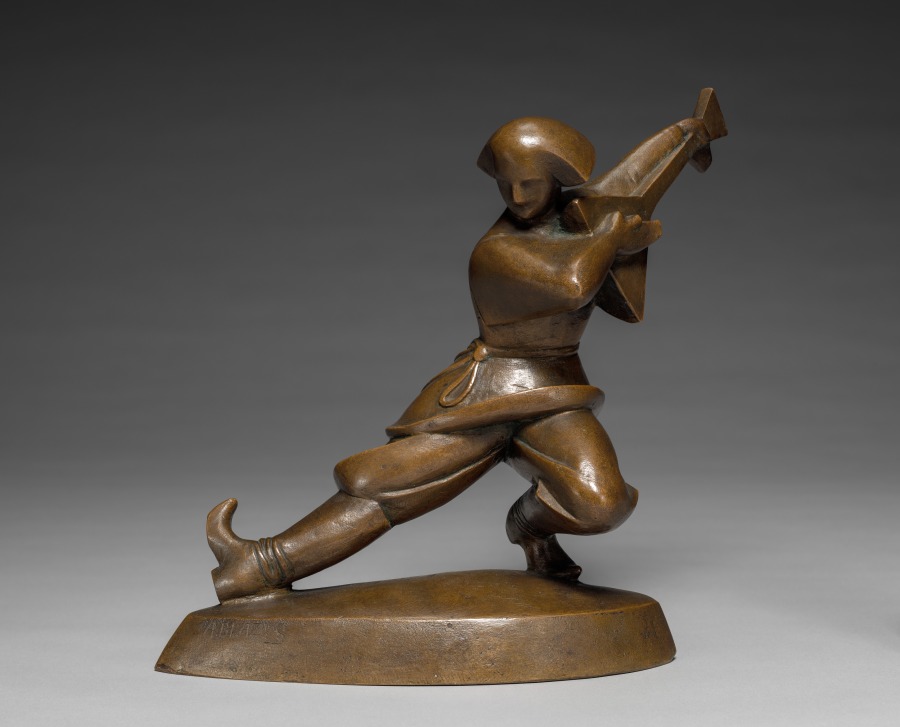
Urban Silhouette Research: The Balalaika Player as Architectural Fragment
The subject of the Balalaika Player, when filtered through the internal DNA of Addison Fashion, is not a portrait of a musician but a study in structural truncation. The research is anchored by two artifacts: the Mold Fragment with Musicians and the Lotus Pod and Water Chestnut painting. Both operate on a principle of deliberate incompleteness—a curated absence that defines the 2026 executive silhouette. This analysis deconstructs the geometric integrity of these works to propose a new urban materiality for the modern wardrobe.
I. The Geometry of the Fragment: Structural Poetics
A. The Mold Fragment: Negative Space as Architecture
The Mold Fragment with Musicians is not a complete relief; it is a broken tool. Its aesthetic power derives from the rupture of its original utilitarian form. The three musicians are frozen in a moment of performance, yet the mold’s fractured edges create a negative silhouette that defines the positive space. In architectural terms, this is a cantilevered absence—the missing clay is as significant as the preserved figures. The geometric integrity lies in the asymmetrical balance of the break. The lines of the musicians’ instruments—likely a pipa, a flute, and a drum—are truncated, their trajectories cut short by the mold’s boundary. This creates a dynamic tension between the implied motion of the music and the static arrest of the fragment.
For the 2026 executive silhouette, this translates into a layered, asymmetrical construction. The shoulder line is not a continuous seam but a broken horizon, echoing the mold’s edge. The garment’s structure is built from angular panels that intersect at oblique angles, mimicking the fractured geometry of the ceramic. The slate color is chosen to evoke the patina of aged clay—a muted, mineral grey that absorbs light rather than reflects it. This is not a color of warmth but of urban permanence, like the stone of a city wall.
B. The Lotus Pod and Water Chestnut: The Geometry of Selection
The painting Lotus Pod and Water Chestnut employs a different form of truncation: selective isolation. The artist removes all context, leaving only the lotus pod and the water chestnut against a void of white silk. The geometric integrity here is one of negative space—the empty background is not passive but active, defining the contours of the objects. The lotus pod is a grid of circular voids, each seed cavity a perfect negative circle. The water chestnut is a biomorphic crescent, its curve contrasting with the pod’s rigid geometry. Together, they form a dyad of form and void—the pod’s repetitive circles versus the chestnut’s singular arc.
This translates into a minimalist silhouette that relies on strategic cutouts and negative space construction. The garment’s surface is not a continuous plane but a series of voids and solids. A jacket, for example, might feature a single, precise cutout at the shoulder or waist, echoing the lotus pod’s circular voids. The water chestnut’s curve informs the asymmetric hemline—a single, sweeping arc that breaks the rectilinear structure. The slate color is applied in a matte, untextured finish, allowing the geometry of the cutouts to dominate the visual field.
II. Urban Materiality: From Clay to Fabric
A. The Materiality of the Fragment
The Mold Fragment is a relic of industrial process—a tool for creation that has become an object of contemplation. Its surface is pitted and irregular, bearing the marks of time and use. For the 2026 silhouette, this translates into a textural language of raw, unfinished edges and deliberate imperfections. The fabric is not a pristine surface but a constructed artifact. Seams are left exposed, hems are raw, and the weave is intentionally irregular—a slubby wool or a textured linen that mimics the clay’s surface. The slate color is not uniform but variegated, with subtle shifts in tone that suggest the patina of age.
The urban materiality is one of architectural weight. The fabric drapes with a gravity that recalls the density of ceramic. It is not fluid but structured, holding its shape against the body. The silhouette is monolithic—a single, continuous form that is broken only by the geometric cutouts inspired by the lotus pod. This is a silhouette for the urban executive who moves through the city as a static monument, a figure of silent authority.
B. The Materiality of the Void
The Lotus Pod and Water Chestnut painting emphasizes the materiality of the void—the white silk is not empty but a field of potential. In the 2026 silhouette, this is achieved through translucent layers and strategic transparency. A sheer slate-grey organza is layered over a solid base, creating a ghostly double of the garment’s structure. The cutouts are not just voids but windows into the body’s own geometry—the skin becomes a negative space that completes the form. The fabric’s matte finish absorbs light, while the organza’s subtle sheen catches it, creating a dialectic of opacity and transparency.
III. The 2026 Executive Silhouette: A Synthesis
A. The Silhouette as Fragment
The definitive 2026 executive silhouette is a fragment of a larger whole. It is not a complete garment but a curated absence. The jacket is cut with a single, asymmetrical shoulder, the other side left as a raw edge. The trousers are cropped at the ankle, revealing the shoe as a negative space. The silhouette is angular and sharp, with geometric seams that echo the mold’s fractures. The slate color unifies the ensemble, creating a monochromatic block that is broken only by the voids of the cutouts.
B. The Silhouette as Selection
Simultaneously, the silhouette is a selection of essential forms. The lotus pod’s circular voids become circular cutouts at the waist or hip, revealing a contrasting layer of silver or ivory beneath. The water chestnut’s curve becomes a single, sweeping lapel that arcs across the chest. The silhouette is minimal to the point of austerity, with every line and void serving a structural purpose. There is no ornamentation—only geometry.
IV. Conclusion: The Eternal Fragment
The Balalaika Player, as interpreted through the Mold Fragment and the Lotus Pod and Water Chestnut, is not a figure of sound but of silence. The 2026 executive silhouette is a frozen moment—a truncated gesture that contains within it the potential for infinite movement. The slate color and minimalist geometry create a urban armor that is both architectural and poetic. This is the silhouette of the modern executive: a figure of controlled absence, whose power lies not in what is shown but in what is withheld.